Neighbor News
Cinema's Unknown Women: Lisa Berndle and Judy Barton
What do men really see in the women they desire?
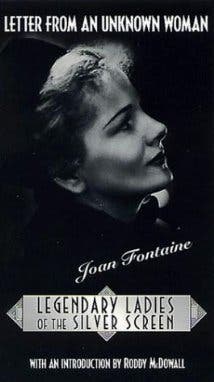
Max Ophuls’ Letter from an Unknown Woman (1948) is narrated by Lisa Berndle (Joan Fontaine) yet the film ultimately ends with the redemption of a man, Stefan (Louis Jourdan). Lisa fades away because of her series of questionable decisions, as if she never had a chance.
Alfred Hitchcock’s Vertigo starts with Scottie Ferguson (James Stewart) becoming obsessed over a woman, Madeleine, who essentially remains unknown to him. Because he thinks he knows her, and can save her from herself and her past, he has a psychotic break and becomes catatonic. Upon release from a psychiatric hospital, he discovers a woman, Judy, a look alike for Madeleine, whom he wants to transform into very woman he couldn’t save. During this process, Scottie fades (into his obsessive project) and Judy emerges as the character seeking redemption.
Both films leave the women in a position whence they are ‘unknown’ to the men they desire. Why are Stefan and Scottie so disinterested in knowing them?
Find out what's happening in Collingswoodfor free with the latest updates from Patch.
Stefan Brand, in Letter, is equally the object of Lisa’s extreme desire and her sexually satisfied lover. He exploits, leaves, and forgets her, not to mention that he has sired a child. Stefan is oblivious to the potential redeeming power that Lisa represents. At least, we infer this from hhis self-acknowledged decline as a pianist from prodigy to hack.
His talent decline comes from the same source that attracts Lisa to him: his charisma. He uses his musical talents for serial sexual exploits with admiring followers. Lisa has known and loved him since she was fourteen. She witnessed his potential and the wasting of it. Unlike the other women, she gives herself to him for the possibility of reacquainting him with his musical destiny. Stefan only sees the pursuit and conquest of a woman. Who she is and what she want does not matter.
Find out what's happening in Collingswoodfor free with the latest updates from Patch.
Lisa never understands how little he had meant to her. She gives up all marital security for one last chance, a long shot at best, to have Stefan accept her into his life. The brutality of the moment when he does not recognize her – he asks her if she traveled much, signaling that he had no memory of their first time together – causes her to run from his apartment. She has nowhere to go, her son has died from typhus, and she also caught a fever. Her final voice over is one the saddest moments in cinema:
If this letter reaches you, believe this -- that I love you now as I’ve always loved you. My life can be measured by the moments I’ve had with you and our child. If only you could have shared those moments, if only you could have recognized what was always yours, could have found what was never lost. I only….
In Vertigo, before Scottie loses Madeleine, she speaks to him not as Madeleine but Judy. Her words echo Lisa’s:
MADELEINE: You believe that I love you?
SCOTTIE: Yes.
MADELEINE: And if you lose me, you’ll know that I loved you and wanted to go on loving you.
As Madeleine, Judy has fallen in love with Scottie, but he can only see Madeleine. When he meets Judy, he tries to turn her into Madeleine. Judy considers leaving him but stays on believing she can make Scottie see her for herself. She’ll be as frustrated as Lisa in the attempt. Scottie and Stefan are locked into a singular desire toward the women/woman in their lives that keeps the women unknown to them. “If only” seems the best way to describe their relationships.
In Letter from an Unknown Woman, Max Ophuls dramatizes the apathy and indifference men have for women’s nature and personal desires. This doesn’t mean that Lisa’s obsession with Stefan was extreme and self-destructive. Many women have fruitlessly pursued, loved, and married men that they alone believed they could save.
Both films (and not the only ones question what men see in the women they love. Basically, it is unnecessary for the women to be themselves and even unfortunate when they contradict how they’ve been seen.
Many unknown women inhabit American cinema the late 40s and 50s, especially in film noir. A closer look at the femme fatale would reveal more than the pedestrian claim that they are evil temptresses and lead good men to their destruction.
[Collingswood Cinema Society -- formerly The Collingswood Movie Club -- showed Letter from an Unknown Woman last July. Vertigo was cited as the #1 movie in the Sight & Sound poll of international film critics.]