Neighbor News
Citizen Critic
Exploring extreme opinions on various films, with a little bit of crankiness
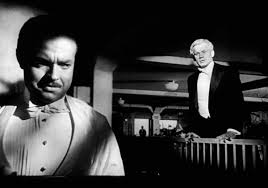

After Susan Kane (Dorothy Comingore) performs at the newly built Chicago Opera House, Kane’s newspaper will publish several reviews on the opera. Jed Leland (Joseph Cotton) is a critic who, unlike the other Kane flunkeys, will write the truth: Susan Kane is awful. However, Leland passes out after typing a few lines. Kane (Orson Welles) comes up to the typewriter and finishes the review. (An inside joke here: Welles wrote opera reviews at the age of twelve.) Leland expects Kane to write a good review. But, no, he writes a review more scurrilous than Leland could have imagined. Leland comments that this was the way Charlie Kane operated. He pursued the truth hoping to convince people, especially Leland, how much he cared for the truth.
We don’t know what critics really think and assume they are being good citizens by telling us their true thoughts about films, plays, albums, restaurants, etc. Then someone comes along and lambasts a great movie, like Citizen Kane. I wonder what the motives are and whether the critic really believes what he or she is saying. Is the article merely a reaction to the pronounced greatness? Is the review, like Kane’s, meant to show the public “something”? Show that the reviewer is not going to be affected by what others think?
***
Find out what's happening in Collingswoodfor free with the latest updates from Patch.
Half-Baked Theory Dept.: Great Movies come very close to being or seeming silly or, what amounts to the same, a critic will find said great movie silly or just isn’t as great as everyone says.
The theory depends on another (making this quarter-baked): you can always find something wrong in a universally accepted great film – or you can always find a negative review for an acknowledged great film (not as prevalently, you can find a good review of a universally reviled film).
Find out what's happening in Collingswoodfor free with the latest updates from Patch.
The Internet’s Mr. Cranky is the lynchpin for these theories.
1. There is a difference between being lucky and being good. People often mistake Casablanca as one of the greatest films of all time because director Michael Curtiz stumbled upon an ending he didn’t have when he began the film.
2. By the time Kane croaks in cinematic real-time, we’ve been subjected to a lot of conceit and some really bad opera singing, courtesy of Kane’s second wife, who has a voice like a bad car starter. In the fiftieth anniversary version that I watched, a subsequent documentary informed me that somebody was once offered $800,000 to destroy the negative of Citizen Kane -- as if this were a bad thing.
3. It turns out to be a good thing the motorcycle accident gets him in the end (i.e. beginning), otherwise, we’d be forced to watch dermatologists saw creeping melanomas off the back of Lawrence of Arabia’s leathery neck
4. [The Bicycle Thief] is often hailed as a classic example of Italian neorealism. “Neorealism,” for those of you with actual jobs, is a term typically reserved for effete academics who find the real world to be a “new” and innovative experience on the rare occasions that they’re forced to confront it. For the rest of us, “neorealism” translates into “dull, poor, depressing crap you can get for free right at your own home or job.”
I remember reading one Mr. Cranky review that couldn’t find anything to criticize. I don’t remember the film.
My half-baked theory was first pursued rigorously after finding on the IMDb critic’s page for Citizen Kane, a legitimate review finding fault with everything. This is inevitable, I suppose, for a film that’s constantly called the greatest of all time. I’ve met a few people, non-critics, who find all kinds of excuses why it doesn’t seem as great as it was advertised.
“The acting is like most 1930s movies, wooden and loud with too many close ups.”
Yes, it’s not method acting BUT neither is it derivative of the 1930s. Most of Citizen Kane’s actors were film neophytes. They brought the spirit of experimentation from Welles’ NYC’s Mercury Theater.
For others, the film’s innovations and profundity (as a tragic story of the downfall of great man) are ignored. The fact that it was in black and white probably affected them as well – I’ve known people who think all black and white films are inferior products.
Thus, a bad review starts to incubate in the minds of the potential critic.
I admire the skeptical attitude toward proclamations such as such a film is the greatest of all time. I believe Citizen Kane is one of the most important ever made. There are many other great and important films. Many on the “greatest of all time list” in Sight & Sound magazine leave me unmoved but not necessarily hostile toward them.
On the other side of the critical coin are films that only the directors’ and actors’ could love. And, occasionally, a very sympathetic reviewer. The other night I watched Jersey Boys (2014), a very popular Broadway musical that went through the theaters quietly. It made $47 million and covered the initial costs. Personally, I didn’t recall when it came out and was no longer in the theaters when my wife wanted us to see it. I searched through the external reviews at the IMDb and found strong to mild negativity from all the critics. Except one. Actually, it was the piece I had read before seeing the film – and made me want to see it.
My half-baked theory, though, I first tested on a film from 1999 called In Dreams, directed by Neil Jordan (The Crying Game) and starring Annette Bening. I read thirty reviews without finding one that remotely praised the film.
Typical of the comments was this from David Edelstein: “It’s a poetic but ultimately disappointing stab at expressionistic horror.” And this from the Onion A.V. Club: “A project for DreamWorks, which has promoted itself as a studio for artists even if its work hasn’t really born this out, it seemed the sort of high-profile project that would allow Jordan to exercise his talents in a mainstream setting, not unlike the impressive Interview With The Vampire. That it would end up not only a bad film, but at times an appallingly, oppressively, insultingly bad film comes as something of a shock.”
Other critics throw up their arms: “Why do they make films like this?!?” and “Do the producers think people will spend money on this drivel?” and ”Be afraid! Be VERY afraid! Of having to sit through 99 minutes of such stuff that bad movies are made of.” Finally, “A gorgeous mess, mind you, but a mess all the same.”
One after the other, the film got hammered. Would anyone find a redeeming quality? Finally, nearly having given up, I came across a stellar commentary from Mick LaSalle in the San Francisco Chronicle:
Annette Bening has been getting good roles in good movies for 10 years now, but the part she has in “In Dreams” is her juiciest yet.
The picture is a 100-minute showcase for nonstop powerhouse acting. Fear. Pain. Betrayal. Terror. Wailing grief. Suicidal despair. Hysteria. Bening goes to all those places, and that’s just in the first 40 minutes as a woman looking for her missing daughter in the woods.
“In Dreams” provides the double thrill of feeling deeply for someone who’s suffering even as we savor the bigness of the torment.
LaSalle saw the good if not the great in the film through the acting, especially Bening’s. I had seen this type of review when the film’s redemption comes through a performance. Robert Downey Jr. in Chaplin (1992) comes to mind (he plays In Dreams’s psychopath). I may not believe in this form of critical redemption but it indicates how a film many people can’t stand can find others to rally around it.
Occasionally, a critic will play the “it’s so bad it’s good” card, at least to justify our taking a peek at the film wreck. I’ve come closest to this feeling after watching Rocky IV (1985). And even I might be culpable of making more out of a great director’s film, like Roman Polanski’s Cul-de-Sac (1966) and The Ninth Gate (1999), than I (and other critics) should.
What did Mr. Cranky think of In Dreams?
Just what we need: a film that legitimizes clairvoyance. Now every wingnut who dreams that Elvis flew over his house singing “Love Me Tender” and sprinkling a pixie dust of Wonder Bread crumbs and barbituates will emerge from the woodwork to lay claim to his rightful slice of millennial zeitgeist.