By Valerie Minard
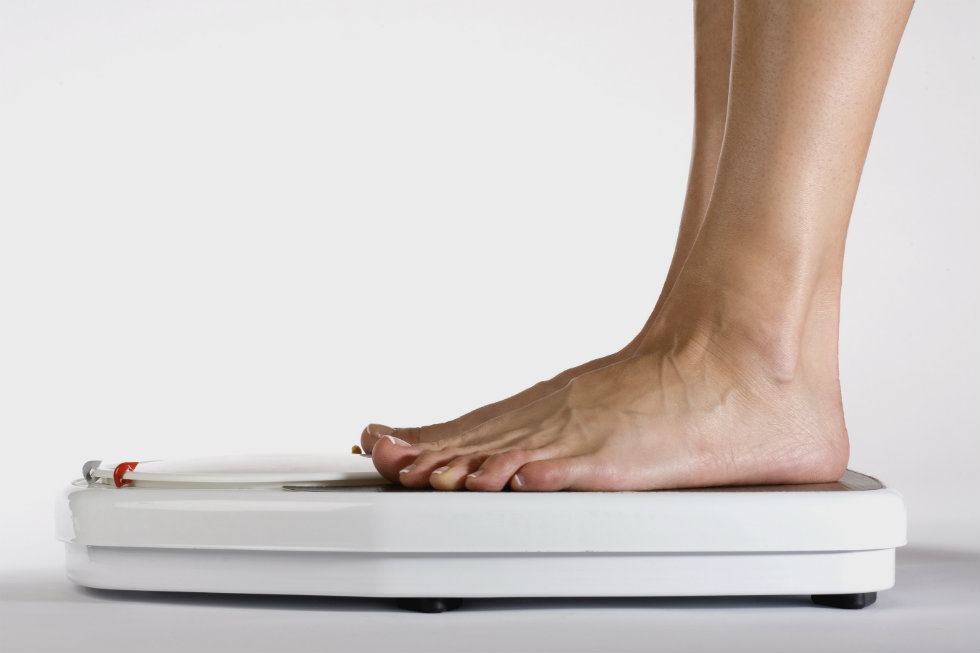
Summer is usually the time when people are more weight conscious as they squeeze into bathing suits and look in the mirror. But, recently the American Medical Association has added some more weight, er, to the problem of being too heavy. It officially labelled obesity as a “disease.“
To some, this is good news. It bodes well for physicians, hospitals, insurers, and drug companies. The new classification, that affects approximately one in three Americans, could inspire physicians to pay more serious attention to their overweight patients’ needs. It may also encourage more insurers to pay for treatment, providing reimbursement for drugs, surgery, and counseling. There will also be tax deduction benefits.
Find out what's happening in Collingswoodfor free with the latest updates from Patch.
But for others, this is not a good sign. They worry about over-diagnosis. According to Dr. Keith Ablow, a psychiatrist and member of the Fox News Medical A- Team, “This decision is another example of inventing illnesses - a favorite pastime of the American Psychiatric Association (APA) - and another step towards eroding people’s autonomy and making them passive participants in their health. It is also an example of how the medical establishment is laying the groundwork to bill Medicare and Medicaid for every bad choice anyone makes, ever.”
Rather than seeing obeisity as a disease, Ablow believes, in most cases, it’s a question of the self-discipline to make healthy eating decisions. The classification as a disease, robs individuals of taking charge of both their diets by suggesting their weight is beyond their control-- that they are helpless victims. And, this leads to a fatalistic attitude.
Find out what's happening in Collingswoodfor free with the latest updates from Patch.
Instead, of surgery or liposuction, he suggests expanding the patients’ self-esteem and self-determination to make better decisions on their intake. Instead of using comfort food to mask depression or fear, treat the underlying mental issue. “Those feelings need to be examined and overcome,” Albow advises. “The only freedom is found in facing one’s fundamental fears - especially, the really terrifying ones - and triumphing over them through courage and empathy, for others, but mostly for oneself.”
Psychologist, Dr. Elissa Epel, agrees. “People “self-medicate” by eating comfort food when faced with chronic stress,” she explained. Comfort foods, with high sugar and fat content, “may dampen down the body’s stress response, governed by the hormone cortisol.” In other words, people overeat not only because of stress but to reduce stress. Epel believes that mindful eating and stress-reduction techniques can help with weight management without dieting.
A study that Epel conducted with Dr. Jennifer Daubenmier at the Osher Center for Integrative Medicine at the University of California, San Francisco, found that women who “experienced the greatest reduction in stress tended to have the most loss of deep belly fat.” Daubenier explained, “You’re training the mind to notice, but to not automatically react based on habitual patterns-- to not reach for a candy bar in response to feeling anger, for example. If you can first recognize what you are feeling before you act, you have a greater chance of making a wiser decision.”
Mindfulness based approaches, such as Epel’s and Daubenmier’s, train “individuals to notice distressing thoughts, emotions, and sensations that would have otherwise gone unnoticed. One learns to bring the experience fully into awareness so that many types of distress that would have provoked an automatic reaction [such as over eating] can be tolerated. Thus, distress tolerance is increased and automaticity reduced. Because reduced reactivity enhances tolerance, the cultivation of mindfulness becomes self-reinforcing.”
Reducing fear and stress - and the effects of that on our health - has been a key focus of Dr. Herbert Benson, a pioneer in mind-body research at Harvard. Benson advocates meditative techniques such as diaphragmatic breathing, chi gong, yoga, tai chi or prayer to reduce stress.
Across the nation, many ministers, faith groups and church communities - recognizing the significant costs of obesity - are establishing programs to help their members take a prayerful approach to this problem. Some groups, including Overeaters Anonymous, are basing their training on an approach similar to Alcoholics Anonymous - which has a long, successful track record of helping people find solutions by turning to a higher power.
A prayerful approach was, in fact, what eventually helped Christiana Camacho loose weight after her third pregnancy. Christiana had gone from a size S to size XXL. After trying several diets she decided to seek a spiritual perspective on controlling her weight. She prayed with what Jesus said in the Bible, “Not that which goeth into the mouth defileth a man; but that which cometh out the mouth this defileth a man."
“Popular culture tells us that what we eat affects our body size and shape,” said Christiana. “I realized that it wasn’t what I was eating, but what I was thinking, that affected my appearance.”
She began to pray about this each day; her prayers went something like this: “There is no room in divine consciousness - in God’s realm - for me to be overweight, oversized, overburdened, overbearing, misshapen, disproportionate, uncoordinated, inflexible, clogged, or otherwise unable to express the good that God was giving me each day...As [her] spiritual perfection became firmer and clearer in [her] thinking, the weight disappeared slowly and steadily.” And she’s been able to keep it off for several years. Perhaps like others, you may feel that your weight has gotten out of control. But don’t despair-- you are not helpless or a victim. Even if the Amercian Medical Association has decided to label obesity as a disease-- it doesn’t give it any more power than it had before. You are still in control of changing your course. Just like Christiana you can lift pounds off by watching - and changing - your thoughts instead of your waist.
Valerie Minard is a health blogger/writer and the media and legislative spokesperson in New Jersey for Christian Science. She is also a Christian Science Practitioner.