Community Corner
Churchill Student Contributes to College Textbook
Jake Mattis helped write a chapter dealing with religiosity and it's affect on African American youth.
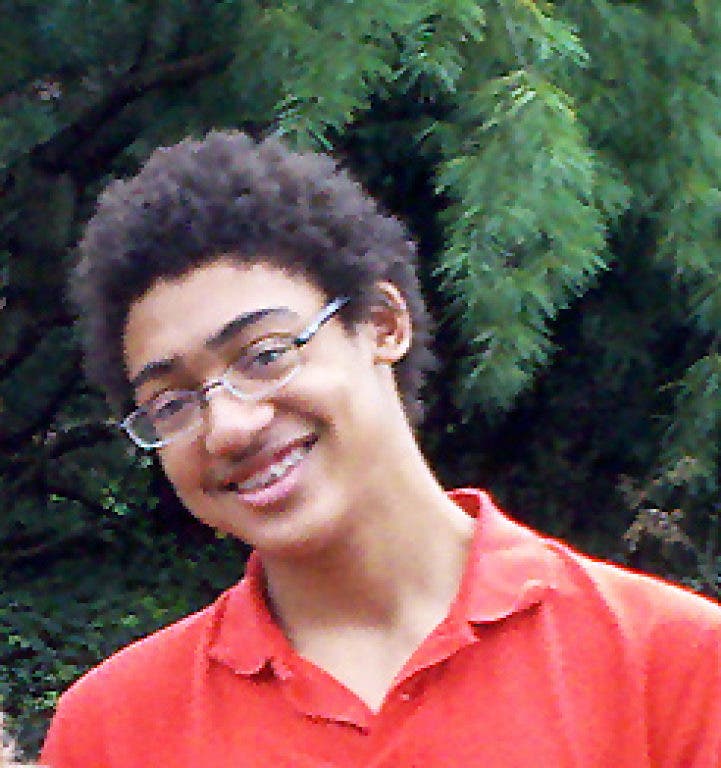

When Jake Mattis, an all-honor student at Churchill Junior High School in East Brunswick, recently found his schoolwork piling up and conflicting with some extracurricular activities, he did what most intelligent people would do. He turned to a relative for help.
And that’s where Jake Mattis’s similarities to most normal, intelligent people start to diverge a bit. Because the extracurricular activity that Mattis was involved in was a college level textbook on which he was collaborating.
“Whenever my schoolwork load was heavy I'd ask my aunt, who is the chairperson for the department of psychology at NYU, if I could take a bit longer to finish the research and generally she'd agree,” Mattis said. “When it was heavy I'd try to increase the amount of work I was doing to make up for the extension. Also, some of it the writing and editing happened in June, when school was winding down, so I had plenty of time to do the work.”
Find out what's happening in East Brunswickfor free with the latest updates from Patch.
The book on which Mattis collaborated is titled "African American Children and Mental Health." It is a college-level textbook published by Praeger, and the chapter Mattis helped write is "Religiosity and Spirituality in the Lives of African American Children."
It may seem like a heady topic for a middle-school student, but it is a topic about which the young man feels strongly, and carries a close personal association. “I helped to write a chapter about spirituality,” he said, “which I've been concerned about for a long time, as the son of a Jamaican Baptist and a Jewish American.”
Find out what's happening in East Brunswickfor free with the latest updates from Patch.
“Though there are obviously many textbooks about psychology, and the psychology of children, close to none really focuses on the mental health of African American children, who, of course, are in a very unique situation when it comes to race relations, culture, religion and other issues. So some professors and psychologists decided to write a mental health textbook specifically dealing with African Americans.”
To accomplish his task, Mattis found himself engaged in the kinds of work most often associated with graduate level collegians. “To help write my chapter, I worked as an aide for my aunt,” Mattis said. “I read through research papers and studies and wrote down their findings in a more organized way, and also helped to draw some of the conclusions in the chapter. It took probably four to six months, but it was surprisingly engaging and interesting work.”
The results of his research proved surprising, even to Mattis.
“Originally I thought I would find that spirituality and religiosity would not majorly affect the behaviors and mental health of African American youth, but I was dead wrong,” he said. “After reading only a handful of studies I found that it affects nearly every aspect of life, from someone's outlook on life to the people they associate with, and even their family structure, is influenced in some way by their religiosity.
“The text hopes to show that any type of spirituality, not just Christianity or just Hinduism or just Islam, is beneficial to black youths, yet can make some feel alienated if it is at odds with things they've learned in academic classes (like evolution) or deems their lifestyle or choices sinful or immoral, and must find a way to accept and confront both believers and skeptics. I was raised Jewish and had a bar mitzvah, and even continue to attend Hebrew school; however, I am also an atheist.”
Perhaps most importantly, Mattis found the experience enhanced his relationship with the family member who gave him the opportunity. “I really enjoyed working with my aunt and thank her very much for the opportunity to collaborate with her on such an important book,” Mattis said. “She guided me and trusted in my ability to do the research. She is the best.”