Health & Fitness
‘Not Enough Vaccines’ Says East Brunswick Mayor, Urging Patience
Mayor Brad Cohen said that the slow vaccine rollout is impacting statewide distribution effort.


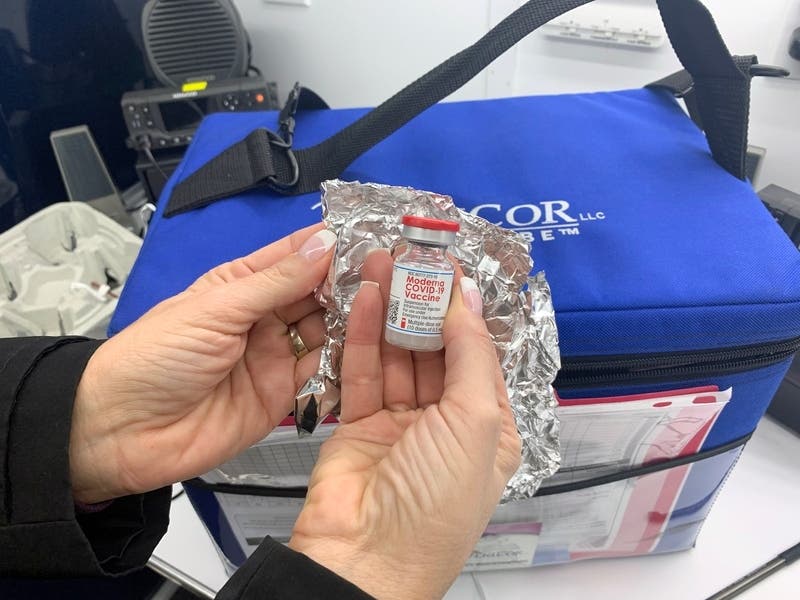
EAST BRUNSWICK, NJ — Although a new COVID-19 vaccination site opened in East Brunswick, it does not guarantee town residents will receive the vaccinations anytime soon due to a nationwide shortage.
At his COVID-19 briefing on Wednesday, East Brunswick Mayor Brad Cohen clarified that the vaccines are distributed by the state and county and that the mayor has no control over the distribution.
“At this point in time we are all in the same scenario. There are simply just not enough vaccines coming to the state, and the state therefore does not have the ability to make sure the counties get a regular supply on a regular enough schedule,” he said.
Find out what's happening in East Brunswickfor free with the latest updates from Patch.
“I understand how everybody is anxious and concerned... But we are gonna have to be patient.”
Addressing the shortage of vaccines, Department of Health Commissioner Judy Persichilli on Tuesday said: "With the expansion of eligibility into more categories, there are now many more people who are eligible to get vaccinated, but our vaccine supply is still very limited and will be for some time."
Find out what's happening in East Brunswickfor free with the latest updates from Patch.
New Jersey is currently receiving 100,000 doses per week. Officials said they are expecting a supply of 400,000 doses per week to meet demands.
Middlesex County and New Jersey are following a phased approach to administering the vaccine, as set by the CDC.
Currently in East Brunswick, people in group 1A and part of 1B are being vaccinated.
Cohen asked residents to register at the state portal, as well as other county portals to ensure they have a better chance of getting the vaccine when it becomes available in their category.
He clarified that all sites recently opened by Middlesex are accessible to anyone living in the state.
He asked East Brunswick residents to access sites and locations across the state, and check for spots that are open in their category.
“You may find that the best slot or the most available appointment may not necessarily be in the facility that’s closest to where you live. But you will be able to access the site from the state website,” he said.
Here’s where you can register for the vaccine: https://covidvaccine.nj.gov/
Those who cannot register online can call Middlesex County's Call Center at 732-745-3100 for help.
Vaccine eligibility:
Healthcare Personnel (Phase 1A)
Paid and unpaid persons serving in health care settings who have the potential for direct or indirect exposure to patients or infectious materials, including, but not limited to:
- Licensed healthcare professionals like doctors, nurses, pharmacists, and dentists
- Staff like receptionists, janitors, mortuary services, laboratory technicians
- Consultants, per diem, and contractors who are not directly employed by the facility
- Unpaid workers like health professional students, trainees, volunteers, and essential caregivers
- Community health workers, doulas, and public health professionals like Medical Reserve Corps
- Personnel with variable venues like EMS, paramedics, funeral staff, and autopsy workers
- All workers in acute, pediatric, and behavioral health hospitals and ambulatory surgical centers
- All workers in health facilities like psychiatric facilities, Federally Qualified Health Centers, and rehabs
- All workers in clinic-based settings like urgent care clinics, dialysis centers, and family planning sites
- All workers in long-term care settings like nursing homes, assisted living facilities, group homes, and others
- All workers in occupational-based healthcare settings like health clinics within workplaces, shelters, jails, colleges and universities, and K-12 schools
- All workers in community-based healthcare settings like PACE and Adult Living Community Nursing
- All workers in home-based settings like hospice, home care, and visiting nurse services
- All workers in office-based healthcare settings like physician and dental offices
- All workers in public health settings like local health departments, LINCS agencies, harm reduction centers, and medicinal marijuana programs
- All workers in retail, independent, and institutional pharmacies
- Other paid or unpaid people who work in a healthcare setting, who may have direct or indirect contact with infectious persons or materials, and who cannot work from home.
Long-Term Care Residents and Staff (Phase 1A)
All residents and staff of long-term and congregate care facilities, including:
- Skilled nursing facilities
- Veterans homes
- Group homes like residential care homes, adult family homes, adult foster homes, and intellectual and developmental disabilities group homes
- HUD 202 Supportive Housing for the Elderly Program residences
- Institutional settings like psychiatric hospitals, correctional institutions, county jails, and juvenile detention facilities (for eligible minors, e.g. 16+ years of age may be eligible for Pfizer vaccine under the emergency use authorization)
- Other vulnerable, congregate, long-term settings
First Responders (Phase 1B)
Sworn law enforcement, firefighters, and other first responders, including:
- New Jersey State Police troopers
- Municipal and county police officers
- Campus police officers
- Detectives in prosecutors' offices and state agencies
- State agency/authority law enforcement officers (such as State Park Police and Conservation officers, Palisades Interstate Parkway officers, Human Services police, and NJ Transit police)
- Investigator, parole and secured facilities officers
- Aeronautical operations specialists
- Sworn federal law enforcement officers and special agents
- Bi-state law enforcement officers (such as the Port Authority)
- Court Security Officers
- Paid and unpaid members of firefighting services (structural and wildland)
- Paid and unpaid members of search and rescue units including technical rescue units and HAZMAT teams
- Paid and unpaid firefighters who provide emergency medical services
- Paid and unpaid members of Industrial units that perform fire, rescue and HAZMAT services
- Members of State Fire Marshal's Offices
- Bi-state fire service personnel (such as the Port Authority)
Individuals at High Risk (Phase 1B)
Individuals aged 65 and older, and individuals ages 16-64 with medical conditions, as defined by the Centers for Disease Control and Prevention, that increase the risk of severe illness from the virus. These conditions include:
- Cancer
- Chronic kidney disease
- COPD (chronic obstructive pulmonary disease)
- Down Syndrome
- Heart conditions, such as heart failure, coronary artery disease, or cardiomyopathies
- Obesity (body mass index [BMI] of 30 kg/m2 or higher but < 40 kg/m2)
- Severe Obesity (BMI ≥ 40 kg/m2)
- Sickle cell disease
- Smoking
- Type 2 diabetes mellitus
Individuals who are pregnant and those in an immunocompromised state (weakened immune system) from solid organ transplant are also eligible but should follow CDC guidance and first discuss vaccination with their medical provider before receiving the vaccine.
If you are currently eligible, click here for more information on where to get vaccinated.
Who is eligible for vaccination next?
- Additional frontline essential workers (Phase 1B)
- Other essential workers and people living in congregate settings (Phase 1C)
- General population (Phase 2)
This group was designated as 1B, and will likely be next:
- Foodservice workers
- Port Authority workers
- New Jersey Transit workers
- Teachers, staff, and childcare workers
- Workers who support radio, print, internet and television news and media services
- Other critical workers (CISA)
- Other essential workers
This group was originally designated as 1C:
- People living or working in congregate or overcrowded settings – such as colleges and universities
- People living or working in congregate or overcrowded settings – such as migrant workers
- People living or working in congregate or overcrowded settings - other tribal populations
- Other people at high risk of COVID-19 illness due to comorbidities, occupations, demographics, etc.
NOTE: Vaccination phases are tentative and subject to change.
Thank you for reading. Have a correction or news tip? Email sarah.salvadore@patch.com
Get breaking news alerts on your phone with our app. Download here. Sign up to get Patch emails so you don't miss out on local and statewide news.
Get more local news delivered straight to your inbox. Sign up for free Patch newsletters and alerts.