Community Corner
Alcohol Rehab in NJ Isn’t One Program. Florham Park Families are Learning How Level of Care Changes Recovery
From detox to outpatient care, the right alcohol treatment plan depends on each person's health, stability and recovery needs.


This is a paid post contributed by a Patch Community Partner. The views expressed in this post are the author's own, and the information presented has not been verified by Patch.
For a Florham Park family trying to understand alcohol treatment, one of the first questions is often where to go. A more important question may be what level of care is appropriate.
Alcohol use disorder can look different from one person to another. Someone facing significant withdrawal risk may need medically supervised stabilization before continuing treatment. Another person may be medically stable but need a highly structured daytime program. Someone else may be ready for outpatient care while continuing to work and live at home.
For families comparing alcohol rehab in New Jersey, the question isn’t just availability. It’s whether the program determines level of care through clinical assessment or assigns everyone to the same program.
New Jersey's treatment data show why the issue matters. The state recorded 81,217 substance use treatment admissions in 2024, with alcohol identified as the primary substance in 34,071 admissions, or 42%. The data were reported through the New Jersey Substance Abuse Monitoring System (NJSAMS).
Why Two People with Alcohol Use Disorder Need Different Treatment Plans
Treatment planning begins with the person's current needs rather than a predetermined program.
Withdrawal risk is one consideration. Alcohol withdrawal can become medically serious, particularly for people with a history of severe withdrawal or other medical concerns. When medical detox is clinically indicated, stabilization should occur in an appropriate medical setting before continued addiction treatment.
Relapse history is another factor. Someone returning to treatment after several previous attempts may need more structure, closer monitoring and a plan that addresses what contributed to earlier setbacks.
Mental health can also change the treatment picture. Depression, anxiety, trauma and other co-occurring conditions may affect substance use and recovery. Dual diagnosis or co-occurring disorder treatment addresses substance use and mental health needs together rather than treating them as unrelated concerns.
Daily stability matters as well. Safe housing, family support, employment, transportation and the ability to attend treatment consistently can all affect which level of care is appropriate.
Previous treatment experiences provide additional information. A clinical assessment can examine what worked, what didn’t and whether a person needs more or less structure this time.
What the Levels of Care Actually Look Like

The treatment continuum is designed to provide different amounts of structure as needs change. A person may move between levels as symptoms, stability and recovery needs change.
- Medical detox: When alcohol withdrawal presents significant medical risk, supervised detox and stabilization may be necessary. Detox focuses on safely managing withdrawal rather than completing the full recovery process. Rolling Hills Recovery Center doesn’t provide inpatient medical detox onsite. When detox is clinically indicated, the admissions team can coordinate placement with an appropriate medical provider before continued treatment begins.
- Partial Hospitalization Program (PHP): PHP provides structured daytime treatment while allowing participants to return home rather than remain in a residential setting. Rolling Hills describes its PHP as five hours of group treatment per day, six days per week, along with weekly individual sessions and family counseling when appropriate.
- Intensive Outpatient Program (IOP): IOP provides several treatment sessions each week while allowing participants to maintain more of their normal responsibilities. Rolling Hills describes its IOP as nine to 15 hours of group therapy per week, three to five days a week, with weekly individual sessions.
- Outpatient alcohol treatment: Standard outpatient care generally involves a less intensive schedule and may be appropriate when symptoms are more stable, withdrawal risk is low and the person has adequate support and safe housing.
- Dual diagnosis treatment: When alcohol use occurs alongside a mental health condition, integrated care can address both areas as part of the treatment plan.
The central issue isn’t choosing the most intensive program. It’s finding the level that is clinically appropriate and can be adjusted as circumstances change.
Why ASAM Criteria Matter for Treatment Planning
Families searching for an alcoholism treatment facility may encounter different descriptions of treatment levels, making comparisons difficult.
ASAM criteria provide a clinical framework for evaluating a person's needs across multiple dimensions. Rolling Hills states that its assessment process uses the ASAM PPC-II dimensions along with NJSAMS information to establish the appropriate level of care.
Those dimensions consider factors such as intoxication and withdrawal potential, biomedical conditions, emotional and behavioral conditions, readiness for change, relapse or continued-use potential, and the person's recovery environment.
NJSAMS serves a different purpose. It’s New Jersey's statewide substance use treatment data system and is used to report treatment admissions and other information across licensed providers. The state's 2024 report was based on NJSAMS data submitted by treatment providers.
For a Florham Park family, the practical takeaway is simple: a treatment search should begin with an assessment rather than a self-diagnosis of which program seems appropriate.
What Florham Park Families Should Ask Before Choosing a Program
A few questions can help families understand how an alcohol treatment program approaches level of care:
- How is level of care determined? Ask whether the program conducts a clinical assessment and explains why a particular level is recommended.
- Is dual diagnosis care available? If depression, anxiety, trauma or another mental health concern is present, ask how those needs are incorporated into treatment.
- How are psychiatric needs handled? Families can ask whether mental health concerns are assessed and how medication or psychiatric services are coordinated when appropriate.
- What happens if detox is needed first? A program should be clear about whether medical detox is provided onsite or coordinated with an appropriate external provider.
- How does insurance verification work? Before admission, families can ask about benefits, authorization requirements, deductibles, copays and what services are considered medically necessary. Families can also verify insurance benefits before beginning the admissions process.
These questions can help families compare programs based on clinical approach rather than simply location, availability or program name.
Where Rolling Hills Recovery Center Fits
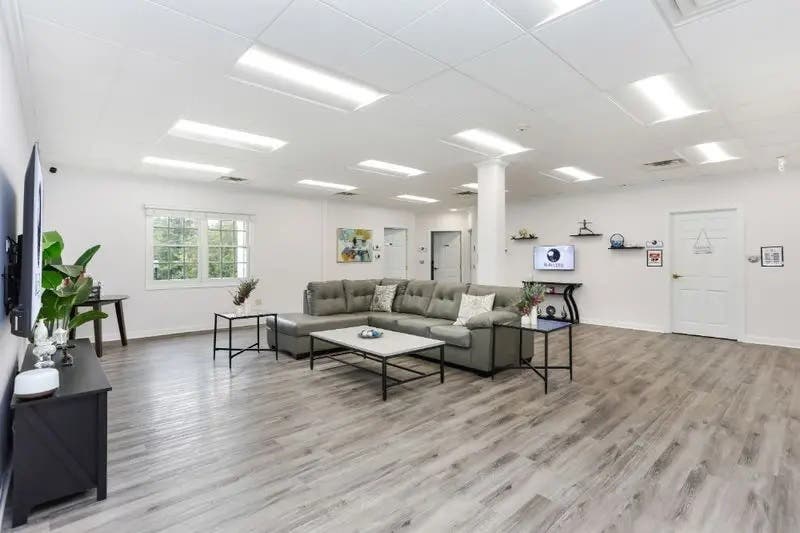
Rolling Hills Recovery Center in Chester provides alcohol treatment through PHP, IOP, outpatient and dual diagnosis care. Its treatment model uses clinical assessment to determine the appropriate level rather than treating every person according to the same schedule.
For Florham Park families seeking alcohol rehab in New Jersey, Rolling Hills Recovery Center in Chester offers structured care determined by clinical assessment. When medical detox is clinically indicated, the center coordinates placement with an appropriate medical provider before continued treatment begins.
The center's alcohol treatment information also discusses evidence-based therapies and medications for alcohol use disorder, including naltrexone and acamprosate, with medication decisions based on individual clinical circumstances.
Rolling Hills Recovery Center reports a 93.6% completion rate among clients who complete its program. Its reported clinical outcomes also show average PHQ-9 depression scores decreasing from 8.4 to 3.4 and GAD-7 anxiety scores decreasing from 9.0 to 4.6 during treatment.
The Chester location is at 425 Main Street, Chester, New Jersey, with free onsite parking.
Families can also review directions to Rolling Hills Recovery Center when considering the Chester location.
For someone in Florham Park, the distance to a treatment center is only one part of the decision. Understanding the level of care, how it was determined and what happens if needs change can be just as important.
Sources: New Jersey Department of Human Services, Division of Mental Health and Addiction Services, 2024 Substance Use Overview; Rolling Hills Recovery Center clinical outcomes and treatment information.
This post is an advertorial piece contributed by a Patch Community Partner, a local brand partner. To learn more, click here.