Politics & Government
Cranbury Delays Action on Water Buffer Zones
Township Committee takes time to add in language in a new state-mandated ordinance to refer to an existing, stronger local one.

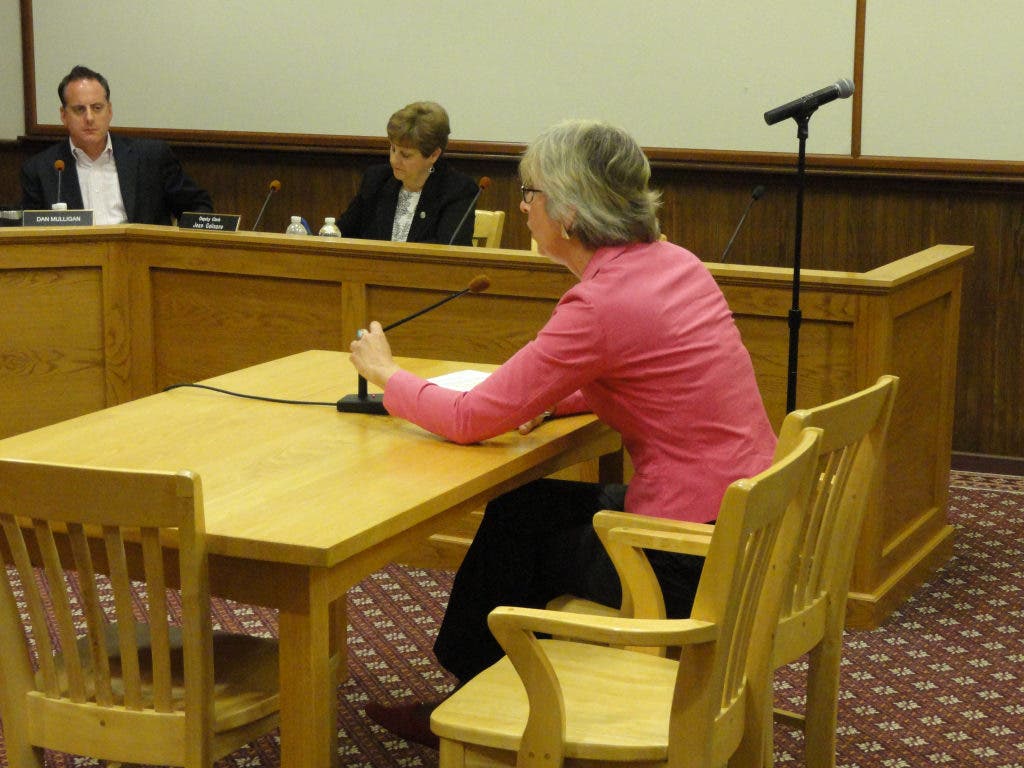


The Cranbury Township Committee delayed action Monday on an ordinance to put into the municipal code requirements from the state Department of Environmental Protection regarding protected “riparian” buffer zones around bodies of water.
With Brainerd Lake right in the downtown, the matter is of interest to a number of homeowners. But officials said the state regulations, whose buffers are smaller than those of the township, won’t overwrite the local rules.
“All those existing, current ordinances still stand. The issue we’re talking about tonight is an interpretation of what the state and the county want in addition to the current ordinances,” said Democrat Committeeman David Cook.
Find out what's happening in East Windsorfor free with the latest updates from Patch.
Township Engineer Bill Tanner told the committee that the state has already adopted the DEP’s rules, meaning they are in effect no matter what the township does. The township can have a more stringent requirement for which it can grant waivers, but the state must waive applications to build within the smaller buffer it requires. In Cranbury's case, this means the buffer is 200 feet for most residents, but that anyone seeking to building within 150 feet of the water would need state approval.
“It exists right now, whether we do anything tonight or not,” Tanner said of the state’s buffer zone. “If you do anything by a stream, you have to follow all the ABC's that are from the DEP.”
Find out what's happening in East Windsorfor free with the latest updates from Patch.
Township Attorney Michael Herbert said the township could protect itself by inserting language into each provision—the township’s and the DEP’s—referring readers to the other and noting that both apply. But some, like Joan McGee of the Stonybrook-Millstone Watershed Association, said having two ordinances with different rules would invite lawsuits.
“You are going to wind up in a lawsuit every single time [someone wants to build] if you have two ordinances with different widths,” she said. “It will be at the developer’s advantage to do so and it will not be at the township’s.”
McGee said the DEP had assured her it would back up any municipality that strengthens the ordinance, and would not require developers to seek state waivers for the extra buffer, beyond what the DEP originally called for.
Resident Robert Dylan also said two sets of rules would create problems with developers. “This ordinance that we’re talking about passing right now—logically speaking, you can’t have two ordinances for the same thing,” he said.
“If we adopt it as an ordinance in that fashion, we’re going to have serious problems,” he added.
The committee ultimately decided to ask Herbert to put in the reference to the other law before they put it up for a vote. But it did not seek to make the two match, with members citing concerns about the state possibly deciding builders would need waivers to work on the extra land that right now only Cranbury wants to protect.
“The residents have the right to read the final language,” said Republican Committeeman Dan Mulligan.
Get more local news delivered straight to your inbox. Sign up for free Patch newsletters and alerts.