Politics & Government
Legislative District 14 Candidate Profiles
The League of Women Voters asked candidates 10 questions each.

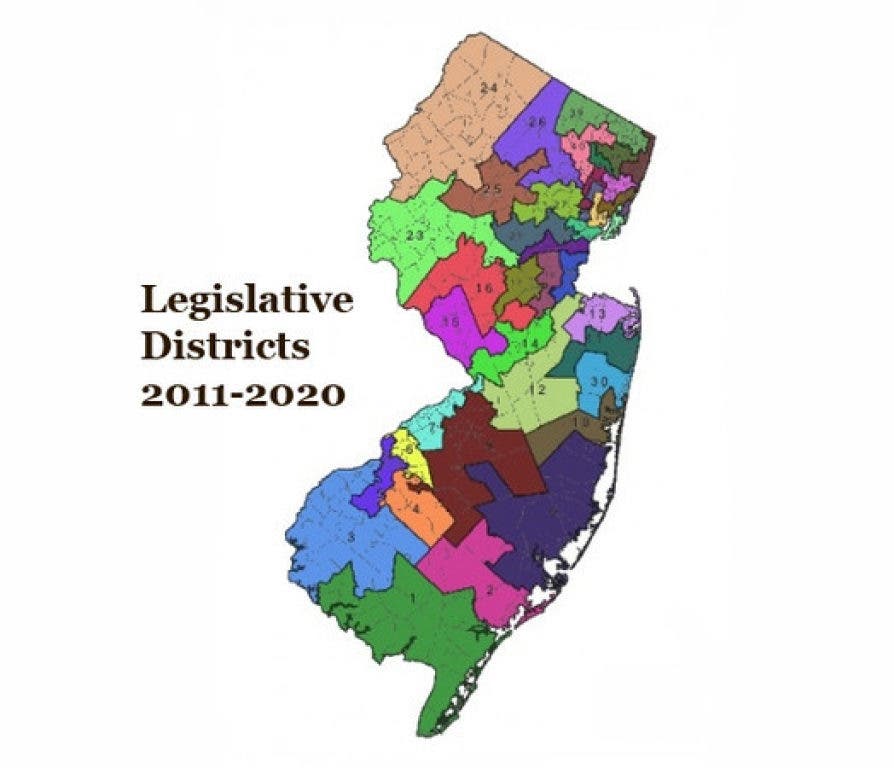
The League of Women Voters of New Jersey Education Fund asked all New Jersey candidates running for State Senate and Assembly in the Legislative District 14 a set of questions. Candidates were asked to limit responses to 125 words, and [truncated] was inserted when the response exceeded this limit. Answers have not been edited for spelling or grammar. If a candidate did not return the questionnaire or did not provide a response to a particular question, “No Response Received” appears next to his or her name.
Candidates for State Senate:
- Linda R. Greenstein (Democratic)
- Richard J. Kanka (Republican)
Candidates for State Assembly:
Find out what's happening in East Windsorfor free with the latest updates from Patch.
- Daniel R. Benson (Democratic)
- Wayne P. DeAngelo (Democratic)
- Sheree McGowan (Republican)
- Steven Welzer (Green Party)
- Wayne Wittman (Republican)
1. Property taxes concern many New Jersey residents. Do you think current programs, such as a cap on property tax hikes and rebates, are effective ways of dealing with them? What, if anything, do you think should be done about property taxes?
Find out what's happening in East Windsorfor free with the latest updates from Patch.
Senate Candidate Responses:
Linda R. Greenstein: The 2% hard cap on property tax hikes may help deal with increases in property taxes, but it has led to other problems, such as steep cuts in funding for schools and municipalities. Fully funding the school funding formula and providing sufficient municipal aid are critical for holding down property tax increases. Rebates and the Senior Property Tax Freeze are important in these difficult times, but the only way to cut property taxes is to reconsider whether we should fund our schools using other forms of revenue besides property taxes. We should also step up our attempts to deal with the duplicative structure of county and local governments, including greater use of shared services.
Richard J. Kanka: No Response Received
Assembly Candidate Responses:
Daniel R. Benson: No Response Received
Wayne P. DeAngelo: I supported the property tax caps as a means to curtail local spending increases that have historically driven up property taxes. Further, I support fully funding the Senior Freeze program to help out most vulnerable citizens as well as rebates for those families who need them the most. Regionalization and shared services are helpful engines to drive down local taxes while cutting out duplicative services particularly in smaller towns. As such, we need to look at those local functions that can be streamlined regionally without jeopardizing the quality of services for taxpayers. I support a constitutional convention on property taxes in order to allow for greater public involvement and input in solving the state’s long-running property tax structure problem.
Sheree McGowan: No Response Received
Steven Welzer: Property tax payers are strained because the income tax structure results in revenue shortfalls. The Green Party advocates progressive taxation reforms that would ensure the super-affluent and the large corporations pay their fair and proper share. A dedicated fund could then be established to provide property tax abatements. Truly progressive income taxation would address the issue of school funding inequality in addition to our over-reliance on property taxes. Also: to alleviate the Medicaid cost burden on our counties we should move toward a single payer health care system.
Wayne Wittman: No Response Received
2. In July, the federal Bureau of Labor Statistics released preliminary unemployment figures that showed New Jersey with a 9.5% seasonally adjusted unemployment rate. While this is comparable to the national average of 9.2%, it is higher than our neighboring states. What is your plan to lower New Jersey’s unemployment rate?
Senate Candidate Responses:
Linda R. Greenstein: Although New Jersey has added 15,300 jobs over the last year, and private sector payrolls have expanded, we must do more to stimulate job growth and recovery. We have had several legislative packages which focus on bills that reward businesses for hiring, encourage capital investment and support growth in manufacturing and biotechnology. I have sponsored a Back to Work NJ bill, modeled on a successful Georgia plan that allows people to receive unemployment benefits while matching them with available jobs. I have also sponsored a Small Business Roundtable, which has produced several bills that have become law, including bills to make state business resources more widely available.
Richard J. Kanka: No Response Received
Assembly Candidate Responses:
Daniel R. Benson: No Response Received
Wayne P. DeAngelo: In order to lower the unemployment rate, we need to support businesses and industries that create jobs. I have crafted several measures that would do just that including a measure that would provide a grant (equal to 5 percent of the value of the job) to small businesses that create a new, full-time job for at least one year. The unemployment rate has hit the building and construction trades at an alarming rate of nearly 30 percent which shows a need to create jobs for these middle-class workers. I have written a law that would provide tax credits for community strip mall redevelopment that would not only create construction jobs but would improve our towns. We also need to provide training programs that can help [truncated]
Sheree McGowan: No Response Received
Steven Welzer: The Green Party has been advocating a “Green New Deal” focusing on proposals such as: (1) a state fiscal stimulus prioritizing public investment in renewable energy, mass transit, and other green industries to increase employment and raise consumer spending; (2) initiation of state-based single-payer “Medicare for all” (like Vermont’s “Green Mountain Care”) which would alleviate the healthcare insurance burden on small businesses; (3) states should demand that the federal government cut military spending and allocate the savings to help state and municipal governments fund job-creating programs like the above.
Wayne Wittman: No Response Received
3. Currently, N.J legislators are working on the “Opportunity Scholarship Act” a pilot program providing tax credits to entities contributing to scholarships for low-income children. Do you support this pilot program and/or expansion of this program?
Senate Candidate Responses:
Linda R. Greenstein: I am strongly opposed to the Opportunity Scholarship Act, which has the effect of diverting public dollars from public schools and using them to support private or parochial schools. (I have voted against this bill in the Budget Committee.) I would rather see the funds used to improve troubled public schools. This voucher program will leave the neediest students behind in the public schools, while siphoning off the best students. These new schools will be less transparent and accountable.
Richard J. Kanka: No Response Received
Assembly Candidate Responses:
Daniel R. Benson: No Response Received
Wayne P. DeAngelo: I do not support the “Opportunity Scholarship Act” because I do not support funding vouchers with taxpayer dollars because of the affect that it will have on our public schools. Our school districts have been forced to stretch every dollar they have left after deep cuts to funding. Further loss of monies because of diversion to vouchers should not be an option. I believe that we need to support our state's public school system which should not be harmed by the diversion of taxpayer dollars to charter schools. I believe that there needs to be greater transparency and oversight of charter schools and the public needs to be given a voice in the approval process of these schools in their community since it impacts their [truncated]
Sheree McGowan: No Response Received
Steven Welzer: No, I’m not supportive. Considering that our urban public schools need more in the way of resources, the "Opportunity Scholarship Act" is a diversion, at best. It’s a stealth voucher bill, essentially a government bailout of private and religious schools. Using vouchers for religious school attendance is a clear abridgement of the separation of church and state clauses in the U.S. and New Jersey constitutions. Also: Public school districts, which would be losing money, will still be required to pay for and provide transportation for those students who use the "scholarship" (voucher) to attend non-public schools.
Wayne Wittman: No Response Received
4. As a result of the current economic crisis and associated budget cuts, municipalities are receiving less state aid. What, if anything, do you propose on the issue of state aid to municipalities?
Senate Candidate Responses:
Linda R. Greenstein: I support full funding of school and municipal aid. Due to the recent economic downturn, state revenues have fallen precipitously. Since State Aid to schools, towns and in the form of direct property tax relief comprises 75% of the entire State budget, a decline in revenues has had an impact on state aid. The restoration of municipal and school aid must be a priority as we begin to regain our fiscal footing.
Richard J. Kanka: No Response Received
Assembly Candidate Responses:
Daniel R. Benson: No Response Received
Wayne P. DeAngelo: The most devastating impact to municipalities as a result of a cut in state aid has been the layoff of police officers and fire fighters that can potentially stretch the ranks of law enforcement thin as they strive to protect our communities. We need to prioritize and provide state funding for towns that need to stabilize their police and fire services in order to adequately protect residents. We also need to encourage greater regionalization and shared services in our towns as a means of cutting expenses.
Sheree McGowan: No Response Received
Steven Welzer: Reductions of state aid to municipalities are symptomatic of misguided priorities. Even during periods of economic contraction government has continued to fund tax breaks for the rich, bailouts for the banks, and (at the federal level) expansion of the bloated military budget. The cities are suffering while multinational corporations use loop-holes to avoid paying their fair share of taxes (corporate profits have accounted for an unprecedented 88 percent of economic growth since the recession ended in June 2009). To the extent that the fiscal crises of state and municipal governments are due to federal-level cutbacks, the states should lobby the U.S. to shift allocation of funds away from its military budget toward social needs. Federal and state aid to municipalities must not be cut.
Wayne Wittman: No Response Received
5. Do you think the state should fund family planning services? Why or why not?
Senate Candidate Responses:
Linda R. Greenstein: I think the state should fund family planning services, as it has done since 1970. These services include OB/GYN services, physical exams, and cancer, diabetes and blood pressure screenings. They do NOT include abortion services. For many people, these clinics are their only access to primary care. Nevertheless, Governor Christies eliminated funding for family planning grants in the FY 2011 and 2012 budgets, forcing clinics to close or reduce services. He stated that cutting the $7.5 million for these clinics was a “fiscal necessity,” but the Legislature provided many ideas about how to pay for these services. The Legislature voted 3 times to include funding for family planning services, but the Governor vetoed this funding and the Legislature was unable to overturn the veto.
Richard J. Kanka: No Response Received
Assembly Candidate Responses:
Daniel R. Benson: No Response Received
Wayne P. DeAngelo: I have supported and voted for measures in the last year to restore adequate funding for women’s health care services to ensure that all women have access to necessary care. I will continue to support women’s health care services and other programs to ensure that cost does not keep critical services out-of-reach for New Jersey’s working families. All women should have access to necessary screenings for routine OB/GYN visits, diabetes and blood pressure screenings and pre-natal care. We need to ensure that there are adequate facilities in our community that can provide these services.
Sheree McGowan: No Response Received
Steven Welzer: The state should fund family planning services because unwanted pregnancy is a public health issue. Research shows that women experiencing unwanted pregnancies and carrying to term are less likely to obtain prenatal care. Their babies are at increased risk of premature birth, low birthweight, and poorer physical and mental health in later years.
Wayne Wittman: No Response Received
6. New Jersey’s energy needs are expanding. What is your plan to meet the increasing energy requirements in our state?
Senate Candidate Responses:
Linda R. Greenstein: New Jersey’s energy needs are expanding. At this time, about half of our electricity comes from nuclear plants and the rest from coal and natural gas fired plants. I have safety concerns about nuclear plants and the production of natural gas. I have been a prime sponsor of the bill to ban fracking, which is a method of getting at natural gas deposits but has the potential to pollute our water supply. Our best power source is renewable power like solar and wind because it is domestically produced, poses no public safety issue and creates no hazardous emissions. We have increased our solar power capacity over the past decade, and will be constructing offshore wind power generators soon. Hopefully, wind and solar will become less [truncated]
Richard J. Kanka: No Response Received
Assembly Candidate Responses:
Daniel R. Benson: No Response Received
Wayne P. DeAngelo: As vice-chairman of the Assembly Telecommunications and Utilities Committee, I am proud of various bills I have sponsored to expand use of renewable alternative energy and job creation in green industries. I believe true leadership will be shown on the issue in the Energy Master Plan about which I have been vocal that I believe it should be not only a document for energy industry but also job creation. I also am proud to sponsor bills that will provide tax credits to small businesses for purchase of ‘green’ equipment and another measure for tax credits to rehabilitate rundown shopping centers as a way to stave off the destruction of undeveloped lands. I am proud to be a sponsor of A-2502 as well as A-915 and [truncated]
Sheree McGowan: No Response Received
Steven Welzer: The Green Party takes the position that there is no reason to accept the premise that our energy needs must keep expanding. The original Earth Day slogan was: "Reduce, Re-use, Recycle." Our society has made considerable progress in regard to recycling and even, to a lesser extent, in regard to re-use of materials and products. But we don't pay enough attention to the idea of reduction ("living more lightly on the earth").
Considering that both fossil fuel usage and nuclear power are highly problematic, a shift toward renewable sources of energy is imperative. But the highest priority should be given to the simplest solutions: efficiency, conservation, and reduction.
Wayne Wittman: No Response Received
7. Charter schools were originally written into legislation to innovate and share those innovations with school districts. Is that the mission you see for charter schools still or do you believe their main purpose should be to provide parental choice?
Senate Candidate Responses:
Linda R. Greenstein: I have many concerns about the present operation of charter schools. If their original purpose was to share innovations with school districts, I find that to be admirable. Unfortunately, they are now serving many other purposes. In districts with failing public schools, they typically do not enroll students with the most challenging problems; they siphon off the best and brightest students. Charter funding should be used to improve the public schools, rather than to leave those schools behind. As for charters in high performing districts, I feel that they must be voted upon by the district. Often the approach to education in the charter is so narrow that it is clear the school is meant to give students a free non-public education at the expense [truncated]
Richard J. Kanka: No Response Received
Assembly Candidate Responses:
Daniel R. Benson: No Response Received
Wayne P. DeAngelo: First and foremost, charter schools should not affect the funding for public schools or quality of education in them. Charter schools should serve as a resource for families who make a private decision to enroll their children should they desire to seek an alternate educational structure than that provided at the public schools.
Sheree McGowan: No Response Received
Steven Welzer: Innovation should be their mission, but I think we need to watch carefully to ensure that the charter school movement doesn't wind up diverting too much money from traditional public schools that are accountable to the taxpayers through elected school boards.
I'm concerned that charter schools significantly underserve both minority and disabled students. Charters as a group enroll a much lower percentage of students with special needs than do district schools. And a UCLA Civil Rights Project study released last year found that charter schools have increased segregation.
Wayne Wittman: No Response Received
8. In a 2010 budget report, the United State House of Representatives identified the need for a focused study of hydraulic fracturing. The Environmental Protection Agency is expected to complete the study by late 2014 with initial study results available by late 2012. As a New Jersey legislator, how would you approach the issue of hydraulic fracturing?
Senate Candidate Responses:
Linda R. Greenstein: I have many concerns about the safety of hydraulic fracturing (fracking). It is a new method of drilling for natural gas that was previously considered unreachable. There is no drilling activity for natural gas in New Jersey at this time. I am a prime sponsor of S2576, which imposed a permanent ban on fracking. The Governor has proposed a one year moratorium in his conditional veto of the bill, awaiting an EPA study to determine the extent of the dangers of fracking. The dangers of fracking are that it creates polluted water that has to be disposed of and can bring radiation to the surface. It can also contaminate groundwater.
Richard J. Kanka: No Response Received
Assembly Candidate Responses:
Daniel R. Benson: No Response Received
Wayne P. DeAngelo: I support a moratorium on the use of fracking until such time when this comprehensive EPA study can be reviewed and interpreted by decision makers. It is my hope that this report will provide and accurate information regarding the realistic impact of fracking on our state or water supply. We also need to understand the potential for fracking to occur within our state’s boundaries so that we can make a decision regarding statewide policy on fracking based in scientific data. I believe that a decision on fracking needs to take into consideration not only environmental issues but also the jobs associated with the safe practice of this activity and the need for alternative access to natural gas in our country.
Sheree McGowan: No Response Received
Steven Welzer: I advocate a ban on hydraulic fracturing. It too often results in contamination of water, air and soil. Accidents (inevitable) can result in fires, explosions, and major spills. Wherever it has been attempted hydrofracking has generated environmental problems to some degree. Residents of drilling areas can become chronically ill due to the seepage of carcinogens and neurotoxins. These impacts can be far from the drill site because hydrofracking involves horizontal drilling up to a mile and a half from the wellhead. Extensive drilling could turn rural landscapes into an industrial belt of rigs, truck traffic, wastewater ponds and pipelines. It could undermine property values and place an enormous strain on local public services.
Wayne Wittman: No Response Received
9. The NJ Transportation Trust Fund, which funds construction and repairs of New Jersey's bridges, highways, and mass transit system, has been under-funded and in danger of going bankrupt. There has been much debate over how to fund needed infrastructure development and repairs. How would you suggest funding New Jersey’s transportation infrastructure needs?
Senate Candidate Responses:
Linda R. Greenstein: The Transportation Trust Fund has been underfunded and is in danger of going bankrupt. There are several possible ways to fund New Jersey’s transportation infrastructure needs. One is the use of public-private partnerships, which allow state and local governments to partner with private funding sources to modernize bridges and roads. These projects offer an opportunity for long-term investments.
Richard J. Kanka: No Response Received
Assembly Candidate Responses:
Daniel R. Benson: No Response Received
Wayne P. DeAngelo: I do not support raising tolls or the gas tax to fund the TTF particularly following the recent Port Authority toll increases. Working families can not afford the impact on their budgets simply to get to work or family. We need to look at our transportation funding mechanisms to ensure that we can pay for priority projects as they happening without pushing off debt and interest for years. We also need to maximize federal dollars for programs that can create needed construction jobs.
Sheree McGowan: No Response Received
Steven Welzer: Maintaining the vast and complex network of roads in our state is too expensive. A priority should be to gradually shift away from the paradigm of suburban-sprawl-with-private-automobile-transportation toward clustered living patterns served by public rail transportation.
To address the immediate crisis, funding for the Transportation Trust Fund must not come from regressive sources such as an increase in the gasoline tax or higher tolls. New Jersey is a relatively affluent state and we have the capability to raise revenues via taxation of wealthy households and multinational corporations.
Wayne Wittman: No Response Received
10. The legislature has not enacted reforms to the state’s Local Redevelopment and Housing Law, despite recent Supreme Court (Gallenthin v. Paulsboro) and Appellate Court (Harrison Redevelopment Agency v. De Rose) decisions which call the existing statutes into question. If elected, how would you propose to update the state’s land use laws to conform to the above cited court decisions?
Senate Candidate Responses:
Linda R. Greenstein: The Legislature must enact reforms to the state’s Local Redevelopment and Housing Law, to conform to recent Supreme Court and Appellate decisions. Both of these recent decisions are property-owner friendly. The Gallenthin case held that the NJ Constitution allows government redevelopment of only blighted areas, not just areas that are not “fully productive.” The Harrison case gives property owners notice and disclosure rights as well as due process. These decisions make it more difficult to take someone’s home and property away. Eminent domain is an important tool for municipalities, but it must be handled fairly and due process must be given.
Richard J. Kanka: No Response Received
Assembly Candidate Responses:
Daniel R. Benson: No Response Received
Wayne P. DeAngelo: In the last several years, there has been an exhaustive review and consideration of eminent domain law and property rights issues in our state. A homeowner should never be in fear of losing their home unfairly or unjustly without full due process rights being maintained. The Legislature would need to dedicate a significant focus on the findings in these cases and a review of state statute in order to perform such an overall. However, there also would need to be consideration to the desire of many New Jerseyans to allow local land use decisions to be made on a more local or regional level. With so many families struggling to pay the bills to stay in their homes, land use law should not become an [truncated]
Sheree McGowan: No Response Received
Steven Welzer: After the misguided 2005 Kelo v. City of New London decision Greens around the country fought predatory development plans in which residents and small business owners faced mass removal under excessive powers of eminent domain. Now the courts are returning some balance to the situation. Legislation should reflect that balance and it should go even further in regard to specifying strict limitations on the state's eminent domain rights.
Wayne Wittman: No Response Received
Get more local news delivered straight to your inbox. Sign up for free Patch newsletters and alerts.