Politics & Government
Superior Court Judge Confirms Hightstown Police Stop of Councilman Politically Motivated
Mercer County Superior Court Judge Mark Fleming ruled Hightstown Detective Benjamin Miller's August 2010 stop of Councilman Robert Thibault was unconstitutional
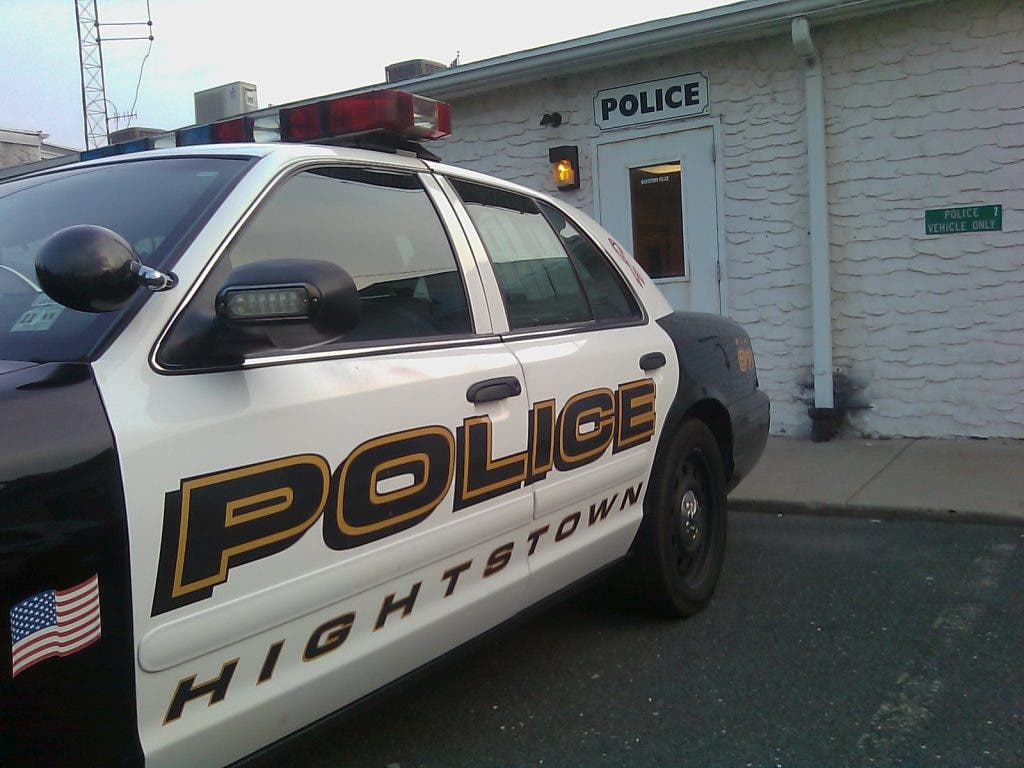

After a more than two-year battle that began in August 2010 with a motor vehicle stop by Detective Benjamin Miller, Hightstown Councilman Robert Thibault is relieved to be one step closer to finding closure.
On Oct. 3, Mercer County Superior Court Judge Mark Fleming rejected the State’s appeal for last year’s decision to dismiss a criminal complaint against Thibault.
“The Court does not believe [the stop] was coincidence, but rather, targeting of the defendant because of his political stance regarding the future of the Hightstown Police Department,” Fleming wrote in his decision.
Find out what's happening in East Windsorfor free with the latest updates from Patch.
The State filed an appeal in January 2012 against Brennan’s ruling to “determine whether the findings made could reasonably have been reached on sufficient credible evidence present in the record.”
Fleming’s responsibility was to review the case independently of the previous ruling, while taking into consideration the evidentiary record created by the municipal court.
Find out what's happening in East Windsorfor free with the latest updates from Patch.
In 2010, Thibault was running for mayor and vocally supported a plan to consolidate Hightstown and East Windsor’s police departments, among other services.
According to court records, Miller pulled Thibault over on Aug. 6, 2010 in the Borough Hall parking lot and issued tickets for driving with a suspended license and failure to surrender a suspended license.
Miller testified he overheard during National Night Out, which occurred on Aug. 3, 2010, a conversation between other officers claiming Thibault had a history of driving with a suspended license “as well as being good for a warrant arrest.” However, according to the Fleming’s written decision, Miller told Sgt. Frank Gendron that he was a part of the conversation.
Fleming wrote that he did not find Miller’s testimony on this point to be credible, and he doubted if the conversation occurred at all.
Miller testified that on the morning of the stop, he ran a warrant check and Thibault’s license. While Miller said he found no outstanding warrants, the databases showed Thibault had a suspended driver’s license out of North Carolina.
Miller testified that he then went to South Main Street to do radar detail in an area close to Thibault’s residence. According to Fleming’s written decision, Miller testified that when he stopped Thibault, he said he was stopped because he did a random inquiry of his license plate, which was untrue.
West Windsor Municipal Court Judge Mary S. Brennan ruled in December 2012 that Miller’s search of Thibault’s motor vehicle history was done without probable cause, and the stop was unlawful. In addition, North Carolina officials expunged Thibault’s traffic record after finding the suspended license was a clerical error, and New Jersey officials reinstated his license.
“It is difficult to envision Detective Miller taking these steps if the defendant was not a political candidate with a platform that would likely affect Detective Miller’s position,” Fleming confirmed in his decision.
While the State argued that Miller did not need probable cause to search Thibault’s information, since there was no privacy interest in the status of his driver’s license, Thibault’s defense countered that Miller looked up Thibault’s license status because of impermissible motives.
Both Brennan and Fleming agreed Miller’s search was motivated by Thibault’s political platform, which means Miller engaged in selective enforcement.
“Detective Miller’s actions were not motivated by a concern that the defendant was driving without a license; but rather, he attempted to discredit the defendant prior to the mayoral election,” Fleming wrote in his decision.
Fleming called the stop of Thibault’s car “unconstitutional.”
The Court also found that after stopping Thibault, Miller wrote the wrong date on Thibault’s summons. Fleming wrote that Miller was aware the Court could issue a warrant if Thibault did not appear in Court on the appropriate day.
“Once again, the Court finds it difficult to believe that this was a mistake,” Fleming wrote. “Rather, Detective Miller seemed determined to discredit the defendant.”
Thibault said his next step is to win the civil suit against the Borough, police department, and Miller, and quickly.
According to Thibault, although he was not provided with the internal affairs reports until June 2011, he was eventually able to file a notice of late claim.
“One thing that does bother me is the fact that it appears that Officer Miller has faced no consequences for actions that have now been called by several judges ‘illegal,’” he said.
Thibault said it should be up to the police department on deciding those consequences, and Thibault’s only recourse is to attach a cost to Miller’s illegal behavior. He said his lawsuit is a way to let Miller and those who condoned the stop know that the actions are not without cost.
Thibault said whoever made the decisions to drag out the case beyond two years has cost him legal fees in excess of $100,000. He said he has made at least a dozen court appearances and half a dozen motions.
“Somebody could conclude from their actions that they were hoping that I would run out of money, that I would give up, and that this would get buried,” Thibault said.
He said he believes the Superior Court’s findings speak volumes for his case against Miller.
“Detective Miller’s targeting of the defendant was more than mere personal dislike,” Fleming wrote in the decision.
“I want to move forward–I want to settle this so we can move on,” Thibault said.