Neighbor News
National Stroke Awareness Month: Know the Signs, Save a Life
Stroke stands as a leading cause of death and long-term disability in the U.S. But it is preventable and treatable, doctors say.
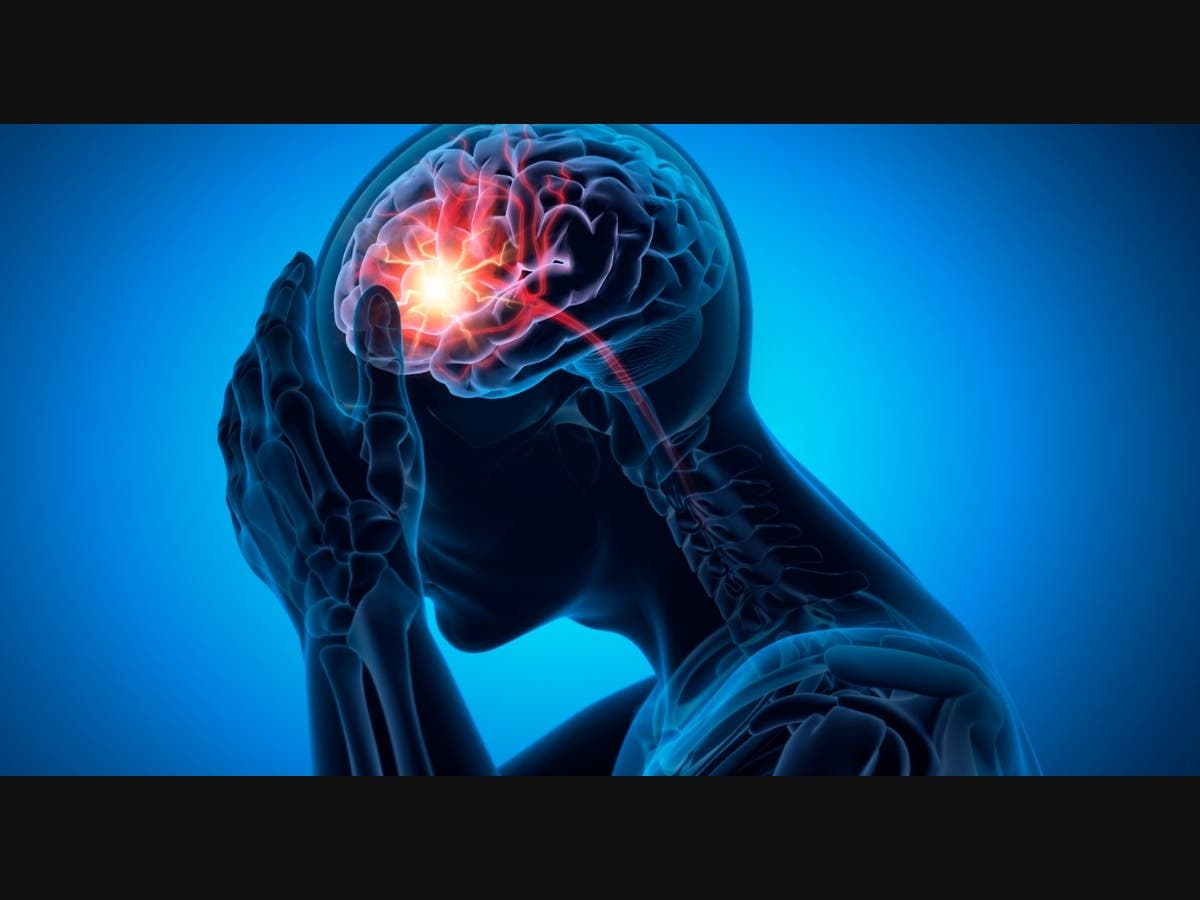
Every 40 seconds, someone in the United States has a stroke, and every three minutes and 11 seconds, someone dies from one.
Last October, Kenneth Schroppe, a 62-year-old resident of Wall, N.J., was one of the luckier ones.
Kenneth suffered an ischemic stroke that began with an unusual feeling in his head before progressing rapidly at the hospital, leaving him unable to move his right side or speak coherently. After he received treatment, he was admitted to the JFK Johnson Rehabilitation Institute, where he began the arduous process of recovery, initially unable to perform basic tasks like eating without special utensils or moving without a wheelchair.
Find out what's happening in Edison-Metuchenfor free with the latest updates from Patch.
Through intensive therapy and lifestyle changes in diet and physical activity, Kenneth has made significant progress, now regaining more than 75 percent of his mobility, using daily walks with his puppy to improve his balance. He credits his therapists for motivating him and continues to exercise regularly, stressing the importance of making a permanent lifestyle change after a stroke.
Ischemic stroke, the most common, results when a blood vessel that supplies blood to the brain is obstructed. A hemorrhagic stroke occurs in the case of weakened blood vessels, such as aneurysms. And in a transient ischemic attack, a clot temporarily blocks blood flow to the brain and often dissolves but can signal a forthcoming full-blown stroke.
Find out what's happening in Edison-Metuchenfor free with the latest updates from Patch.
Patients who arrive at the emergency room within three hours of their first symptoms often have less disability three months after a stroke than those who receive delayed care.
As National Stroke Awareness Month is marked this May, Hackensack Meridian Health is shining a spotlight on this major public health issue that stands as a leading cause of death and long-term disability in the U.S. Understanding the risks, recognizing the signs, and acting fast are crucial to saving lives and improving outcomes.
While about 87% of strokes are ischemic, both ischemic and hemorrhagic types require immediate medical attention to prevent brain cell death and permanent disability.
"Stroke is common, but more importantly, it is preventable and treatable,” says Dr. Colum Amory, director of the Division of Cerebrovascular Diseases at Hackensack University Medical Center. “Getting to the hospital as quickly as possible after symptoms start gives physicians a much better chance to reverse the injury before it becomes permanent."
Adds Dr. Brian Jankowitz, co-chair of Stroke and Neurovascular Science at JFK University Medical Center: "We have the expertise, technology, and resources to treat every type of stroke. Our priority is to provide cutting edge therapy 24/7 and 365 days a year because we never give up."
Below is a snapshot of the latest news about stroke, as well as long-known information that always bears repeating.
- Slow Walking Pace, Weaker Grip = Stroke Risk - A new study in the journal Stroke reveals a direct link between declining physical abilities and a higher risk of stroke. The research found that adults with muscle loss, a weaker grip, and a slower walking pace were more susceptible to stroke. Specifically, low muscle strength was associated with a 30% higher risk of any stroke, while a weaker grip increased the chances by 7%. Most significantly, a slow walking pace was linked to a 64% increased risk of stroke when compared to a brisk pace.
- You Can be at Risk of Stroke if Your Heart Rate is Too Low or Too High - A newly published study of people aged 40 to 69 revealed a U-shaped correlation between resting heart rate and stroke risk. Compared to those with heart rates in the mid-range (60-69 bpm), people with heart rates at or above 90 beats per minute had a 45% higher risk of stroke. Similarly, those with heart rates below 50 bpm had a 25% higher risk. This increased risk at both high and low heart rate extremes persisted even after researchers accounted for other stroke risk factors like age, blood pressure, and atrial fibrillation (AFib). Notably, this U-shaped pattern was observed in individuals with no history of AFib, a common irregular heart rhythm.
- Younger Stroke Patients Often Have Non-traditional Risk Factors -A recent study published in the journal Stroke reveals that adults under 50 who suffer from unexplained strokes are more likely to have nontraditional risk factors, especially if they were born with a common heart defect known as a patent foramen ovale (PFO). Researchers found that in individuals with a PFO—a small hole between the heart's upper chambers—nontraditional risks like migraines, liver disease, or cancer were more strongly associated with stroke than typical factors such as high blood pressure. For this group, nontraditional factors more than doubled the odds of having a stroke, while traditional risks were more closely linked to strokes in people without the heart defect.
The study identified migraine with aura as the single most significant nontraditional risk factor, particularly among women. It accounted for nearly half the stroke risk in people with a PFO and about a quarter in those without it. Based on these findings, the study's authors emphasize the need for a more tailored approach to stroke prevention in younger adults. They recommend that health professionals should actively screen younger patients, especially women, for nontraditional risk factors like migraines to better assess their stroke risk and prevent future incidents.
Who’s at Risk of a Stroke?
Do strokes only affect older adults? While they’re more common among people aged 65 and older, 10 to 15 percent of people who have strokes are between the ages of 18 and 50. Some stroke risk factors are out of your control, including your age, gender, race and family history. But there are several risk factors which you may be able to change, either on your own or with the help of a doctor. For instance high blood pressure, diabetes, and high cholesterol can increase risk by causing plaque to build up in the arteries that supply blood to the brain. Lifestyle choices also play a significant role; smoking, heavy alcohol consumption, physical inactivity, and a poor diet high in salt and saturated fats all contribute to the danger. Furthermore, obesity and chronic stress can exacerbate these conditions. Taking steps to modify the following risk factors may help decrease your risk of stroke in your 40s or beyond.
Women and Stroke – A Disproportionate Burden
Stroke is not an equal opportunity killer; it poses a greater threat to women than men. Stroke is the third leading cause of death for women, compared to fifth for men. Women also have unique risk factors, including a 9-times increased risk of intracranial hemorrhage in the 12 weeks following labor and delivery and a 15- to 35-times higher risk of blood clots in the first week postpartum. Conditions like preeclampsia (high blood pressure during pregnancy) can double the risk for a stroke. Women are more likely to experience non-traditional stroke symptoms like sudden shortness of breath, confusion, or hiccups, which can delay life-saving diagnosis and treatment.
Time is Brain – The Critical Importance of Calling 911
When a stroke occurs, every second counts. The American Stroke Association emphasizes that for every minute a stroke goes untreated, 1.9 million brain cells die. The single most important action to take at the first sign of a stroke is to call 911 immediately. Emergency medical services (EMS) can begin treatment en route to the hospital and are trained to recognize stroke symptoms, ensuring the patient is taken to the most appropriate medical facility. Arriving at the hospital via ambulance has been shown to lead to faster evaluation and treatment, which can be the difference between a full recovery and lifelong disability or death. Discourage the common and dangerous impulse to drive oneself or a loved one to the hospital. The BEFAST acronym (Balance, Eyes, Face drooping, Arm weakness, Speech difficulty, Time to call 911) is a vital tool for recognizing the most common stroke symptoms.
Silent Strokes, TIAs, and Hemorrhagic Strokes, What’s the Difference?
Not all strokes present with dramatic, obvious symptoms. Reporters have an opportunity to educate the public on two often-misunderstood conditions: silent strokes and transient ischemic attacks (TIAs).
- A Silent Stroke, or silent cerebral infarction, is a true stroke that causes permanent brain damage but occurs in a part of the brain that doesn't control major functions like speech or movement, so it goes unnoticed. It's estimated that silent strokes are five times more common than symptomatic strokes, and their cumulative effect can lead to significant cognitive decline and dementia.
- A Transient Ischemic Attack (TIA), often called a "mini-stroke," produces temporary stroke-like symptoms that resolve on their own. While a TIA does not cause permanent brain damage, it is a critical warning sign. About one-third of people who have a TIA will have a more severe stroke in the future, with the highest risk in the first 48 hours.
- A Hemorrhagic Stroke occurs when a weakened blood vessel in or on the surface of the brain ruptures and bleeds, accounting for about 13% of all stroke cases. This bleeding puts pressure on the surrounding brain tissue, causing damage and preventing oxygen and nutrients from reaching the brain cells. Uncontrolled high blood pressure is the most common cause of hemorrhagic stroke, which can also be triggered by two types of weakened blood vessels known as aneurysms and arteriovenous malformations (AVMs).
Rehabilitation Makes a Difference
Stroke is one of the world’s largest causes of long-term disability. A strong, comprehensive rehab program is critical to the best possible outcome as far as regaining physical and cognitive function and achieving independence. The American Stroke Association says: “High-quality rehab will help ensure that you reach your full-potential recovery.” For nearly 50 years, JFK Johnson Rehabilitation Institute, nationally-ranked as a Top Rehabilitation Hospital in the Country by U.S. News & World Report, has developed programs in stroke rehabilitation and numerous other specialties.
Says Kenneth, the patient from Wall Township, “All the therapists at JFK RI are fantastic. Everybody I worked with there, I’m thankful for. They’ve got great skills, they motivate you. They tell you you have to get up, and you have to get into your rehab and exercises. To be honest, they’re the reason I’ve gotten this far.”
“My recovery has been a long process, but I count my blessings every day.”
For more information about Hackensack Meridian Neuroscience Institute, visit www.hackensackmeridianhealth.org/en/services/neurosciences.
For more information about stroke or to book an appointment, please visit hackensackmeridianhealth.org/stroke or call 844-464-9355.