Neighbor News
How JFK University Medical Center Neurosurgery Team Helped Stroke Patient Beat Odds, Return to His Grandkids
The Carteret resident achieved a near full recovery after suffering a blockage that typically has a 95 percent mortality rate if untreated.
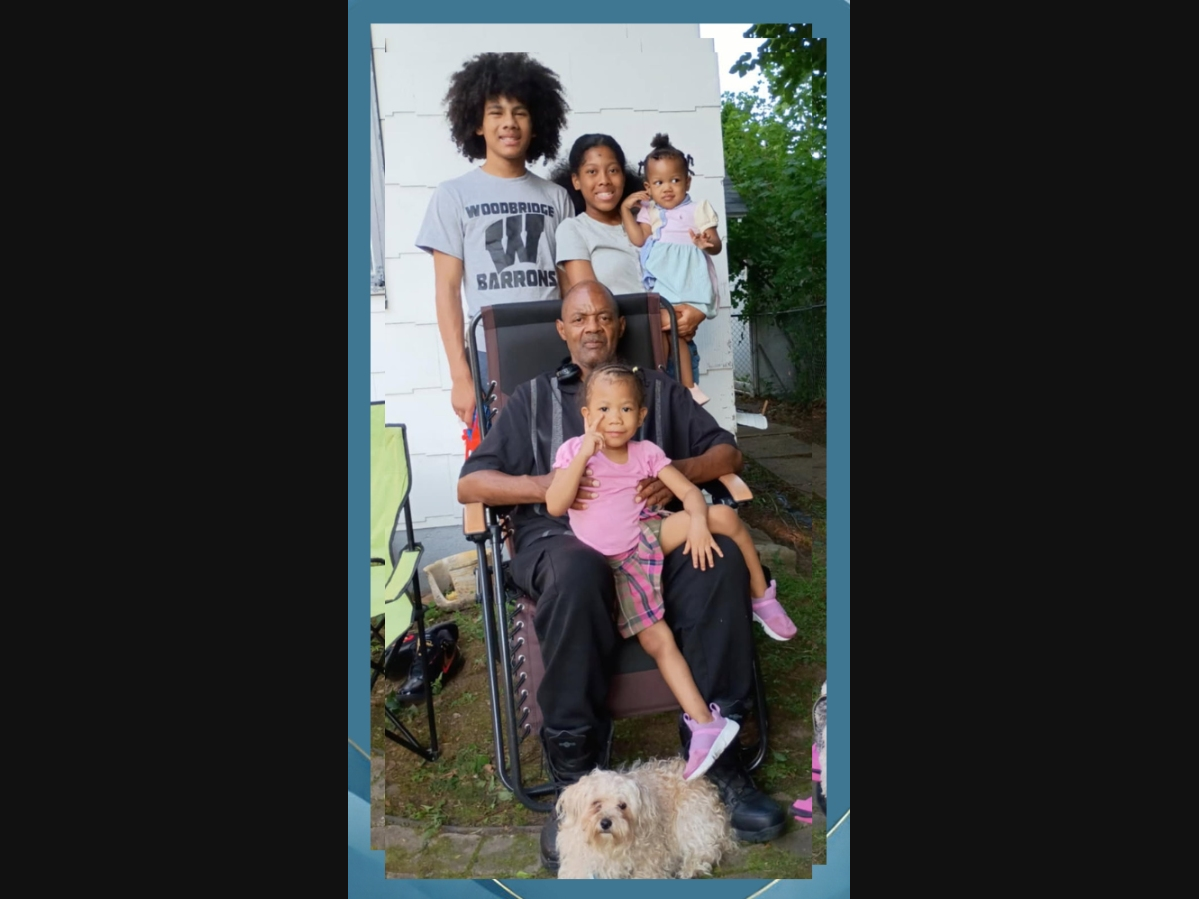
Two years ago, a heart attack forced Albert Martin to step away from his physically demanding job at a local resort.
Going on disability at age 64 was a tough adjustment for a man accustomed to hard work and powering through any physical discomfort. He lifted heavy objects without a second thought, and balked at slowing down and embracing a gentler pace.
Martin also indulged his cravings for fast food and fried dishes, and sometimes missed his daily medications, assuming he could simply catch up the next day.
Find out what's happening in Edison-Metuchenfor free with the latest updates from Patch.
"I acted like everything was fine," says Martins, now 66. "I didn't really change my habits."
Then came that summer afternoon when he didn’t feel quite right after working in his yard.
Find out what's happening in Edison-Metuchenfor free with the latest updates from Patch.
He felt a sudden cramp in his chest that subsided, but alarmed him. He called 911. An ambulance took him to the emergency room at Raritan Bay Medical Center in Perth Amboy, where he was diagnosed with having had a mild heart attack. He was resting after getting treated when he felt a sharp pain shoot up the back of his neck and head, and he had trouble speaking.
The medical team sprung into action, and had Martin evaluated by a telestroke neurologist, who determined that he was having a stroke. He was quickly transported to the Comprehensive Stroke Center at Hackensack Meridian Neuroscience Institute at JFK University Medical Center, which is certified by The Joint Commission and licensed by the New Jersey Department of Health and Senior Services.
When doctors asked him his name and where he was, he reacted with confusion and couldn’t respond. He also couldn’t move his left arm.
Thoughts of a neighbor who had been severely disabled by stroke crossed his mind and triggered anxiety. Martin, who lives in Carteret, recalls thinking: “Am I not going to be able to move my left arm anymore? Am I going to be deformed? I don’t want to end up like that.”
Dr. Brian Jankowitz, Professor and Chair of Neurosurgery, quickly got to work, threading a catheter through the vertebral artery up to Martin’s brain, where he suctioned out a clot in the basilar artery. Blood again flowed to the brain tissue, and the results were nearly immediate and remarkable.
Dr. Jankowitz asked: What’s your name? Martin responded with a crystal clear voice, “Albert Martin.” Where are you? “In the hospital,” he said. Impressive for a man who could barely say a word 30 minutes prior.
The combined top-notch skills and speed of the teams at Raritan Bay Medical Center, those who transported Martin to JFK, and those at the stroke center who sprinted to salvage Martin’s brain tissue, all contributed to his successful recovery.
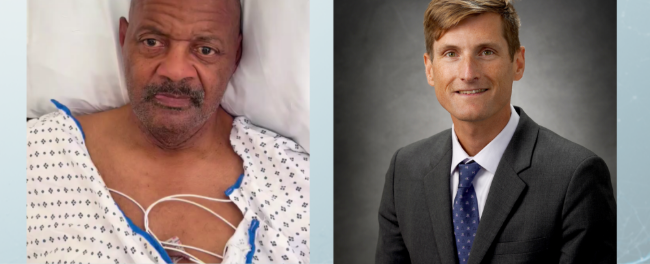
“Speed is everything,” says Dr. Jankowitz. “In an active stroke, every minute you lose 2 million neurons. There was early recognition [at Raritan Bay] of his stroke symptoms, and they got the patient to the right place as fast as possible.”
“He started to improve right on the operating table, and all through the night to being near normal again the next day,” he says.
“It’s not common for people to recover so fast. Martin achieved a near full recovery and walked right out of the hospital after suffering a blockage that typically has a 95 percent mortality rate if left untreated.”
Nearly 800,000 people in the U.S. have a stroke each year. The vast majority are first or new strokes, according to the Centers for Disease Control and Prevention. Every three minutes, stroke kills someone in the U.S.
Martin was one of countless patients to benefit from the world-class team of neuroscience experts and state-of-the-art resources at JFK University Medical Center. The facility boasts 24/7 access to state-of-the-art neuroimaging, elite neuro-critical care units, and a highly specialized stroke team capable of performing advanced endovascular treatments.
For stroke patients like Martin, JFK’s rapid-response protocols, innovative rehabilitation technology, and top-tier neurological experts can literally mean the difference between permanent loss of function and a vibrant, full recovery. JFK is one of the Hackensack Meridian Neuroscience Institute’s three dedicated centers of care for neurological disorders. Hackensack Meridian Health has New Jersey’s only nationally ranked neurology and neurosurgery program, supported by specialized technology and research.
Martin survived, and the experience provided a profound wake-up call.
Today, Martin approaches his health with a new level of care and appreciation. He has gently reshaped his lifestyle, enjoying fresh salads and keeping a close eye on his salt intake. He monitors his blood pressure twice daily and makes sure to take his prescribed medications at the exact same time every day.
Martin now prioritizes his well-being and sets healthy boundaries. To ensure he doesn't risk a fall while on blood thinners, he relies on a walker for longer distances—with a motorized scooter on the way—and takes his time walking his loyal Yorkie three times a day. Most importantly, his four grandchildren are thrilled to have their grandfather healthy and present in their lives.
"If you're doing something not beneficial to your health, stop it, because you might not make it back," Martin advises.
Today, he embraces his second chance at life with a steady, cautious gratitude.
"There's no rush. I'll get there when I get there."