Community Corner
Wasps, Hornets, and Cicada Killers: What's Active in NJ Yards Right Now
Wasp and hornet nests are small enough to remove safely right now — and cicada killers are about to show up across Middlesex and Somerset.
This is a paid post contributed by a Patch Community Partner. The views expressed in this post are the author's own, and the information presented has not been verified by Patch.
Early summer is a turning point for stinging insects across New Jersey. The queen wasps and hornets that emerged back in the spring have spent the past several weeks quietly building starter nests — and those nests are now big enough to notice, but still small enough to deal with safely. By late summer, the same colonies can grow into the hundreds, making removal far riskier.
For homeowners in Middlesex and Somerset Counties, this is the moment to take a slow walk around the yard.
What's actually happening right now
Four types of stinging insects are active in New Jersey at this time of year, and they behave differently enough that it helps to know which one you're looking at.
Paper wasps build small, open, umbrella-shaped nests under eaves, deck railings, mailboxes, and patio furniture. They're generally not aggressive unless their nest is disturbed.
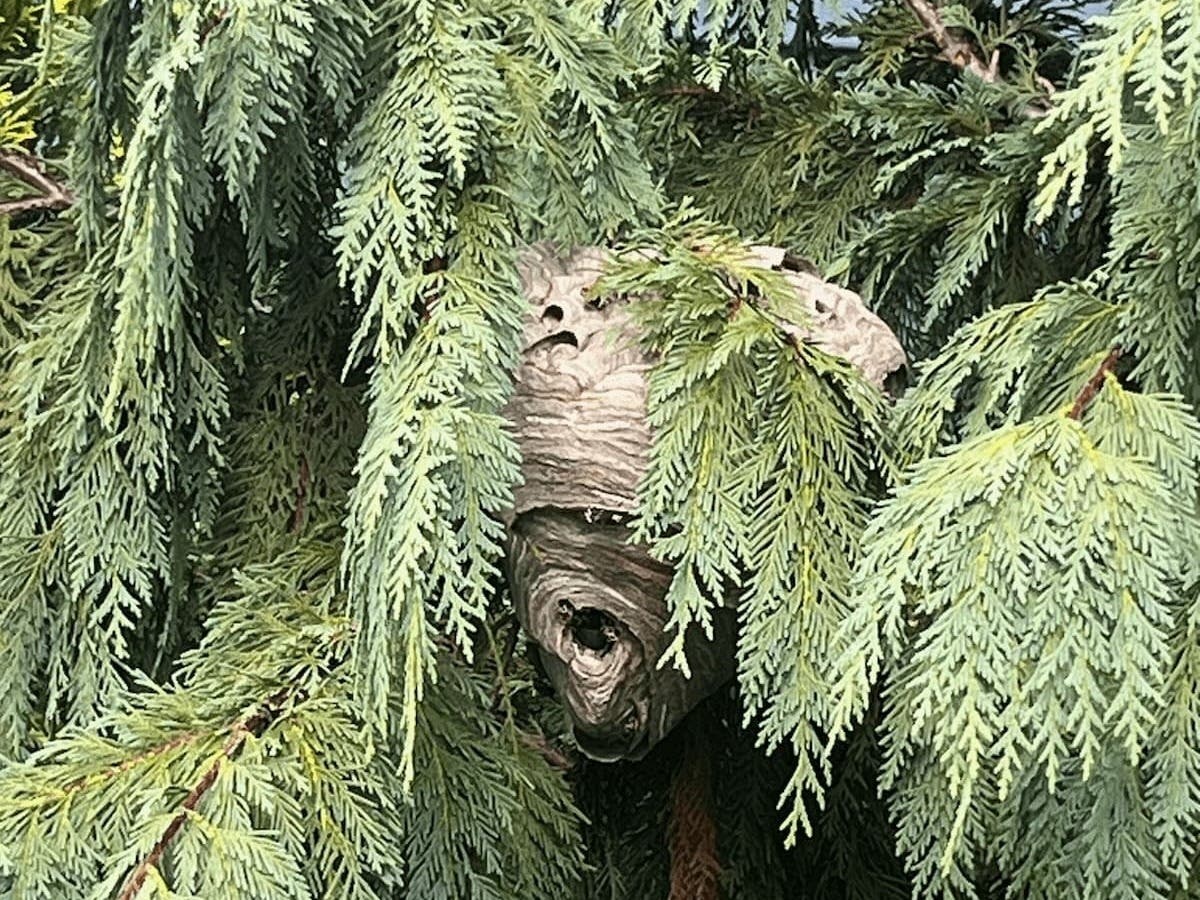
Bald-faced hornets build large, enclosed gray paper nests, often in trees, shrubs, or under roof overhangs. Their nests can eventually grow to the size of a basketball or larger, and hornets will defend them aggressively.
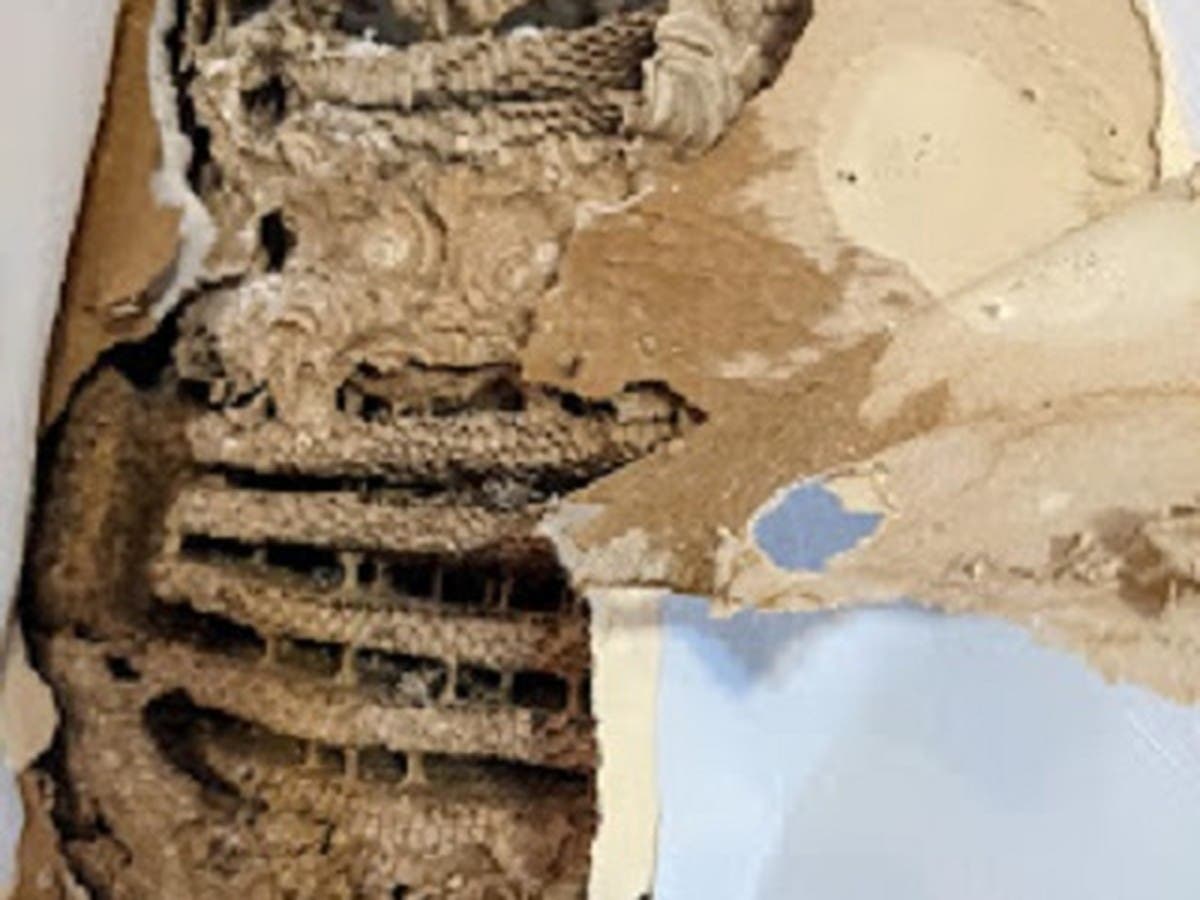
Yellow jackets are the ones most homeowners end up calling about. They nest in the ground, in wall voids, and even inside grills or old rodent burrows — which means a nest can be well underway before anyone notices it. A recent job in Middlesex Borough turned up a nest that had been growing inside a wall for weeks before anyone heard the activity behind the drywall. Yellow jackets are capable of stinging repeatedly and become especially defensive as the season goes on.
European hornets are less commonly recognized but just as active right now. They're reddish-brown and noticeably larger than yellow jackets, and unlike most stinging insects, they stay active after dark — homeowners often notice them bumping against porch lights or windows at night. Rather than building the exposed, football-shaped nests typical of bald-faced hornets, European hornets prefer hollow trees, wall voids, and attics, which can make a nest harder to spot until activity picks up.
Cicada killers are just getting started
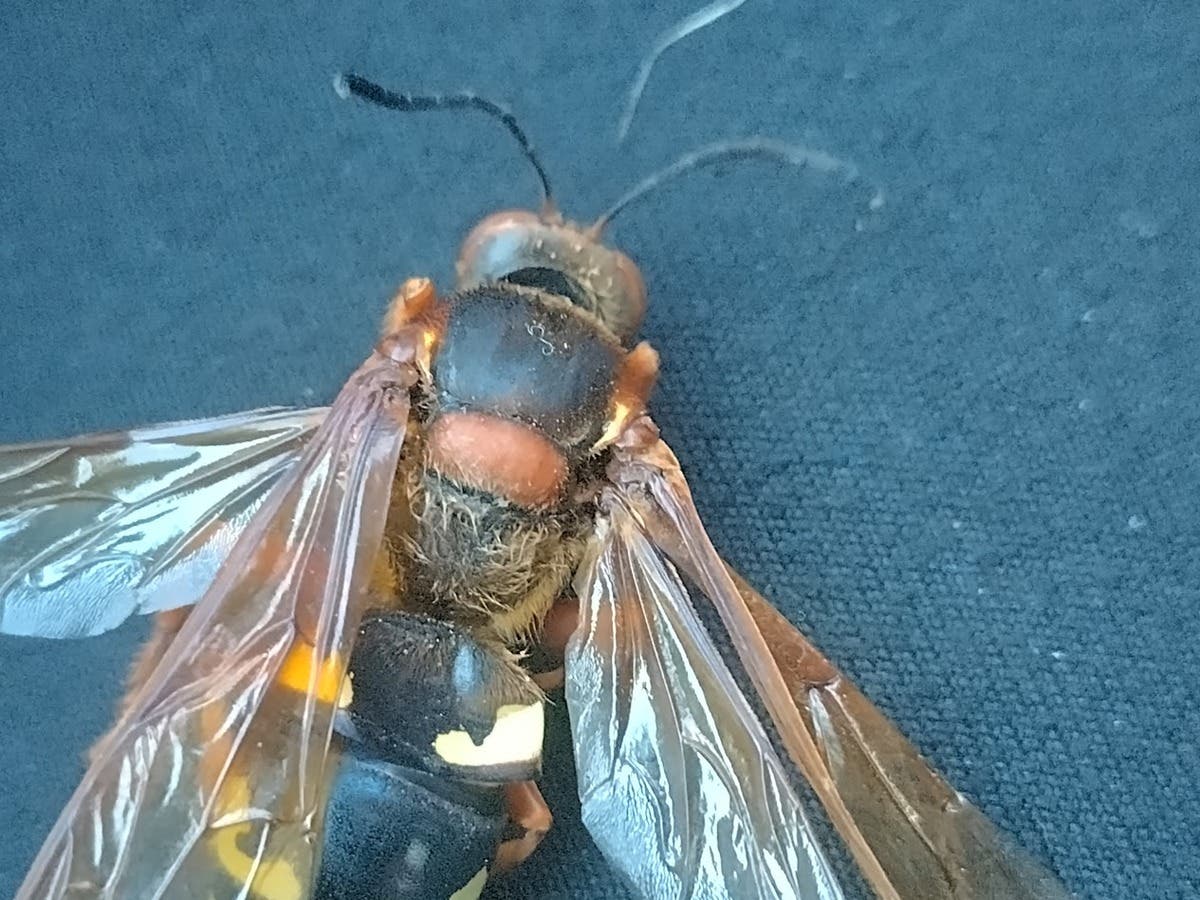
One stinging insect that's beginning to show up — and will become much more common over the next several weeks — is the cicada killer. These are the largest wasps in New Jersey, sometimes reaching two inches long, with a rust-colored head and thorax and bold yellow markings that make them look far more threatening than they actually are. They typically reach peak activity in July and August, timed to the cicadas they hunt, and central New Jersey's cicada season tends to begin right around late June.
Despite the intimidating size, cicada killers are mostly harmless. Most of the wasps people see flying around a yard or patio are males, and males are physically incapable of stinging — what looks like a stinger is actually used for mating, not defense. Only females sting, and they rarely do unless handled directly or stepped on barefoot.
The more common complaint isn't stings — it's the ground. Female cicada killers dig burrows in sandy or bare patches of soil, often along walkways, in mulch beds, or at the edge of a lawn, and a cluster of burrows can leave a yard looking dug-up by late summer. They're also genuinely beneficial insects, since the cicadas they hunt can otherwise damage trees.
For most homeowners, the right move with cicada killers is simply to leave them alone and let the season run its course. If burrows are concentrated somewhere high-traffic, like a play area or a path used barefoot, that's the situation worth a professional opinion.
Why towns like Edison, Piscataway, and Middlesex Borough see this often
Middlesex County's mix of mature, tree-lined neighborhoods and properties backing up to parks, retention basins, or wooded buffers creates exactly the conditions stinging insects look for: sheltered nesting spots close to food and water. Homeowners in Edison and Piscataway frequently find nests tucked into shed eaves, under deck boards, or along fence lines where lawn equipment rarely disturbs them until the colony is already established. Older homes in towns like Middlesex Borough can also see nests build inside wall voids and attic spaces, often going unnoticed until the activity becomes loud enough to hear from inside the house.
Somerset County's blend of suburban developments and nearby wooded or farmland edges creates similar conditions, particularly in yards that back up to undeveloped land.
The safest window is closing
Early in the season, a nest is small, the colony is just a queen and a handful of workers, and removal is relatively low-risk. Once a colony reaches full size in July and August, the same nest can house hundreds of yellow jackets or up to several hundred hornets — and disturbing it, even accidentally with a lawnmower or weed trimmer, can trigger a swarm.
A few practical signs it's worth a closer look around your property:
- Increased insect traffic in and out of one specific spot — under eaves, in a vent, or near the ground
- A small papery or mud-colored structure forming under a roofline, deck, or in a shrub
- Small, perfectly round holes appearing in deck railings or wood trim
- Buzzing or rustling sounds coming from inside a wall, especially near an attic or garage
If you spot an active nest, professionals generally recommend not approaching it directly — stings can be serious for anyone with an allergy, and a disturbed colony will defend itself as a group. It's also worth noting that not every flying insect needs to go: honeybee colonies are protected pollinators in New Jersey, so a licensed pest control company will typically relocate a honeybee colony rather than exterminate it, while still removing the more aggressive species safely.
What to do next
If you're seeing increased wasp or hornet activity around your home in Edison, Piscataway, or anywhere else in Middlesex or Somerset County, a professional inspection now — while nests are still small — is the easiest and safest way to handle it. Cicada killer burrows generally don't need treatment unless they're concentrated in a high-traffic area of the yard. Environmina Pest Control, a Middlesex, NJ-based, NJ DEP-licensed pest control company, offers free inspections for bee, wasp, and hornet activity throughout Middlesex County, Somerset County, and five other New Jersey counties.
Residents can schedule a free inspection through Environmina's online booking portal or learn more about the company's service areas across Central and North Jersey.
About Environmina Pest Control
Environmina Pest Control LLC is a family-owned, NJ DEP-licensed pest control company based in Middlesex, NJ, serving Middlesex, Somerset, Essex, Union, Hudson, Hunterdon, and Warren Counties since 2015. The company is led by Carmen, a NJ State Certified Pest Control Technician with a B.S. in Toxicology and Chemistry, who applies an Integrated Pest Management approach to every inspection and treatment plan. Environmina is rated 4.9 stars from more than 217 Google reviews and offers free inspections, 24/7 availability, and warranties on most services.
This post is an advertorial piece contributed by a Patch Community Partner, a local brand partner. To learn more, click here.