Crime & Safety
Beware Fake Solar Eclipse Glasses: Monmouth Prosecutor
There are lots of people selling glasses for next Monday's eclipse claiming they'll protect your eyes. Find out how to know yours will work.


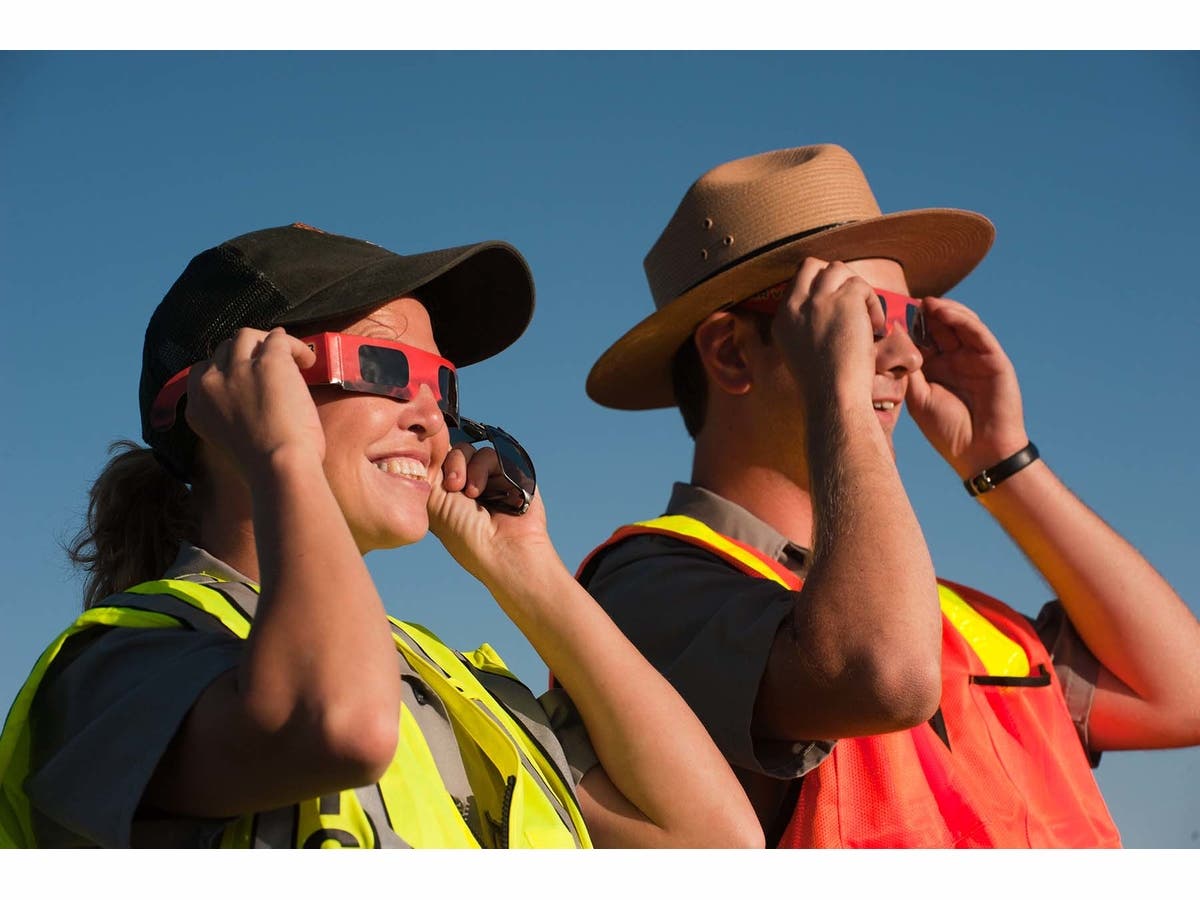
FREEHOLD, NJ — The Monmouth County prosecutor's office is urging amateur astronomers to beware of buying counterfeit glasses to watch the Aug. 21 solar eclipse.
The prosecutor's office on Monday afternoon shared an article from the FEMA website warning of the counterfeits, which pose a danger because they put viewers who use them at risk of eye damage that could result in blindness.
"Millions of Americans will watch the Aug. 21 solar eclipse and have already purchased (or will) eclipse glasses or handheld solar viewers to do so," the article reads. "Some of these people may be at risk from counterfeit glasses and viewers sold by disreputable vendors trying to cash in on this rare event."
Find out what's happening in Freeholdfor free with the latest updates from Patch.
Only glasses and viewers verified by an accredited testing laboratory to meet ISO 12312-2 are safe to use when viewing the eclipse. This standard requires glasses and viewers to be thousands of times darker than typical sunglasses, the article said.
It may be hard to tell the difference between genuine protective gear and fake glasses/viewers as some counterfeit makers are placing ISO labels on them, officials said.
Find out what's happening in Freeholdfor free with the latest updates from Patch.
The American Astronomical Society has compiled a list of vendors whose products are safe and posted it on its Reputable Vendors of Solar Filters & Viewers page.
"We've checked manufacturers' ISO paperwork to make sure it's complete and that it comes from a recognized, accredited testing facility, and we've personally examined manufacturers' products. We've asked manufacturers to identify their authorized resellers, and we've asked dealers to identify the source of the products they're selling. Only when everything checks out do we add a vendor to our listing," the society said.
For suppliers not on the list, it doesn't mean their products are unsafe — only that they have no knowledge of them or are unsure of their safety,
How can you tell if your solar viewer is not safe? You shouldn't be able to see anything through a safe solar filter except the sun itself or something comparably bright, such as the sun reflected in a mirror, a sunglint off shiny metal, the hot filament of an unfrosted incandescent light bulb, a bright halogen light bulb, a bright-white LED bulb (including the flashlight on your smartphone), a bare compact fluorescent (CFL) bulb, or an arc-welding torch.
All such sources (except perhaps the welding torch) should appear quite dim through a solar viewer.
If you can see shaded lamps or other common household light fixtures (not bare bulbs) of more ordinary brightness through your eclipse glasses or handheld viewer, and you're not sure the product came from a reputable vendor, it’s no good, the society said.
If you glance at the sun through your solar filter and find it uncomfortably bright, out of focus, and/or surrounded by a bright haze, it’s no good. You should contact the seller and demand a refund or credit for return of the product, then obtain a replacement from one of the sources listed on the reputable-vendors page, the society said.
Remember that a genuinely safe solar viewer does more than reduce the Sun's visible light to a comfortable brightness level. It also blocks potentially harmful UV and IR radiation, they said.
Photo via FEMA
Get more local news delivered straight to your inbox. Sign up for free Patch newsletters and alerts.