Neighbor News
Some Meters Are Just Odd
On October 26th, 2016, Alan Wasserman, sponsored by the Cecilian Music Club, discussed and demonstrated odd meters in music.
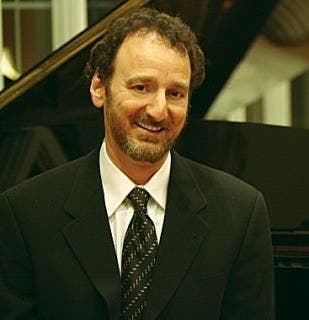
Some meters are just odd. Common musical meters are 2 beats to a measure, or 3, or 4, as in 2/4, 3/4, and 4/4 time. But there are also 5/8, 9/8, and even polyrhythms, 2 different meters played at the same time. On Wednesday, October 26th, 2016, Alan Wasserman, sponsored by the Cecilian Music Club, demonstrated each of these meters, the common ones and the odd ones, during his Music Hour at Freehold Music Center.
To explain a feeling of 2/4 time, Mr. Wasserman performed “Rumania, Rumania,” by Aaron Lebedeff. 4/4 time was exemplified by the “Czardas” by V. Monti. To demonstrate 3/4 time, Phil Carr, composer/arranger, played “Bluesette,” by Toots Thielemans. Then it was time to discuss the odd meters. For an example of a 5/8 piece, a feeling of 3+2, Mr. Wasserman performed “Take 5,” by Dave Brubeck. 9/8 time, 2+2+2=3, was featured in “Blue Rondo a la Turk,” also by Brubeck. He then discussed the “stretching of time,” using themes from opera, and explained compound time – 9/8, forming three groups of 3 – by playing Debussy’s “Clair de Lune.” The finale was Chopin’s “Fantasie-Impromptu,” Opus 66, which uses polyrhythms, 4/4 in the right hand and 3/4 in the left.
Alan Wasserman’s Music Hour brings music lovers of all backgrounds together to discuss and enjoy music. To learn more about this performer/educator, visit his website at alanwassermanpianomusic.com. The Cecilian Music Club, founded in 1883, is an organization of performers, teachers, and music lovers dedicated to the study and performance of classical music. For more information, or to become a member, visit our website at www.cecilianclub.org.