Health & Fitness
5 People In NJ Got Flesh-Eating Bacteria; 1 Died, Report Says
The disease once limited to warmer climates now appears to be infecting people in New Jersey, a medical report says.


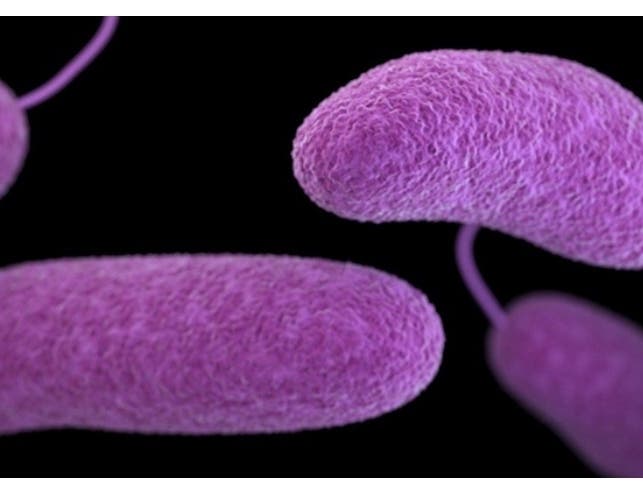
A horrible disease that once was supposedly limited to year-round warm-weather climates now appears to be a threat to New Jersey.
Five people have recently been treated in New Jersey – and one person has died – for what's commonly known as "flesh-eating bacteria," or Vibrio, according to a report published this past week in the Annals of Internal Medicine.
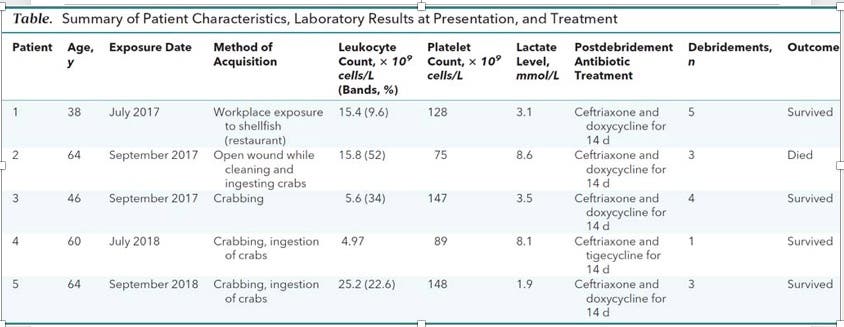
The five people, who were all treated at Cooper University Hospital, ranged in ages between 38 and 64 and contracted the disease between July 2017 and September 2018, Katherine Doktor, one of the study's authors, told Patch.
Find out what's happening in Gloucester Townshipfor free with the latest updates from Patch.
One person contracted the disease while working in a restaurant; another got it while cleaning and ingesting crabs with an open wound. That person, who was 64, died.
The other three got it while crabbing in the Delaware Bay. One of them may have been Angel Perez, 60, of Millville who was crabbing in the waters off Matts Landing in the Maurice River when he began to have severe pain and swelling in his right leg, according to his daughter, Dilena Perez-Dilan.
Find out what's happening in Gloucester Townshipfor free with the latest updates from Patch.
Perez contracted the infection on July 2, 2018 and it spread to his blood, and his forearms were black. He also had blisters and scarring, according to Perez-Dilan. He ultimately had to have his limbs amputated. Read more: More Heartbreaking Details On NJ Man With Flesh-Eating Bacteria
Perez has been in relatively good spirits and now uses a motorized chair to transport himself around (story continues below the video).
Vibrio lives in brackish, high-salt waters with surface temperatures above 55 degrees. The infections occur through breaks in the skin, and intestinal infections occur after consumption of seafood, according to the report issued by the Annals of Internal Medicine.
Either route can lead to bloodstream infections. Mortality from wound and bloodstream infections is high, particularly in patients with health problems, the report says.
Vibrio exists along the southeastern U.S. coast. Cases of the infection have also been reported from the Chesapeake Bay but are rarely reported from the Delaware Bay, which is farther north and slightly cooler. Indeed, there was only one case reported at Cooper in the eight years before 2017.
Here were the New Jersey cases:
- A 38-year-old man with untreated hepatitis B was admitted after vomiting, was diagnosed with a fever and had a tender left calf. He worked at a seafood restaurant in New Jersey but denied exposure to crabs or the Delaware Bay.
- A 64-year-old man with untreated hepatitis C had rapidly worsening pain and swelling of his right hand, two days after cleaning and eating crabs caught in the Delaware Bay. His hand was severely swollen with lesions. He developed further complications and died.
- A 46-year-old man with type 2 diabetes and "morbid obesity" was admitted after having progressive pain, swelling and blistering lesions, two days after suffering minor trauma to his leg while crabbing in the Delaware Bay.
- A 60-year-old man with Parkinson disease developed progressively severe right-leg swelling and pain. He developed shock and respiratory failure. All four limbs required amputation. During the week before admission, he had multiple exposures to crabs, including crabbing in the Delaware Bay, and on the day before admission, he ate a dozen crabs.
- A 64-year-old man with untreated hepatitis C, alcohol abuse and arthritis was admitted one day after eating crabs and lacerating his right leg with a crab trap from the Delaware Bay.
![]()
The report seemed to indicate that climate change was a culprit.
The report says climate change "has resulted in significant increases in sea surface temperatures in many regions of the United States over the past three decades."
"These changes have resulted in longer summer seasons and are associated with alterations in the quantity, distribution, and seasonal windows of bacteria in marine ecosystems, including Vibrio, the report says
As a result of the experience, the researchers believe that clinicians should be aware of the possibility that Vibrio infections are occurring more frequently outside traditional geographic areas.
Get more local news delivered straight to your inbox. Sign up for free Patch newsletters and alerts.