Schools
Camden County College Offers Free Program About Prospect For Peace In The Middle East
The series takes place on Wednesdays in March and April.


To register, click the link below and fill out a registration form, then mail, email or fax the form: Registration form, Center for Civic Leadership and Responsibility
MARCH 8
Islamic Exceptionalism: How the Struggle Over Islamis Reshaping the World
Dr. Shadi Hamid, The Brookings Institution In Islamic Exceptionalism, Brookings Institution scholar and acclaimed author Shadi Hamid offers a novel and provocative argument on how Islam is, in fact, "exceptional" in how it relates to politics, with profound implications for how we understand the future of the Middle East. Divides among citizens aren't just about power but are products of fundamental disagreements over he very nature and purpose of the modern nation state-and thev exing problem of religion's role in public life. Hamid argues for a new understanding of how Islam and Islamism shape politics by examining different models of reckoning with the problem of religion and state, including the terrifying-and alarmingly successful-example of ISIS. With unprecedented access to Islamist activists and leaders across the region, Hamid offers a panoramic and ambitious interpretation of the region's descent into violence. Islamic Exceptionalism is a vital contribution to our understanding of Islam's past and present, and its outsized role in modern politics. We don't have to like it, but we have to understand it-because Islam, as a religion and as an idea, will continue to be a force that shapes not just the region, but the West as well in the decades to come.
Find out what's happening in Gloucester Townshipfor free with the latest updates from Patch.
MARCH 29
The United States and the Middle East Peace Process:Why So Much Process, and So Little Peace?
Dr. Ian Lustick, Department of Political Science,University of Pennsylvania
For at least three and a half decades US foreign policy toward the Arab-Israeli conflict has been organized around "the peace process." Originally the idea was that the process, guided and helped along by American diplomats and their "good offices," would enable Arab and Israeli negotiators to follow a path from conflict to peace. The idea was that the process would lead to somewhere different, somewhere better than the place where it began. But instead of a road leading from here to there, the peace process has been a carousel, in constant movement, but never moving. Fruitless negotiations stagger on, end, then restart under a slightly different name, and with a slowly changing cast of
characters. This lecture will offer specific illustrations of this pattern and offer an explanation for why it continues, despite its failures, but, in a very real sense, because of the knowledge of hose involved in each go-round, that they, too, will fail.
Find out what's happening in Gloucester Townshipfor free with the latest updates from Patch.
APRIL 5
America and Iraq: Past, Present (and Future?)
Dr. Samuel Helfont, International Relations Program,University of Pennsylvania
Iraq has been at the center of American foreign policy for over a quarter century. Will it continue to play such a pivotal role? This talk will discuss the future of Iraq and what that means for the United States.
APRIL 12
Turkey in Turbulence
James Ryan, PhD Candidate, Department of History, University of Pennsylvania
Since the parliamentary elections of June 2015, which dealt a minor setback to Justice and Development Party, Turkey has experienced two of the most tumultuous years in its history. Turkey has become increasingly involved in the Syrian conflict, suffered several of the worst terror attacks the country has ever endured, re-ignited a decades-old conflict with Kurdish separatists in the country's southeast region, and, most recently, survived an attempted coup on July 15, 2016. As the country undergoes a serious transformation in the wake of the coup attempt and with a constitutional referendum on the horizon, this talk will recap the last two years of current events, and offer some preliminary analysis of the ongoing transformation occurring in Turkey.
APRIL 19
The Middle East is Changing
Dr. Brian Spooner, Department of Anthropology, University of Pennsylvania
The Middle East as we know it today was formed by Western intervention, resulting from competition between the British and Russian Empires in the 19th century at the eastern end of the region and by the British and French division of the Ottomanm Empire after the First World War at the Western end. Them"national" boundaries drawn by the Western powers, and the new governments that they supported, are not working any more. The Afghan and Persian governments were overthrown by revolutions in 1978 and 1979; America terminated the Iraqi regime in 2003, and Syria has been in conflict since 2011 as a result of what came to be known as The Arab Spring. The results of Western intervention are being transformed into new social and political currents that derive from the earlier history of the region.
APRIL 26
US-Saudi Arabia Relations in the 21st Century
Dr. Anna Viden, International Relations Program, University of Pennsylvania
The talk will shed light on Saudi Arabia's new more assertive foreign policy and how it affects current and future relations between the United States and Saudi Arabia. It will address the conflict in Syria, the ongoing war in Yemen, arms transfers, and the relationship between the members of OPEC on the one hand, and between OPEC and the West on the other. The talk will also focus on the internal political situation in Saudi Arabia, which of course significantly may impact Saudi Arabia's ability to carry out its ambitious foreign policy and new economic global compact which was announced by the Deputy Crown Prince, Mohammed bin Salman last April.
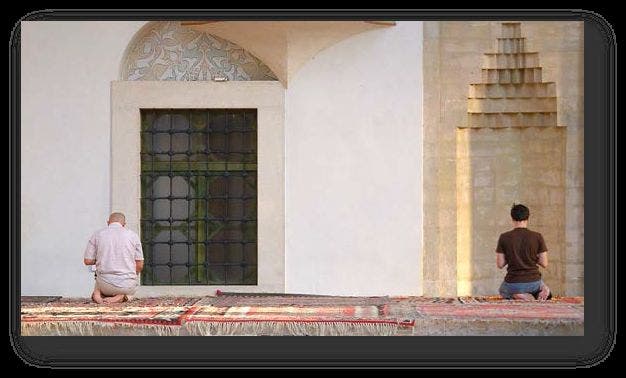
The attached image was provided by Camden County College
Get more local news delivered straight to your inbox. Sign up for free Patch newsletters and alerts.