Health & Fitness
With Heroin And Opiates, Amanda Potopchuk Has Been 'Through Hell And Back'
Amanda Potopchuk is from a New Jersey community where the heroin death rate is very high, and she has been through hell and back.


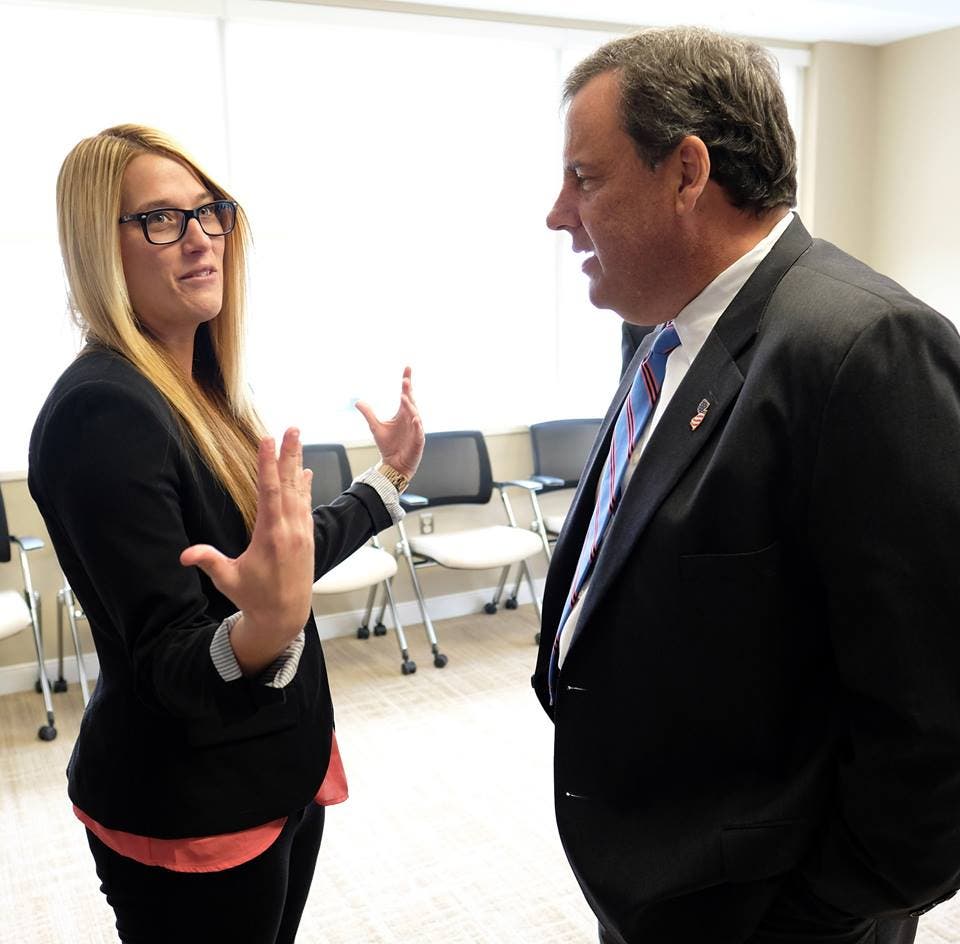
Amanda Potopchuk used heroin for a few months. But it all started with pills.
She had the pills for pain for kidney stones. "I was prescribed the opiates at 15 ," she said.
"I was prescribed them, but my health insurance expired December 2006 when I was 19. I doctor shopped for maybe 4-5 months," Amanda said. "Then it got too expensive."
Find out what's happening in Gloucester Townshipfor free with the latest updates from Patch.
Heroin became a cheaper option. She's from a New Jersey community where the heroin death rate is insanely high. So she's watched people die, one after another, from the drug.
It didn't matter. By May 2007, her family and friends figured out what was going on with her.
Find out what's happening in Gloucester Townshipfor free with the latest updates from Patch.
She got an ultimatum: Get help or get out.
"I make no distinction between legal opiates and heroin - same thing," Amanda said. "Both can be deadly. Both can get you addicted."
Amanda Potopchuk is now in recovery, but it's never easy. Especially for her: She has social anxiety disorder, and she has made it a priority to help others, speaking before groups and even appearing with Gov. Chris Christie recently.
She made an appearance with Christie in Aprll when the governor announced that New Jersey has linked with New York to monitor the flow of prescription drugs as a way to curb opiate addiction and doctor-shopping.
For Amanda, luck has never really been on her side. Long before she graduated from Williamstown High School in 2005 - a town where the heroin death-rate is 25 times the national average - she never used any drugs.
But when she developed health problems, it became easy.
"I used in private for years," she said. "I used in my bedroom or in school."
"I recently read an article where a girl described her drug use," she added. "and it was similar to I think how it was for me."
Taking pills daily became as routine for her, she said, just as brushing her teeth or combing her hair in the morning.
Amanda ultimately got outpatient help three times a week for five hours a day from September to December 2007. Family and friends brought her to outpatient every day.
She was grateful for the help. She popular in school, and had a lot of friends. But she lost a lot of friends because of her addiction.
"Of course I hated it," she said. She was 20 years old, and sitting in a room with people twice her age who, like her, "had been through hell and back."
"I felt like I didn’t belong there," she said.
But she understood why she was there.
"My first instinct was to take a pill," she said. "But at home, everything was locked away. My mom handed me a heating pad and told me to rest up. I started to cry often. I started to get bad anxiety."
"I worried about everything and what people would think of me. I was 20 years old with nothing to show for myself while my friends were away at college."
In May 2008, Amanda turned 21. At that point, she was almost a year without opiates but felt "like nothing."
"I had no car; what little money I had in my name my mom kept track of," she said.
"I decided since I was turning 21, I would get messed up like everyone else," Amanda added. "I figured it wouldn’t be wise to take opiates so I took Xanax. I took a lot of it, and my family found me.
She went to the hospital. They told her family that she wouldn’t get into treatment that night unless she told them she wanted to kill herself.
"I really don’t have much memory of it, but I told them I would kill myself," she said.
Finally, Amanda was in recovery center. It was actually not too bad. After being in there, she realized she didn’t want to be like that anymore.
"I needed to stop feeling sorry myself and pick myself up," she said.
She got work. By October 2008. she was off the Suboxen, which is used to ease recovering addicts off opiates.
To this day, she still sees a therapist once a month. They drug test her every month, and if she fails, her work finds out and she loses her job.
Life has started to become somewhat “normal” for her. She had racked up about $15,000 in credit cards, but no one would help her pay them off so she filed for bankruptcy.
After she filed bankruptcy, Amanda put a down payment on a used SUV and got her first car.
She realized that if she wanted to get anywhere and help people, she needed to go to college. She couldn’t get any loans in her name because she was considered a dependent of my parents.
She went to school, and she's had the same job for five years: caring for an adult male with a developmental disability. In 2012, she finally graduated from Rowan University.
Sometimes she's tried to go out to bars or out with friends and but it was just awkward for her.
"I just felt like I didn’t belong being out," Amanda said. "I liked being at home, hanging out with my dogs and watching foreign T.V shows. I did date but I dated people who I knew it would never go anywhere with."
The Municipal Alliance in Monroe Township, a group that addresses addiction, got her to talk about it, and make appearances - as she did with Christie. They told her she could change a lot of people’s minds about recovery and really help people.
"Life is good," she said. "I have off days just like everyone. I am human. One thing I think I can speak on is not being ashamed about your disease. Some people choose to be out and open and others are more private with it."
"Regardless, no one should be ashamed," she said.
Get more local news delivered straight to your inbox. Sign up for free Patch newsletters and alerts.