Politics & Government
State Critical of Atlantic City Electric's Response to June 23 Storm
ACE's communication with the Board of Public Utilities (BPU) leadership and staff was not as proficient as expected, according to the BPU.


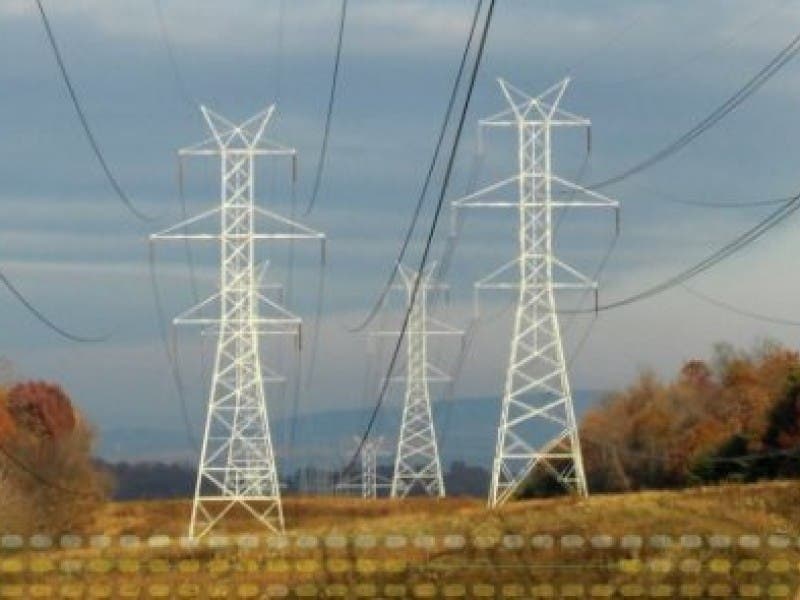
PSE&G took proactive preparedness actions ahead of the June 23 storm that devastated South Jersey, while Atlantic City Electric’s communication with the New Jersey Board of Public Utilities (BPU) leadership and staff was not as proficient as expected, according to a preliminary report on response to the storm released by BPU Thursday afternoon.
“The company should have promptly and clearly conveyed to BPU the problems the company was having with getting good situational awareness, and should have informed local communities more quickly about the extent of damage and the challenges being facing in terms of an extended recovery,” BPU said of Atlantic City Electric’s response in its report. “Communications did eventually improve as the company developed better situational awareness.”
Atlantic City Electric concurred with the report’s finding that better communication was needed.
Find out what's happening in Gloucester Townshipfor free with the latest updates from Patch.
“We have found that an earlier call with public officials will be needed to ensure that all state, county and municipal stakeholders are aware of planned restoration efforts,” Atlantic City Electric spokesman Frank Tedesco said in a response to Patch Thursday evening. “We are also looking into ways to improve coordination with municipalities for faster clean-up of trees, wires and debris so that roads can be cleared quickly, efficiently and most of all, safely. It is our belief that, with these adjustments and with better coordination, our customers will see an improved communication process during any future major weather event.”
For at least 12 hours following the storm, Atlantic City Electric was unable to use its field mobile data terminals for mobile dispatching of workforce and to communicate fluidly with its field crews and personnel. BPU called this ability “particularly critical in a weather impact outage that causes widespread infrastructure damage and requires a major mutual assistance response.”
Find out what's happening in Gloucester Townshipfor free with the latest updates from Patch.
Instead, Atlantic City Electric had to revert to its radios and manual processes to dispatch crews and personnel; collect damage assessment information; and input data into its Outage Management System.
“This process caused inaccuracy in the outage information contained on ACE’s outage webpages and maps,” BPU said in its report. “Additionally, mutual assistance crews were initially hampered by the wireless outage.”
The impact of the storm on Atlantic City Electric customers was greater than that felt during Hurricane Sandy.
The electric company reported 17 transmission circuits and 5 substations were initially out of service; six transmission poles and 135 distribution poles needed to be replaced; thousands of feet of primary and secondary cable needed to be rebuilt; and extensive tree damage need to be repaired.
A total of 280,000 customers were left without power at the peak of the outages, compared to 206,000 who were without power during the 2012 derecho and the 220,000 without power following Sandy.
“The impact was compounded by a less than optimal execution of an initial emergency communications effort by ACE with impacted customers, local officials and BPU Emergency Management staff,” according to the report. “The timing of the storm combined with the wireless outage caused a delay in ACE achieving a solid situational awareness of the full system impact from the weather event.”
It was nearly a week before Atlantic City Electric achieved full restoration, compounded by a weekend storm that caused further outages.
“ACE executed a rapid workforce mobilization escalation and was able to secure a large utility crew and tree crew workforce which increased to close to 1,000 workers by June 25 and continued to ramp up into the weekend,” according to the report. “ACE also offered assistance to the affected County Emergency Management Offices, cooperated with Staff in executing a roadway clearance process, and distributed ice and water in the affected areas.”
The review of the electric company’s post-storm performance will continue, according to Richard S. Mroz, President of the N.J. Board of Public Utilities.
“Continuous improvement to our service is one of Atlantic City Electric’s highest goals,” Tedesco said. “While the storm did not leave a catastrophic amount of personal or homeowner property damage in its wake, it resulted in significant damage to our electric transmission infrastructure and distribution system. After each storm -- once service to all customers has been safely restored -- Atlantic City Electric looks at lessons learned and focuses on ways to improve our restoration process.”
On the morning of June 23, a complex of thunderstorms moved across western Pennsylvania ahead of a cold front, not unlike forecasts seen weekly during the summer months, according to the report.
However, by early afternoon the storm forecast began to change as the system began to reflect more severe characteristics. As the storms bore down, they grew stronger.
As the storms crossed the Delaware River just before 6 p.m., the system produced a macroburst with wind gusts of up to 85 mph in areas of Gloucester and Camden counties. The line of storms with high winds of 50-70 mph continued to move across southern New Jersey and offshore.
This weather system caused extensive utility system damage and outages affecting Verizon Wireless Service, PSE&G Southern Division and ACE. Damage to a major Verizon fiber optic system impacted cellular service in portions of Burlington, Atlantic, Cape May, Salem, Cumberland, Gloucester and Camden counties.
“I have also directed staff to determine the impact that Verizon’s cellular voice and data service outage had on ACE’s response and what redundancy is required going forward,” Mroz said.
“We thank our customers for their patience and understanding,” Tedesco said. “We look forward to working cooperatively with the BPU Staff and other stakeholders to continually improve our process.”
Before the storm, PSE&G was proactive in terms of workforce staging, initiating holding over a percentage of its line construction personnel in each district and activating its Emergency Operation Center.
There were a total of 159,000 outages reported by PSE&G customers, with approximately 146,000 of those customers located in PSE&G’s Southern District. While several of the company’s substations were impacted by the storm, there were not extensive transmission line outages.
The report came one day after President Barack Obama declared that a major disaster exists in New Jersey and approved federal funds to help in the recovery in Atlantic, Burlington, Camden and Gloucester counties.
Get more local news delivered straight to your inbox. Sign up for free Patch newsletters and alerts.