Crime & Safety
Woman Who Claimed To Be Staying In Gloucester Township Apartment Following Superstorm Sandy Charged With Fraud
Authorities say she created false documents concerning apartments in Camden and Gloucester Township in order to collect over $9K from FEMA.


A Camden woman is among five people who were charged criminally with filing fraudulent applications for federal relief funds related to Superstorm Sandy, Attorney General Christopher S. Porrino said Thursday morning.
Lisa Drew, 45, is charged with third-degree theft by deception and fourth-degree unsworn falsification for allegedly creating false documents in relation to a $9,479 FEMA rental assistance claim.
Drew said she was forced to evacuate her apartment in Camden after it was damaged during Superstorm Sandy, and rent a room from her daughter at an apartment complex in Gloucester Township on a month-to-month basis, Porrino said.
Find out what's happening in Gloucester Townshipfor free with the latest updates from Patch.
She submitted a lease for the Camden apartment and rental receipts for the room in Gloucester Township, both of which authorities say were fraudulent.
Authorities allege Drew did not live in either the apartment in Camden or the apartment complex in Gloucester Township.
Find out what's happening in Gloucester Townshipfor free with the latest updates from Patch.
Drew allegedly received four payments from FEMA for rental assistance totaling $9,479.
The new cases were investigated by detectives of the New Jersey Division of Criminal Justice, Investigators of the NJ Office of the State Comptroller, and special agents of the U.S. Department of Homeland Security Office of Inspector General, HUD Office of Inspector General, (and) SBA Office of Inspector General and HHS Office of Inspector General. Deputy Attorneys General Norma R. Evans, William N. Conlow, Valerie A. Noto and Denise Grugan are prosecuting the new defendants under the supervision of Deputy Attorney General Michael A. Monahan, Chief of the Financial & Computer Crimes Bureau, and Deputy Attorney General Mark Kurzawa, Deputy Bureau Chief. They are working with Lt. David Nolan, Sgt. Fred Weidman and Analyst Alison Callery, who are conducting and coordinating the investigations for the Division of Criminal Justice, along with others, including Special Civil Investigators Rita Binn and Jeff Gross, and Investigator John Silver of the NJ Office of the State Comptroller.
Others charged on Thursday include:
- Stephen Hewitt, 64, and his wife, Sharon Hewitt, 60, of Westville, N.J., allegedly filed fraudulent applications following Superstorm Sandy for FEMA assistance and state grants under the Homeowner Resettlement Program (RSP), the Reconstruction, Rehabilitation, Elevation and Mitigation (RREM) Program, and the Sandy Homeowner and Renter Assistance Program (SHRAP). As a result, they received approximately $52,146 in relief funds. The Hewitts allegedly falsely claimed in their applications that a home they own on Mohawk Drive in Little Egg Harbor, N.J., which was damaged by Superstorm Sandy, was their primary residence at the time Sandy struck. It is alleged that, in fact, their primary residence was in Westville, and the Little Egg Harbor home was a summer/vacation home. As a result of the alleged fraudulent applications, the Hewitts received $28,216 from FEMA, a $10,000 RSP grant, and SHRAP funds totaling approximately $13,930. Their RREM application was denied. The Hewitts are charged with third-degree theft by deception and fourth-degree unsworn falsification.
- Mary Eileen Adams, 63, of Glenmoore, Pa., allegedly filed fraudulent applications following Superstorm Sandy for FEMA assistance and state grants under the Homeowner Resettlement Program (RSP) and the Reconstruction, Rehabilitation, Elevation and Mitigation (RREM) Program. As a result, she received approximately $31,949 in relief funds. Adams allegedly falsely claimed in her applications that a home she owns on Atlantic Avenue in Beach Haven, Long Beach Township, N.J., which was damaged by Superstorm Sandy, was her primary residence when Sandy struck. In fact, her primary residence at the time allegedly was in Pennsylvania, and the property in Beach Haven was a rental/vacation property. As a result of the alleged fraudulent applications, she received $5,090 in FEMA rental assistance, a $10,000 RSP grant, and $16,859 in RREM monies. Adams was initially awarded just under $75,000 in RREM grant funds, but additional funds were denied after a check for $16,859 was issued to her because it subsequently was determined that the Beach Haven home was not her primary residence at the time of the storm. Adams is charged with second-degree attempted theft by deception, third-degree theft by deception and fourth-degree unsworn falsification.
- Janie Spataro, 52, of Beachwood, N.J., allegedly filed fraudulent applications following Superstorm Sandy for FEMA assistance and state grants under the Homeowner Resettlement Program (RSP) and the Reconstruction, Rehabilitation, Elevation and Mitigation (RREM) Program. As a result, she received approximately $21,711 in relief funds. Spataro allegedly falsely claimed in her applications that a home she owns on East Long Branch Avenue in Ocean Gate, N.J., which was damaged by Superstorm Sandy, was her primary residence when Sandy struck. In fact, it is alleged that the property in Ocean Gate was a vacation/rental property. As a result of the alleged fraudulent applications, she received $11,711 in FEMA rental and home repair assistance, and a $10,000 RSP grant. Her application for an RREM grant was denied. Spataro is charged with third-degree theft by deception and fourth-degree unsworn falsification.
On Oct. 29, 2012, Superstorm Sandy hit New Jersey, resulting in an unprecedented level of damage. Almost immediately, the affected areas were declared federal disaster areas, making residents eligible for FEMA relief. FEMA grants are provided to repair damaged homes and replace personal property. In addition, rental assistance grants are available for impacted homeowners. FEMA allocates up to $31,900 per applicant for federal disasters. To qualify for FEMA relief, applicants must affirm that the damaged property was their primary residence at the time of the storm.
In addition to the FEMA relief funds, HUD allocated $16 billion in Community Development Block Grant (CDBG) funds for storm victims along the East Coast. New Jersey has received $2.3 billion in CDBG funds for housing-related programs, including $215 million that was allocated for the Homeowner Resettlement Program (RSP) and $1.1 billion that was allocated for the Reconstruction, Rehabilitation, Elevation and Mitigation (RREM) Program.
Under the Resettlement Program, the New Jersey Department of Community Affairs is disbursing grants of $10,000 to encourage homeowners affected by Sandy to remain in the nine counties most seriously impacted by the storm: Atlantic, Bergen, Cape May, Essex, Hudson, Middlesex, Monmouth, Ocean and Union counties. The RREM Program, which is the state’s largest housing recovery program, provides grants to Sandy-impacted homeowners to cover rebuilding costs up to $150,000 that are not funded by insurance, FEMA, U.S. Small Business Administration loans, or other sources.
The Small Business Administration provides low-interest disaster loans to homeowners, renters, businesses of all sizes, and most private nonprofit organizations. SBA disaster loans can be used to repair or replace real estate, personal property, machinery and equipment, and inventory and business assets damaged or destroyed in a declared disaster.
Renters and homeowners may borrow up to $40,000 to repair or replace clothing, furniture, cars or appliances damaged or destroyed in the disaster. Homeowners may apply for a loan of up to $200,000 to replace or repair their primary residence to its pre-disaster condition. Secondary homes or vacation properties are not eligible for these loans, but qualified rental properties may be eligible for assistance under the business loan program.
The Disaster Relief Act provided HHS approximately $760 million in funding for Hurricane Sandy disaster victims. The Administration for Children and Families (ACF) received approximately $577 million in Sandy funding through three grant programs, including the Social Services Block Grant (SSBG) program, which received nearly $475 million to help five states (New York, New Jersey, Connecticut, Rhode Island, and Maryland).
New Jersey received over $226 million for a wide range of social services directly related to the disaster. New Jersey used SSBG funds to develop the Sandy Homeowner/Renter Assistance Program (SHRAP) to assist individuals/families with expenses for housing and other related needs.
Since March 2014, the Attorney General’s Office has filed criminal charges against 76 people for allegedly engaging in this type of fraud, including the five individuals charged on Thursday.
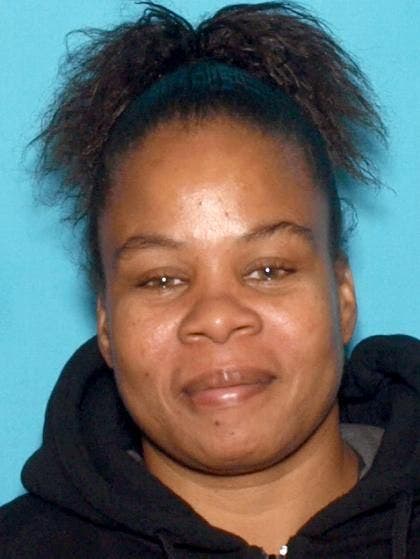
The attached image of Lisa Drew was provided by the Attorney General's Office
Get more local news delivered straight to your inbox. Sign up for free Patch newsletters and alerts.