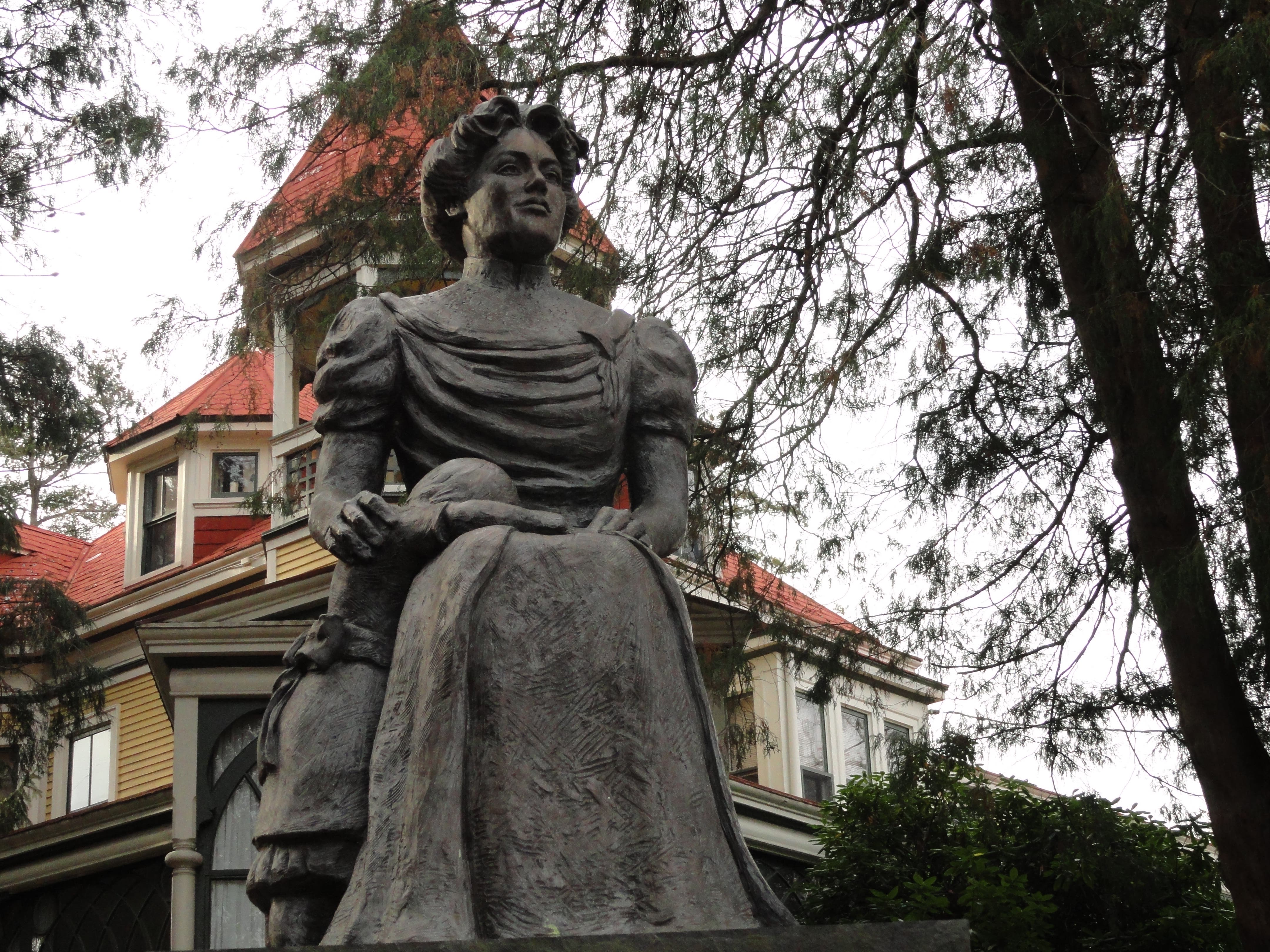
The Bancroft institution for the developmentally disabled has been a friend to children with developmental disabilities for the past 127 years. Based in Haddonfield, it has evolved over the years into a large institution with many facilities, not only in New Jersey, but also in Delaware. Bancroft is a nonprofit organization serving more than 1,000 children and adults in day and residential programs.
It's now in the news for reasons not related to the developmentally disabled. The 18.7-acre campus on Kings Highway at Hopkins Lane is now in play. Bancroft decided 10 years ago that it would be too expensive to renovate its aging campus. It put the property up for sale and the borough has been trying to come up with a redevelopment plan acceptable to the public. But the public has varying opinions of what to do with the property, widely regarded as the last open-space parcel in this 2.5-square-mile, nearly 400-year-old borough.
According to historical records, the school had its humble beginnings in 1883 when Margaret Bancroft, a talented teacher, had a dream that would eventually give these children with disabilities an opportunity to learn the skills that any child without disabilities could easily grasp.
Find out what's happening in Haddonfield-Haddon Townshipfor free with the latest updates from Patch.
The records show she was born in Philadelphia on June 28, 1854, the younger daughter of Harvey and Rebecca Bancroft. She attended the Philadelphia Normal School, and immediately upon graduation began her career as a teacher in Philadelphia. She was fiercely devoted to the children.
In her decision to teach children with learning disabilities, Bancroft boldly announced to the school board around 1880 that she would not return in the fall, according to The Story of Margaret Bancroft: Teacher With A Dream by Sister M. Krista Mote, OSF. Mote wrote that the board members tried to convince her to stay and that one man declared that it was selfish for such a talented teacher not to use her energy to teach children who, in his opinion, were more worthwhile.
Find out what's happening in Haddonfield-Haddon Townshipfor free with the latest updates from Patch.
Bancroft stood firm, the nun wrote in her book. She told the board members of her strong and devoted belief in the ability of every child to learn, and in the responsibility of educators and doctors to find out everything they could about all types of children. "Special children must have special schools," she said, "with well-trained teachers who used materials adapted to those children's capabilities. They should not be abandoned to state institutions where conditions were appallingly inhumane."
In her book, Mote pointed out that someone told Bancroft about Haddonfield, describing it as a quiet and lovely place. When she went to see the town for herself she found that it indeed answered all her needs. Haddonfield offered the perfect combination of the peace and beauty with many modern conveniences that could benefit the school. She did not have enough money to buy a house but was able to rent one on Centre Street.
Mote writes in her book that a good friend of Bancroft’s, Dr. S. Weir Michell, told her of a family in New York who would be willing to pay her if she would accept their daughter as her first boarding student. Bancroft was eager to tell her father, but he forbade her to use her last $4 for the trip to New York. "That four dollars," Poppa said, "must be used to pay for a barrel of flour."
But Bancroft decided to have her own way. At 3 a.m. the next day, she dressed silently in the dark, took the $4 from its hiding place in the iron coffeepot and quietly left the house, Mote recalls in her book. She went to the station and boarded the train for New York and returned later with her first student, whose name was Cora.
In 1898, the school was incorporated as The Bancroft Training School and in 1904 the school was chartered as a stock corporation. The book points out that in a speech at the Woman’s Medical College in Philadelphia in May of 1907, Bancroft regarded every mentally disabled child as a personality. She championed the cause of children with developmental disabilities and fought for their right to adequate care and education until her death, on Jan. 1, 1912, at the age of 57.
Thomas A. Bergbauer is a retired journalist and can be reached tbergbauer@verizon.net.