Neighbor News
Hillsborough Taxes Keep Rising—And We’re Yelling at the Wrong People
This isn't a local problem—it's a system working exactly as designed.

Another year, another school budget, another tax increase in Hillsborough Township.
This time it’s 1.31%.
And like clockwork, the outrage rolls in—directed straight at the local school board.
Find out what's happening in Hillsboroughfor free with the latest updates from Patch.
But here’s the uncomfortable truth:
You’re aiming at the wrong target.
Find out what's happening in Hillsboroughfor free with the latest updates from Patch.
Because this isn’t really about your school board. It’s not even primarily about local spending.
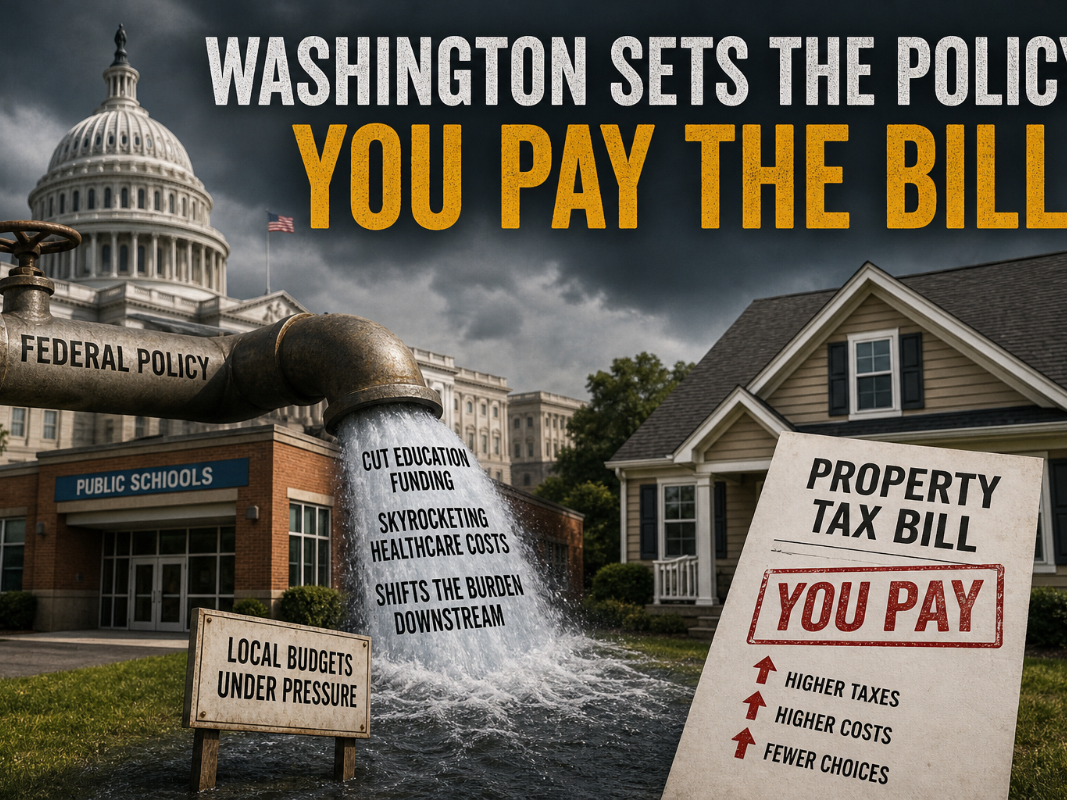
It’s about a system that is built to shift massive costs onto you—and then convince you it’s your town’s fault.
This System Is Designed to Hit Your Property Taxes
Let’s strip this down to what’s actually happening.
Local school districts are being forced to absorb two massive, fast-growing costs they don’t control:
- Healthcare
- Underfunded—and increasingly unstable—education funding
Start with healthcare.
School districts are on the hook for employee health insurance—and those costs keep climbing, year after year.
They don’t control pricing.
They don’t control the system.
They just get the bill.
And when that bill goes up, your property taxes go up.
Every time.
Now look at education funding.
The U.S. Department of Education sends money to states—but nowhere near enough to carry the real cost of public education, especially in states like New Jersey.
And lately, it’s not just insufficient—it’s unstable.
In just the past year:
- At least $12 billion in already-approved education funding has been disrupted or pulled back
- More than $2 billion in active grants were canceled midstream
- And additional proposals have targeted another $10+ billion in cuts across Department of Education programs
Here’s the part that matters most:
Federal funding only accounts for about 15% of total K–12 education spending.
So when Washington cuts funding, it doesn’t eliminate costs.
It shifts them.
Straight down the chain—
from the federal government,
to the state,
to municipalities,
to your property tax bill.
That’s not dysfunction.
That’s design.
And Then We’re Told It’s a “Local Budget Problem”
Every year, we hear the same talking points:
“Be more efficient.”
“Cut spending.”
“Make tough choices.”
But you can’t “tighten your belt” your way out of structural cost drivers.
You can’t out-budget a broken system.
You can slash programs, pack classrooms, and squeeze every dollar out of a district—and it still won’t stop the pressure if healthcare costs keep rising and federal funding remains unstable.
So what happens?
You fight over scraps at the local level while the real drivers stay untouched.
Want Lower Property Taxes? Fix What’s Actually Causing Them
If affordability is the goal—and it should be—then the fight has to move where the costs are actually created.
Single-Payer Healthcare Isn’t a Talking Point—It’s a Tax Issue
Under a universal, single-payer system, school districts wouldn’t be paying for employee healthcare.
That cost shifts out of local budgets entirely.
Think about what that means:
- One of the largest expenses in your school budget disappears
- Budget growth stabilizes
- Property tax pressure drops immediately
No more annual spikes driven by insurance premiums.
No more pretending this is a “local spending problem.”
Yes—you’d pay for it through taxes.
But instead of loading that cost onto property owners—one of the most punishing, least flexible forms of taxation—it gets spread across the entire system.
That’s not radical.
That’s rational.
Federal Education Funding: The Missing Piece No One Talks About
Now layer in the second fix.
If the federal government actually funded education at a meaningful level, states like New Jersey wouldn’t have to lean so heavily on property taxes.
That would mean:
- More aid flowing into districts like Hillsborough
- Less reliance on local tax hikes
- A funding system that doesn’t punish homeowners just for living in a decent school district
Right now, we’ve chosen the opposite.
We’ve chosen a model where your ZIP code and your property value determine how much you personally subsidize public education.
Again—that’s not accidental.
So Let’s Be Honest About What This Is
This isn’t just about a 1.31% increase.
It’s about a system that:
- Offloads national-level costs onto local taxpayers
- Protects the structures driving those costs
- And then tells you to blame your school board when the bill comes due
That’s the game.
And as long as we keep playing it, nothing changes.
Hillsborough Isn’t the Problem—It’s the Example
What’s happening in Hillsborough Township isn’t unique.
It’s happening across New Jersey. Across the country.
Anywhere property taxes are used to plug holes created by federal policy decisions.
So no—this isn’t about one budget vote.
It’s about whether we keep accepting a system that guarantees these increases year after year.
Or whether we start demanding changes where they actually matter.
What You Can Actually Do About It
If this feels bigger than a school board vote, that’s because it is.
The policies driving your property taxes aren’t being set in Hillsborough.
They’re being set in Washington.
And this fall, every seat in the U.S. House of Representatives is on the ballot.
That matters.
Because if you want relief from rising property taxes, you need to start asking better questions of the people running for those seats:
- Do they support universal, single-payer healthcare?
- Do they support restoring and expanding federal education funding to the states?
- Do they have a real plan to reduce the burden on local taxpayers—or are they just going to keep shifting costs downward?
If the answer is no—or if there is no clear answer at all—then nothing changes.
The system stays exactly as it is.
And your property taxes keep going up.
This isn’t about party lines.
It’s about whether the people asking for your vote are willing to fix the policies that are quietly driving your cost of living higher every year.
Because until that changes, neither will your tax bill.
The Bottom Line
You can keep yelling at your school board.
Or you can start holding accountable the people who built the system that keeps raising your taxes.
Because until healthcare policy changes…
Until federal education funding is restored and expanded…
Nothing at the local level is going to fix this.
You don’t have a local tax problem.
You have a federal policy problem that shows up on your local tax bill.