Politics & Government
NJ Gas Tax Holiday: Legislators Call For Aid As Pump Prices Soar
Prices at the pump continue to soar driven by the war in Ukraine, some legislators say a gas tax holiday could help.


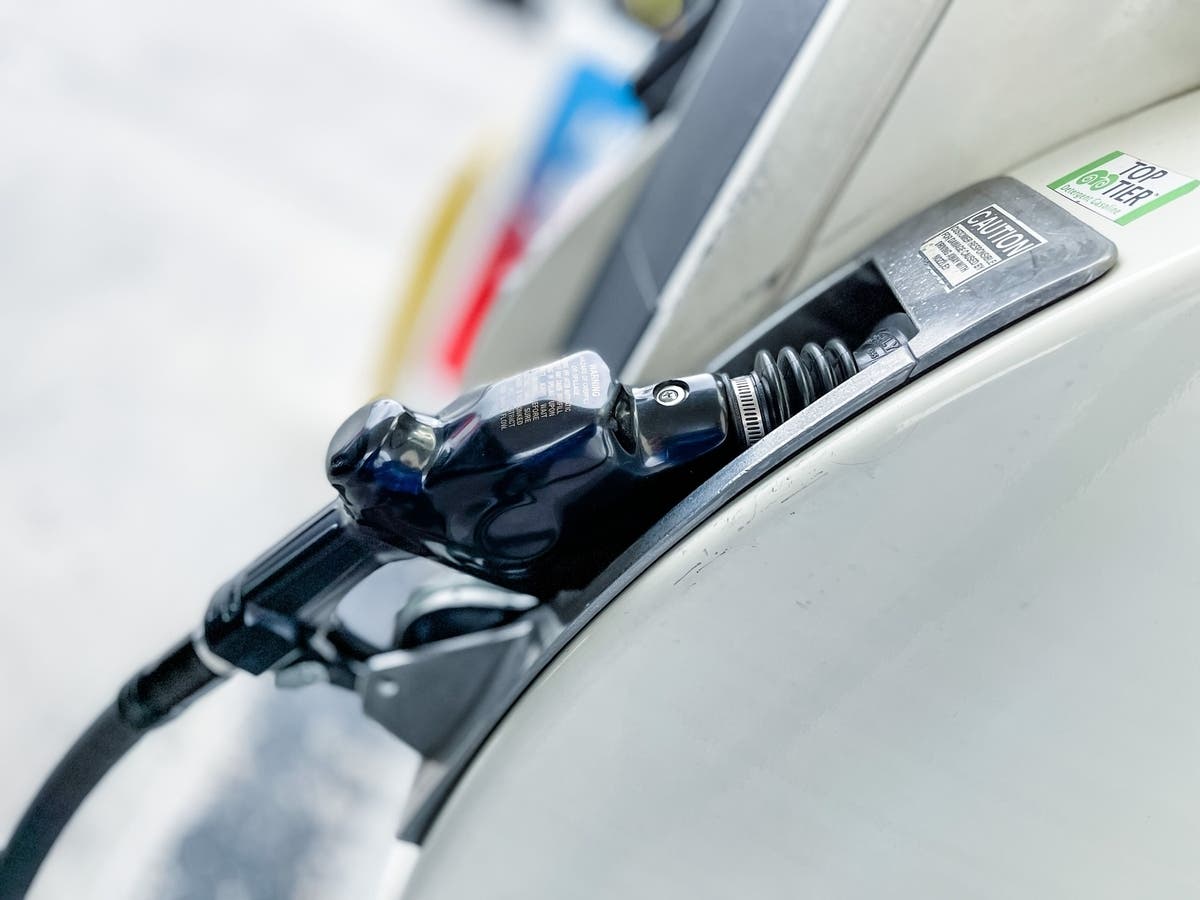
NEW JERSEY — The ol' joke of costing an arm and a leg to fill up your car in New Jersey is sadly no longer a joke. The average price for a gallon of regular gas in New Jersey is now $4.37, which is higher than the national average of $4.31 as of Thursday, according to AAA.
Along with rising gas prices, New Jersey residents also are getting hit with the state's gas tax which is now 42.4 cents per gallon, which went down 8.3 cents this past October.
Some states are taking other actions such as California who is proposing a gas tax holiday while Illinois is looking to freeze the gas tax to help drivers out.
Find out what's happening in Hillsboroughfor free with the latest updates from Patch.
In New Jersey, Gov. Phil Murphy said on Monday in an interview on CNBC's Squawk Box there really isn't much the state can do to keep gas and oil prices down.
"Not a lot, unfortunately. In fact, we have a gas tax set every August. This past August, it went down over 8 cents. It is subject to a formula I’d like to see that continue to go down," said Murphy.
Find out what's happening in Hillsboroughfor free with the latest updates from Patch.
The formula Murphy is referring to gives New Jersey's heads of state little power over it despite their political affiliation. (Learn more about the formula below)
Murphy went on to say that at the federal level he likes the idea of a gas holiday for a period of time and even tapping into reserves.
"That would be another step, I would think that would help here, but we will — no question what we're facing, we'll do everything we can. In our case, probably indirectly as opposed to a whole lot we can do direct," said Murphy.
Congresswoman Mikie Sherill of District 11 also recently spoke on NJ Spotlight calling for a gas tax holiday to lower prices at the pump.
"Suspending the gas tax will give New Jersey families immediate and direct relief," said Sherrill in a tweet.
Congressman Donald Norcross of District 1 also said he is supporting a gas tax.
"We need to help working families with high gas prices now, just like they did through the pandemic," said Norcoss. "That’s why I support a gas tax holiday to save New Jerseyans +60 cents/gallon, and continuing to support highway & transportation trusts through federal aid."
Gas Taxes In NJ: A Quick Background
What is generally called the "gas tax" or the "highway fuels tax" is actually two separate fees on gasoline and diesel fuel - the Motor Fuels tax and the Petroleum Products Gross Receipts (PPGR) tax.
When drivers pay gas taxes in New Jersey, the money goes into its Transportation Trust Fund (TTF), which support repairs and renovations to the state's roadways and bridges.
To make sure that the state has the funds to support these projects, a 2016 law dictates that the gas tax rate must be adjusted to generate roughly $2 billion per year. Outside factors such as federal aid or the state sales tax can help to meet this target goal.
Under state law, officials are required to analyze gas-tax collection figures each year by the middle of August. If revenues aren't high enough to cover all the state's planned road construction projects, an automatic tax hike kicks in. On the other hand, if the rate is creating a surplus, officials have the power to drop the rate.
Under the formula explicitly outlined in the 2016 law, the PPGR tax rate will decrease on Oct. 1, going from 40.2 cents to 31.9 cents for gasoline and from 44.2 cents to 35.9 cents for diesel fuel. When combined with the Motor Fuels Tax, which is fixed at 10.5 cents for gasoline and 13.5 cents for diesel fuel, the total tax rates that motorists will pay for gasoline and diesel fuel will be 42.4 cents and 49.4 cents, respectively.
The rate was last changed in 2020, when the state tried to dig itself out of a financial hole caused by the coronavirus crisis. With less drivers hitting the roads and less fuel being used, officials increased the gasoline tax by 9.3 cents per gallon to help make up the difference.
Bill Looks to Suspend Federal Gas Tax
A bill in Congress to suspend the 18.4-cent-per-gallon federal gas tax until January 2023 is gaining momentum. Democratic governors in Wisconsin, Minnesota, Colorado, New Mexico and Pennsylvania sent a letter to congressional leaders from both parties encouraging them to take up the Gas Price Relief Act as swiftly as possible.
"First, it saves Americans at the pump by suspending the federal gas tax for the rest of the year," the governors wrote. "Money saved at the pump translates into dollars back in consumers' pockets for groceries, childcare, rent, and more."
Republican Gov. Brian Kemp is working with Georgia lawmakers to temporarily suspend that state's fuel tax, and Minnesota Democratic Gov. Tim Walz said he's open to doing the same there.
A federal gas tax holiday would cost the government about $20 billion, the Committee for a Responsible Federal Budget estimates.
In general, state gas taxes pay for the construction, maintenance and repair of roads and bridges.
What can you do?
The simple answer: Drive less. Public transportation is a good option for people who have access to it. Carpooling also helps. And with spring on the horizon, bicycling and walking become more attractive options that carry health benefits.
When you're driving, follow these tips for more efficient fuel consumption:
- Make sure tires are properly inflated.
- Lighten the load by removing heavy things you're hauling around because they're handy (picnic chairs and tables), but not necessary (spare tires and wrenches).
- Use your air conditioning, which is more efficient than driving with the windows down, which creates wind resistance.
- Accelerate gently when taking off.
- Avoid aggressive braking, and slow by taking your foot off the accelerator and coasting to a near stop before braking.
- In traffic, keep a safe distance from the vehicles in front of you, stay alert and anticipate people crossing the street or making turns so you can avoid sudden braking.
- Avoid high speeds.
- Avoid excessive idling.
Also, combine trips when possible; map out routes, especially if they're long; avoid roads with frequent stoplights, intersections and pedestrians; avoid rush hour traffic; and use four-lane highways when you can.
— Additional reporting by Eric Keifer and Beth Dalby
Have a news tip? Email alexis.tarrazi@patch.com.
Get Patch breaking news alerts sent right to your phone with our new app. Download here. Don't miss local and statewide announcements. Sign up for Patch alerts and daily newsletters.
Get more local news delivered straight to your inbox. Sign up for free Patch newsletters and alerts.