Health & Fitness
Gay Men Can Donate Blood: FDA Partially Lifts Ban
Gay and bisexual men can now donate blood if they've abstained from sex for one year, the FDA announced.


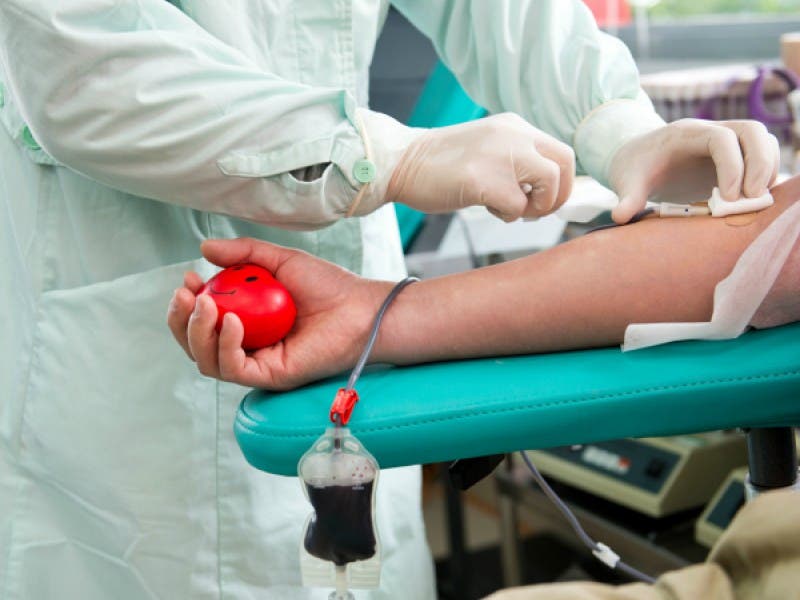
Gay and bisexual men will now be able to donate blood, according to new FDA regulations announced on Monday.
The new guidelines put an end to a 32-year-old FDA ban on blood donations from men who have had sex with men (MSM), which was enacted in 1983 due to concerns about the spread of the HIV virus through blood transfusions.
However, the FDA still recommends a ban on donations from MSM unless they have abstained from sex for at least a year.
Find out what's happening in Hobokenfor free with the latest updates from Patch.
“The FDA expects that the changes made to the recommendations will maintain or improve blood safety with respect to HIV,” the agency stated. “The change with respect to MSM reflects current scientific evidence and better aligns the deferral period with the deferral period for other men and women at increased risk for HIV infection.”
According to the FDA, the new policy comes after conducting years of joint studies with other public health agencies such as the Centers for Disease Control and Prevention, Health Resources and Services Administration, National Institutes of Health, and the Office of the Assistant Secretary for Health.
Find out what's happening in Hobokenfor free with the latest updates from Patch.
In November of 2014, these results were presented to the HHS Advisory Committee for Blood and Tissue Safety and Availability, which recommended that a shorter deferral period was appropriate, according to the FDA.
The blood donation bans for other “behavioral deferrals” such as commercial sex workers and injection drug use will not change at this time, the FDA stated.
BLOOD BANKS EXPRESS SUPPORT
While blood banks typically follow federal guidelines regarding donor qualifications, establishments may voluntarily elect more stringent donor deferral criteria, the FDA states on its website.
However, three of the largest blood donation agencies in the nation - the American Association of Blood Banks (AABB), America’s Blood Centers and the American Red Cross – have released a joint statement in support of the FDA decision.
“AABB, America’s Blood Centers and the Red Cross support the FDA’s decision to change the MSM blood donation policy from a lifetime deferral to a one-year deferral,” the agencies stated. “This policy change aligns the MSM donor deferral period with those for other activities that may pose a similar risk of transfusion-transmissible infections.”
“While the final FDA guidance describes a pathway for previously deferred donors to give blood, it will take several months for blood centers to update their computer systems, modify processes and procedures, train staff and implement these extensive changes,” the statement added. “Our blood banks will work diligently to determine a process for the reinstatement of eligible donors who were deferred under the previous MSM policy; however, it is important to understand that this process will take time.”
STILL STIGMATIZING?
While the new regulations are a step in the right direction, some LGBTQ activists claim that the rules are still stigmatizing and potentially discriminatory.
“It perpetuates the stigma that HIV is a gay disease,” Kelsey Louie, head of the Gay Men’s Health Crisis, told NPR.
“While it’s a step in the right direction toward an ideal policy that reflects the best scientific research, it still falls far short of a fully acceptable solution because it continues to stigmatize gay and bisexual men,” said Human Rights Campaign Government Affairs Director David Stacy.
“It simply cannot be justified in light of current scientific research and updated blood screening technology,” Stacy asserted.
However, others say that the new policy makes sense.
“The gay community and many people view blood donation as a civil right… And I don’t think it is,” Kenrad Nelson, a professor of epidemiology at Johns Hopkins Bloomberg School of Public Health, told NPR.
The one-year abstinence policy matches policies in other counties including the UK, Australia and Japan, according to the BBC.
Video by Inform.com
Get more local news delivered straight to your inbox. Sign up for free Patch newsletters and alerts.