Neighbor News
Trekking the Happy Trails of Hoboken Streets
"We do not remember days; we remember moments."
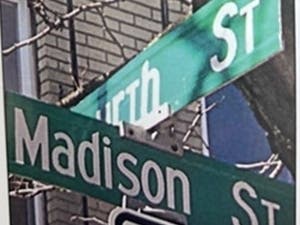
Passing by 400 Madison Street during the holiday season brings me back to old Hoboken family traditions—one’s worth keeping as the candles on the cake grow thicker with time. There were gifts exchanged, hugs shared, and long walks that always seemed to end at 200 Adams Street.
Robert Bates was once a student at Connors School at 201 Monroe Street in the early 1970s, and later one of my Little League baseball teammates with Company K at 525 Jefferson Street. He played alongside his late brother William, as well as Phillip, Carmello, and Rodrigo. The team was good—not because of the coaching, but because of raw talent. Still, we could never quite get the upper hand against the Troys from 330 Jefferson Street.
Hoboken’s streets were largely named after presidents—Madison, Monroe, Jefferson, Jackson—a common practice of the time, influenced by patriotic ideals and the wealthy Stevens family who lived atop the hill east of Willow Avenue. Castle Point Terrace was Hoboken’s version of Beverly Hills.
Find out what's happening in Hobokenfor free with the latest updates from Patch.
Four hundred Madison Street was the home of my grandparents, with Augie’s Barbershop on the first floor. My uncle Jack, who sadly had cerebral palsy, was confined to a wheelchair throughout the 1930s, ’40s, and ’50s. He refused to attend Daniel Kealey School and instead made the corner of Madison Street his place in the world. Over time, Jack became a symbol of the Third Ward, west of Willow, sustained by family and friends who kept his spirits high even as his body slowly declined.
Jimmy Roselli, the club singer on Madison and Third, took a genuine liking to Jack. He made him feel wanted, softly singing Italian songs that lingered in the air. Roselli also kept a watchful, caring eye on the family as they struggled to put cake and coffee on the table while the Depression crushed their small milk business.
Find out what's happening in Hobokenfor free with the latest updates from Patch.
Jack’s brother, my uncle, Nick was five years younger than another rising singer from 4th and Monroe Street—Francis Albert. Francis took a liking to Nick and opened bay windows into the entertainment world while he himself climbed to the top. Nicholas carved his own successful path, managing and promoting talent such as Lindsay Wagner (The Bionic Woman), Jack Jones, and Charo, booking acts in Las Vegas, New York, and London. His biggest break came with Glen Campbell and “Rhinestone Cowboy,” followed by “Gentle on My Mind,” which sold over one million copies by 1991 and went platinum—cementing Glen’s place at the top.
Many old-timers from Madison Street and the surrounding blocks west of Willow—known then as Little Italy—remember a time of deep ethnic divisions. Germans looked down on the Irish, the Irish bristled at the Italians, and even Italians divided themselves between north and south. Politics, jobs, and marriage slowly broke down those walls over the years.
West of Willow always carried a distinct class identity, one softened by Catholic faith and community. Blessings and belonging flowed through the churches, especially during the Depression and wartime years: St. Anne’s, St. Francis, St. Joseph’s, and—standing proudly at 4th and Willow Avenue, without a president’s name—the Gothic Our Lady of Grace.
These parishes provided everything: Mass, weddings, daily prayer, funerals, schools, and, of course, social gatherings—BINGO… I’ll take three cards.
The St. Anne’s Feast each summer united Hobokenites, Hudson County neighbors, and those who had moved away but always found their way back for the sausage and zeppoles. It was—and still is—a true gem of joy, regardless of faith.
U2, the great Irish band, sang “Where the Streets Have No Name.” It’s a glorious song. But for the sake of nostalgia, it’s worth taking a look at Hoboken, where street names meant everything to those of us who grew up there—mine being 12th and Washington.
Special thanks to Marie Giangolano and Delores Donofrio for their insight and motivation.
Dennis Sevano was born and raised in Hoboken. He writes frequently about sports figures and notables in the Mile Square City. He currently resides in Teaneck.