Neighbor News
Lisa McCormick condemns the US Supreme Court's 2022 Dobbs decision
Erasing the right to choose was a radical, illegitimate abuse of the judicial power, says the woman wh nearly defeated Bob Menendez in 2018
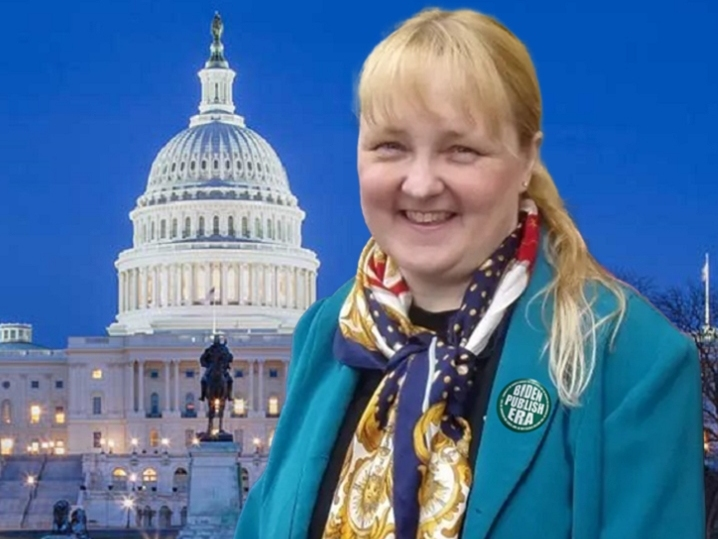
Lisa McCormick issued a strong condemnation of the Supreme Court's 2022 decision in Dobbs v. Jackson Women's Health Organization, citing recent reports from the House Energy and Commerce Committee and 15 women in the US Senate that described the detrimental impact this ruling has had on health care providers and patients across the United States.
The decision overturned the right to choose abortion, opening a door for at least 16 states to subsequently implement abortion bans or 6-week gestational limits. These laws essentially force women to give birth in cases of unwanted pregnancy.
“Republicans hijacked the confirmation process and stole the Supreme Court majority in a terribly undemocratic attempt to appeal to far-right religious zealots who seek to outlaw abortion in the United States," said McCormick. "This malignant trickery follows revelations of scandalous, outrageously illegal behavior by the kangaroo court’s justices, particularly Samuel Alito and Clarence Thomas, making America a country far removed from the freedoms of the 21st century. Democrats need to do something to rectify this situation instead of carping and complaining about it."
Find out what's happening in Jersey Cityfor free with the latest updates from Patch.
The Supreme Court's decision in Dobbs has made it significantly more difficult for health care providers to deliver timely and effective care to pregnant individuals who need abortions, even when it's medically necessary. Large areas of the country now lack access to abortion services, disproportionately affecting people in the South and Midwest.
In a nationwide study published in JAMA, the Journal of the American Medical Association, the total number of self-managed abortions increased by 27,838 in the six months after Dobbs compared with what would have been expected based on pre-Dobbs levels.
Find out what's happening in Jersey Cityfor free with the latest updates from Patch.
The decision has also exacerbated existing disparities in maternal health care, with the greatest declines in abortion rates occurring in states with high levels of poverty and maternal health challenges.
The decision has created a climate of fear among care providers, leading to moral distress, injury, and mental health concerns.
Providers, patients, and third parties are also at risk of prosecution or civil suits for their involvement in private health decisions.
The Dobbs decision has led to widespread infringement of privacy rights, as digital surveillance expands to detect violations of new regulations. This has broad implications for the medical workforce, including physicians, nurses, and pharmacists, necessitating further research to understand the full range of legal, ethical, clinical, and psychological impacts.
The overturning of Roe v. Wade has had cascading and nationwide impacts on women’s access to reproductive health care. Examples include:
- Women with wanted pregnancies are leaving abortion-ban states to seek care. In some emergency situations, patients are being airlifted out.
- New data shows how Florida’s abortion ban is burdening patients across the South, forcing them to travel as far as Illinois for care.
- A ripple effect from abortion bans has increased reproductive health care wait times in some pro-choice states, especially in major cities near airports.
- OB/GYNs and other health care providers are fleeing abortion-ban states, and some medical students are refusing to train in them.
By October 2022, almost 70 clinics across 15 states in the USA stopped offering abortion services, and 26 of these clinics were shut down entirely, eliminating jobs for all staff, even those who do not directly provide abortions.
Since the Dobbs decision eliminated the federal right to abortion, the act of getting an abortion has changed radically in many parts of the United States.
States with total abortion bans had 63 abortion clinics collectively before the Dobbs decision, and all of these were forced to stop providing abortions. Some of these clinics relocated to states where some abortions remain legal, while others closed or limited care to services other than abortion.
Because these states had highly restrictive abortion policies that limited clinic numbers even before Dobbs, those closures did not represent a substantial change in the total number of US abortion clinics: In 2020, the 63 clinics in states that now ban abortion accounted for only 8% of all abortion clinics nationwide.
People are increasingly obtaining care from online-only clinics, self-managing their abortions, and seeking care across state lines, said McCormick, an advocate for democracy and responsible citizenship who garnered nearly 40% of the vote against US Senator Bob Menendez in the 2018 Democratic primary with a grassroots campaign that spent less than $5000.
Despite these changes, brick-and-mortar facilities still account for more than 80% of clinician-provided abortions. New data from the Guttmacher Institute reveals shifts in the number and distribution of brick-and-mortar clinics in recent years, shedding light on the state of abortion access in the United States.
In the remaining 36 states and DC, where abortion was not completely banned, there were 21 more clinics operating in March 2024 than in 2020, a 3% increase. Of these 37 jurisdictions, 14 experienced a net gain in the number of clinics, 12 states and DC experienced a net decrease, and 10 experienced no net change.
McCormick called on Democrats to take more decisive action to rectify the situation and restore the freedoms of the 21st century that have been compromised by the Supreme Court's decision.