Black bear sightings have become a frequent topic of conversation across Hopewell Valley this summer, prompting questions from residents about whether bears are becoming more common, whether they pose a public safety concern, and how local officials respond when one is spotted.
Social media has been filled with photos and firsthand accounts.
Just this week, a sighting in Hopewell with a resident warningothers and asking that they take caution as a large black bear with in gazebo park.
Find out what's happening in Lawrencevillefor free with the latest updates from Patch.
One July 1 Facebook post reported a bear behind the ShopRite near Route 31, generating dozens of comments. Some residents expressed concern about safety, while others urged people to leave the animal alone, noting that black bears are native to New Jersey. Some questioned whether continued residential development is contributing to increased encounters between people and wildlife, though no evidence has been presented locally to confirm that connection.
Find out what's happening in Lawrencevillefor free with the latest updates from Patch.
Hopewell Township did post a reminder on Social media on July 3rd, however many residents did not see the post timely.
To better understand what is happening, I spoke with residents who recently encountered a bear and with local animal control officials about current procedures.
For Irv and Ruby Katz, longtime Hopewell residents of 35 years, seeing a black bear on their property was an unforgettable experience.
Around 7:30 the morning of July 15, 2026, Irv sat outside and saw a black bear walking across their property.
"My first thought was, 'Holy cow, there's a bear,'" Irv recalled.
As the bear calmly walked in his direction, Irv quickly headed inside and called for Ruby.
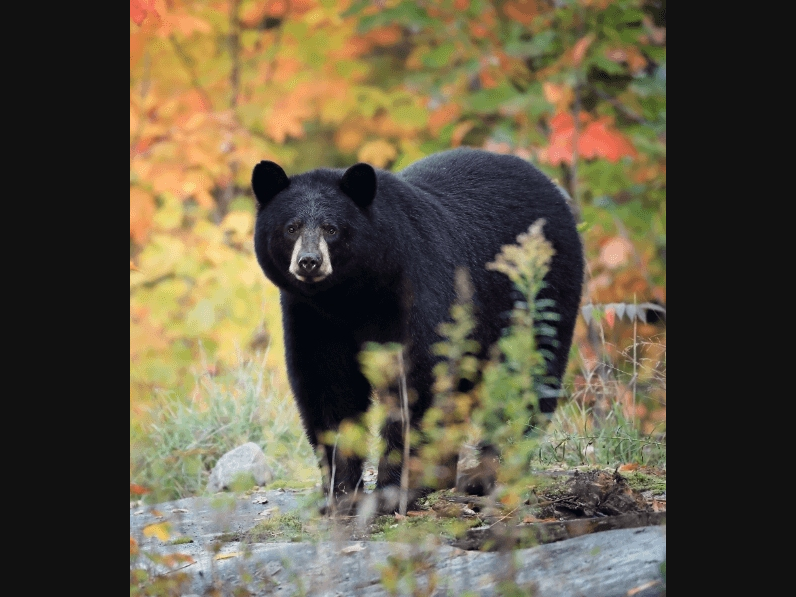
The couple described the bear as healthy-looking, with a lighter-colored snout. It did not appear aggressive or cause any property damage.
Ruby said their first instinct was to respect the animal's space and allow it to continue on its way.
Although it was the closest either had ever been to a bear outside of a zoo, the experience ultimately reinforced their appreciation for the wildlife that surrounds their home.
Their property borders a wooded brook and provides habitat for many species, including deer, wild turkeys, hawks, herons, coyotes, foxes, and numerous smaller animals. Brush piles provide shelter for wildlife, and the couple jokes they abandoned plans for a vegetable garden years ago because the animals always enjoyed it first.
Today, they say they are not fearful.
"We enjoy living with nature," they explained. "Seeing the wildlife is part of what makes this area special."
The couple had also heard reports that bears have now been observed in numerous Mercer County municipalities, leading them to wonder whether sightings are becoming more common.
To understand how these situations are handled, I spoke with Nyesha Foster, a respected local animal control officer serving in Ewing, a neighboring municipality.
Foster explained that there is no single statewide municipal policy for responding to bear sightings. Instead, each municipality follows its own procedures while coordinating with the New Jersey Division of Fish & Wildlife when appropriate.
According to Foster, simply seeing a bear is generally not considered an emergency.
"When residents report a sighting, municipalities often notify New Jersey Fish & Wildlife and may issue public notifications," she explained.
If a bear is causing property damage, behaving aggressively, or creating a public safety concern, municipalities contact New Jersey Fish & Wildlife, whose trained personnel determine the appropriate response.
Foster emphasized that bears are not routinely relocated simply because they are seen in a neighborhood.
Many sightings involve bears searching for easily accessible food sources, including garbage cans, bird feeders, pet food, or open garages.
She noted that while bears spend much of their time in wooded areas, expanding neighborhoods mean people and wildlife increasingly share the same landscape.
Hopewell Township was contacted for comment regarding its procedures for responding to bear sightings but did not provide a response by publication time.
As bear sightings continue to generate discussion throughout the community, wildlife officials consistently encourage residents to secure garbage, remove bird feeders when bears are active, avoid intentionally feeding wildlife, and give bears plenty of space if one is encountered.
For now, the recent sightings appear to reflect encounters with black bears moving through the area rather than reports of aggressive behavior. However, the conversations they have sparked highlight the balance many communities continue to navigate as people and wildlife increasingly occupy the same spaces.
Oregonmetro.gov warns: This black bear lives at the Oregon Zoo. If you are close enough to take a picture like this of a bear in the wild, that is too close.
Rita Katz snapped her photo from her backyard. Are bears in Hopewell too close? I'll let you be the judge.
Related Article from Mercer Me from July 2025:
To reduce the likelihood of attracting bears, residents should:
- Keep all entryways closed and secure.
- Bring pets indoors.
- Remove outdoor food and water sources, including pet bowls and bird feeders.
- Clean barbecue grills and remove food residue.
- Store garbage in closed, secure containers.
Important Bear Safety Reminders:
- Never feed or approach a bear.
- Remain calm and make the bear aware of your presence by speaking firmly, singing, or clapping.
- Do not make direct eye contact; slowly back away instead of running.
- If a bear enters your home, create an escape route by propping doors open.
- To deter a bear, make loud noises (yelling, banging pots, air horns) and make yourself appear larger by waving your arms.
- Bears may huff, snap their jaws, or swat the ground as a warning. Back away slowly if this occurs.
- Standing on hind legs or approaching may be a sign the bear is trying to see or smell better—not necessarily aggression.
- If cornered or trying to steal food, a bear may bluff charge. Stand your ground, then slowly retreat.
- If a bear does not leave, move to a secure location and call authorities.
- In the rare event of an attack, fight back.
Families in areas with frequent bear activity are encouraged to create a “Bear Plan” for children, including tools like whistles, air horns, and predetermined escape routes.
To report bear sightings or concerns, contact the DEP’s 24-hour hotline at 1-877-WARN-DEP (1-877-927-6337).
More information is available from the NJDEP Division of Fish and Wildlife at: https://dep.nj.gov/newsrel/25_0013
Local Animal Control Contacts:
- Weekdays (M–F, 8:30 a.m.–4:30 p.m.): (609) 537-0278
- Nights & Weekends: Hopewell Township Police Non-Emergency Line at (609) 737-3100