Neighbor News
Statement: NJ Coalition for Battered Women Regarding the Domestic Violence Murders of Heidi Errickson and Fred Errickson, Jr.
Statement by New Jersey Coalition for Battered Women Regarding the Domestic Violence Murders of Heidi Errickson and Fred Errickson, Jr.
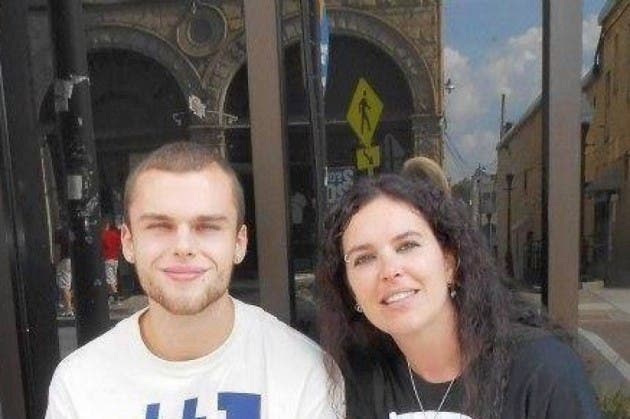
We are deeply saddened by the domestic violence murders of Heidi Errickson and her brother, Fred Errickson, Jr. and extend our sympathies to their families and everyone impacted by this horrific tragedy. When lives are taken by such heinous acts of abuse, individuals, families and entire communities are forever altered – domestic violence disrupts the futures of so many New Jerseyans.
On average, three women are killed by their intimate partners every day in the United States. Domestic Violence occurs across socio-economic, ethnic, racial, and educational backgrounds – anyone can be a victim. In fact, 1 in 3 will be in their lifetimes. For the past 10 years in New Jersey, there have been at least 38 domestic violence homicides reported in the annual New Jersey State Police Uniform Crime Reports. This number is even higher when adding domestic violence murder-suicides throughout the state, which is not captured in the above report. It also doesn’t reflect the untold victims and their children who suffer silently behind closed doors. We must do more to address the serious issue of domestic violence in our state.
We can start by identifying and naming all cases that involve domestic violence clearly as domestic violence. This is a shared responsibility that includes our judicial system, the media and our communities. Domestic violence is not an isolated incident; murder is the final act of power and control over the victim. Murder-suicides, in particular, are the ultimate form of control and occur most often when a victim has decided to leave the relationship. What’s more disturbing is that the access to firearms increases the rate of domestic violence related deaths. Victims whose abusers have access to firearms are five times more likely to be murdered by them (Johns Hopkins University Center for Gun Policy and Research). The presence of high-powered weapons further increases the fatality risk to bystanders – including children, other family members and responding police. In this case, the alleged perpetrator, John Reno, shot and killed his fiancé’s brother before killing her and then – after a standoff with police – turning the gun on himself.
Find out what's happening in Lawrencevillefor free with the latest updates from Patch.
It’s important to note that while there are many warning signs of abuse taking place in a relationship (excessive jealously, forced isolation from friends and family, and even relationships that get too serious too quickly), abusers can often hide their abuse while keeping victims in fear, which can stop them from seeking help or leaving. This is why we must take this public health issue seriously and call it what it is: domestic violence.
In light of these facts and statistics, the Coalition encourages media to name domestic violence in their coverage of these homicides. The media has a vast capacity to educate New Jerseyans on the dangers of domestic violence while accurately reporting on these crimes. In this way, the media plays a critical role in breaking the silence around social issues such as domestic violence – and that can help keep victims safe. When the coverage of homicides accurately reflects the experience of victims and the dynamics of domestic violence, the media helps people learn the steps they or someone they know can take to stop domestic violence on a personal, organizational, policy and community level.
Find out what's happening in Lawrencevillefor free with the latest updates from Patch.
Conversely, without understanding homicides in the context of domestic violence, media reports can perpetuate the myths about domestic violence, such as it is caused by mental illness or was the result of a “troubled relationship” or an argument. Reporting these crimes through the lens of domestic violence, rather than just reporting it as a tragedy, enables the community to understand it as a public health and public safety concern.
Murder makes for dramatic headlines, but the real story is in the seemingly minor events that occur leading up to this extreme form of domestic violence. How might they now be identified as warning signs that could lead to more dangerous, and potentially deadly, violence later on? How can we use this information and the information learned from other near-fatal domestic violence cases to prevent future homicides? We all have a stake in creating safer communities for our families and future generations.
So what can we do? How do we use this domestic violence murder-suicide to strengthen, rather than weaken everyone’s safety and our relationships with one another?
Again, the media can name it for what it is – domestic violence. In this case, we encourage the media to follow up on this tragedy and address domestic violence, which was missing from the initial coverage. Journalists can utilize guides on covering domestic violence stories, such as those by Jane Doe, Inc. in Massachusetts and the Rhode Island Coalition Against Domestic Violence.
Friends, neighbors, and other bystanders can learn the warning signs of domestic violence and the resources that can help victims and their families. In NJ, we have thirty member programs dedicated to providing services for victims of domestic violence and their children. Services include 24-hour hotline support (800-572-SAFE [7233]), emergency shelter, counseling, support groups, therapy for children, legal guidance and more. Visit www.njcbw.org for more information.
In addition to the critical, life-changing services the Coalition’s member programs provide, they can, in conjunction with law enforcement and the courts, research and implement Domestic Violence Homicide Reduction strategies such as High Risk Domestic Violence Response Teams.
We must all shine light on the dangers victims face in their own homes and behind closed doors as we simultaneously facilitate conversations about healthy relationships. Domestic violence is a serious, widespread public health issue, but with a coordinated community response it doesn’t have to be. We can prevent tragedies such as Heidi’s murder from ever happening. Let’s end domestic violence in New Jersey.
###
Photo Credit: Gabe Vallie (son of Heidi Errickson) and Heidi Errickson (Courtesy of the Beard Family)