Politics & Government
Gas Tax Increase Will Be Trouble For NJ Budget, Credit Rating: Moody's
Moody's says N.J.'s 23-cent gas tax hike deal will blow a big hole in the budget that will make you suffer in more ways than you think.


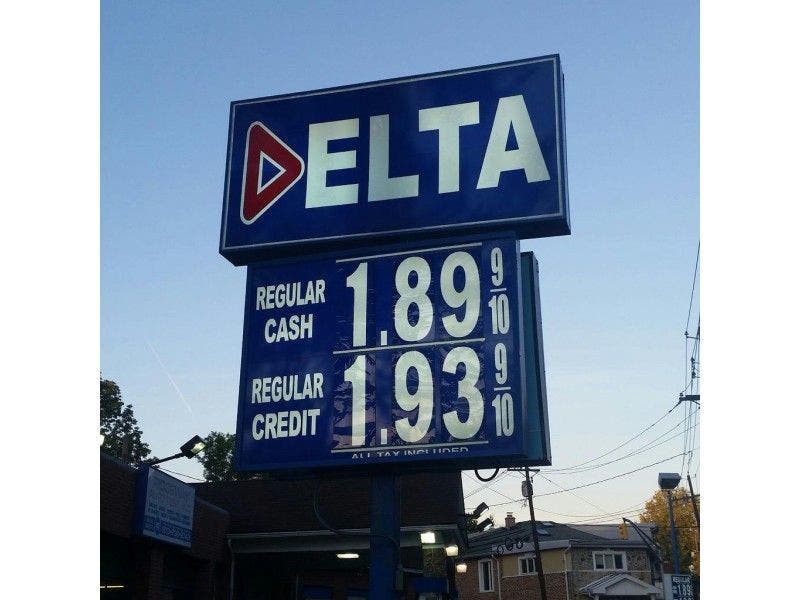
Moody's, the nation's leading investor relations service, says New Jersey's 23-cent gas tax hike deal will blow a big hole in the state's budget that will make you suffer in more ways than you think.
In a report called "New Jersey’s Tax Plan Has Negative Implications for State’s General Fund," Moody's said the 23-cent gas tax increase is offset by various tax reductions that will strain the state's operating budget.
The report suggested the plan could also impact the state's credit rating.
Find out what's happening in Madisonfor free with the latest updates from Patch.
"The net effect of the revenue package is credit negative because it will strain the state’s operating budget amid rapidly rising pension contributions and below-average revenue growth," according to the report.
The state Legislature approved a plan Friday to raise gas taxes by 23 cents, a Gov. Chris Christie-backed plan that is supposed to take effect by Nov. 1 once the governor signs it. The state Senate voted 24-14 to approve the plan, while the state Assembly voted 44-27 to approve it, with nine not voting, soon afterward.
Find out what's happening in Madisonfor free with the latest updates from Patch.
Read more: N.J. Gas Tax Hike: What You Need To Know
Moody's noted the the gas tax increase will raise approximately $1.2 billion, but these revenues will be restricted to transportation projects.
"The other tax changes will reduce state revenues available for costs such as education, human services and pensions, resulting in a net loss to the general fund of about $1 billion by 2021," according to the report.
As part of the plan, the sales tax will be reduced by one-third of a penny over two years. On Jan. 1, 2017, the sales tax will go from 7 percent to 6.875 percent, followed by a decrease to 6.625 percent on Jan. 1, 2018, for a total reduction of 0.375 percent.
The Earned Income Tax Credit will be increased from 30 percent to 35 percent. Veterans will gain a $3,000 personal tax exemption, retirees will pay less in taxes on their retirement income, and the estate tax will be phased out over two years, eliminating a duplicative tax that can fall on middle class families.
Moody's says the state plans to borrow against the new gas tax revenues, "thereby increasing its debt load and fixed costs."
Moody's said these losses will be partially offset by the likely return to the general fund of $350 million of sales taxes that are currently earmarked for debt service on transportation-related projects.
"Once the gas tax increases, there will be sufficient transportation-dedicated revenues to free up the $350 million of sales taxes for general operating purposes," according to the report.
However, the state will have a $1 billion net annual loss in future years, equivalent to 2.9 percent of current revenues, which will "worsen the state’s existing budget challenges."
"Rapid pension cost growth and below-average revenue growth are driving the state’s current budget challenges," according to the report. "Based on the state’s projections, pension contributions will increase annually by an average of $711 million through fiscal 2023, approximately 1.9 percent of revenues"
The plan will also:
- Phase out the estate tax over the next 15 months, replacing the current $675,000 threshold with a $2 million exclusion after Jan. 1, 2017 and eliminating the estate tax altogether as of Jan. 1, 2018.
- Increase the New Jersey gross income tax exclusion on pension and retirement income over four years to $100,000 for joint filers, $75,000 for individuals and $50,000 for married/filing separately.
Moody's estimates the state’s revenues will have to increase approximately 4 percent annually to balance pension and other spending growth.
"Assuming the state takes no other actions to balance the net loss of $1 billion, revenues would have to grow 5 percent annually to balance pension and other spending growth," according to the report. "This growth target will be particularly challenging given the state’s below-average revenue growth of 3 percent
annually since the recession."
Patch file photo
Get more local news delivered straight to your inbox. Sign up for free Patch newsletters and alerts.