When Gina Neuman and Lauren Fuchs, science and math
teachers at St. Vincent Martyr’s Middle School, were asked to attend a two week
workshop this past summer called STEM (Science, Technology, Engineering and
Math) "they did not hesitate” says Sister Noreen Holly, Principal of St.
Vincent Martyr School!
STEM is one more example of how Catholic schools
deliver cutting edge technologies and techniques to learning, in response to a
national call for improving America’s future competitiveness in a global
economy.
Ed Peterson, education director for the STEM Education
Office at Picatinny Arsenal recently stated “In surveying engineers, the
question was asked, ‘What triggered you to develop a career in engineering? And
the answers were over 90 percent the same. It came down to ‘Mister or Misses So
and So, my X-grade teacher in school’; and we realized that the teacher is such
an important link in the chain in motivating students”.
Find out what's happening in Madisonfor free with the latest updates from Patch.
St. Vincent Martyr School is proud to be among the eight
schools from the Diocese of Paterson, to pilot STEM in grades 6 to 8. Partnered
with the Department of Defense Ordinance Technology Consortium (DOTC) of
Picatinny Arsenal and Stevens Institute, STEM is designed to provide students
with problem-solving skills that incorporate proven instructional strategies
from industry and higher level education through technology and hands-on collaboration.
On Wednesday, September 12th, Mary Baier,
Deputy Superintendent of the Diocese of Paterson, visited the Middle School, to
motivate and encourage students on how and why it is important to become
innovative thinkers of the 21st century.
Find out what's happening in Madisonfor free with the latest updates from Patch.
In an effort to demonstrate STEM to their peers, and as
part of the pilot program, the students were assigned an exercise with specific
parameters that included the integration of Science, Technology, Engineering
and Math. The objective was to design and construct a packaging system that
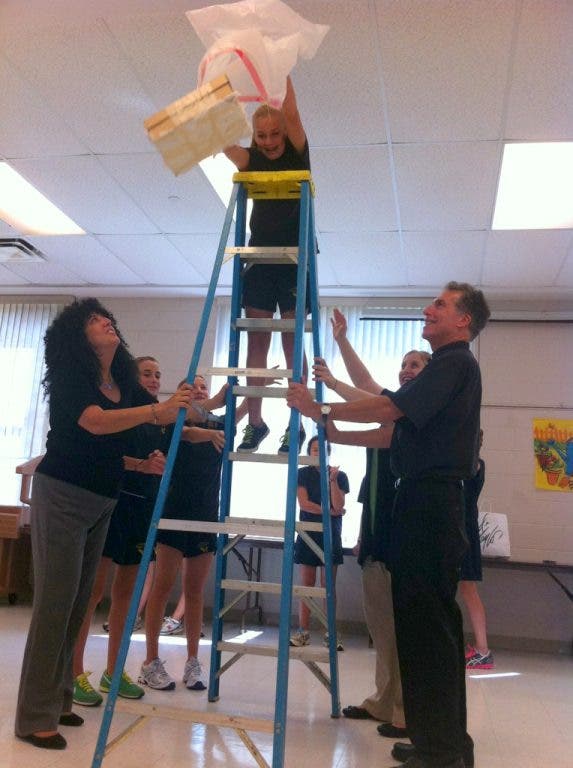
would protect an egg from a drop that did not exceed eight feet. Students worked in groups to develop the packaging
and had to state the reason for the choice of their packaging. They were given
limited materials and time. The
packaging had to be lightweight and cost effective. The criteria changed at
various grade levels. Students utilized the engineering design process to
complete the task; including the formula for velocity. Data was recorded on
spreadsheets and comparisons were made among the groups. Students then observed
each other’s data and determinations were made on the best packaging. The presentation stretched the students’
minds and their finished products demonstrated their power to become creative
and innovative, to think critically and logically, to identify and solve
problems, to effectively collaborate and communicate, and to become productive
21st century citizens!
The STEM Education Coalition works aggressively to raise
awareness in Congress, the Administration, and other organizations about the
critical role that STEM education plays in enabling the U.S. to remain the
economic and technological leader of the global marketplace of the 21st
century. It represents all sectors of
the technological workforce – from knowledge workers, to educators, to
scientists, engineers, and technicians. The Coalition advocates for
strengthening of STEM-related programs for educators and students and increased
federal investments in STEM education.
They also support federal investments in basic scientific research to
inspire generations of young people to pursue careers in STEM fields. Members of the STEM Coalition believe that
our nation must improve the way our students learn science, mathematics,
technology and engineering and that the business, education and STEM
communities must work together to achieve this goal.
When Gina Neuman and Lauren Fuchs, science and math
teachers at St. Vincent Martyr’s Middle School, were asked to attend a two week
workshop this past summer called STEM (Science, Technology, Engineering and
Math) "they did not hesitate” says Sister Noreen Holly, Principal of St.
Vincent Martyr School!
STEM is one more example of how Catholic schools
deliver cutting edge technologies and techniques to learning, in response to a
national call for improving America’s future competitiveness in a global
economy.
Ed Peterson, education director for the STEM Education
Office at Picatinny Arsenal recently stated “In surveying engineers, the
question was asked, ‘What triggered you to develop a career in engineering? And
the answers were over 90 percent the same. It came down to ‘Mister or Misses So
and So, my X-grade teacher in school’; and we realized that the teacher is such
an important link in the chain in motivating students”.
St. Vincent Martyr School is proud to be among the eight
schools from the Diocese of Paterson, to pilot STEM in grades 6 to 8. Partnered
with the Department of Defense Ordinance Technology Consortium (DOTC) of
Picatinny Arsenal and Stevens Institute, STEM is designed to provide students
with problem-solving skills that incorporate proven instructional strategies
from industry and higher level education through technology and hands-on collaboration.
On Wednesday, September 12th, Mary Baier,
Deputy Superintendent of the Diocese of Paterson, visited the Middle School, to
motivate and encourage students on how and why it is important to become
innovative thinkers of the 21st century.
In an effort to demonstrate STEM to their peers, and as
part of the pilot program, the students were assigned an exercise with specific
parameters that included the integration of Science, Technology, Engineering
and Math. The objective was to design and construct a packaging system that
would protect an egg from a drop that did not exceed eight feet. Students worked in groups to develop the packaging
and had to state the reason for the choice of their packaging. They were given
limited materials and time. The
packaging had to be lightweight and cost effective. The criteria changed at
various grade levels. Students utilized the engineering design process to
complete the task; including the formula for velocity. Data was recorded on
spreadsheets and comparisons were made among the groups. Students then observed
each other’s data and determinations were made on the best packaging. The presentation stretched the students’
minds and their finished products demonstrated their power to become creative
and innovative, to think critically and logically, to identify and solve
problems, to effectively collaborate and communicate, and to become productive
21st century citizens!
The STEM Education Coalition works aggressively to raise
awareness in Congress, the Administration, and other organizations about the
critical role that STEM education plays in enabling the U.S. to remain the
economic and technological leader of the global marketplace of the 21st
century. It represents all sectors of
the technological workforce – from knowledge workers, to educators, to
scientists, engineers, and technicians. The Coalition advocates for
strengthening of STEM-related programs for educators and students and increased
federal investments in STEM education.
They also support federal investments in basic scientific research to
inspire generations of young people to pursue careers in STEM fields. Members of the STEM Coalition believe that
our nation must improve the way our students learn science, mathematics,
technology and engineering and that the business, education and STEM
communities must work together to achieve this goal.