Neighbor News
Byrne and Hoover Support Pay-as-You-Go Funding for Utility Capital Improvements
Borough council Candidates Support Borough Ordinance Opposed by Opponents
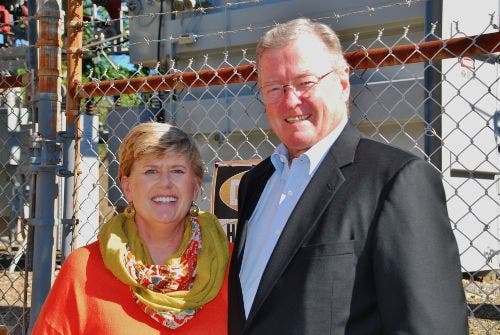
On June 13 the Madison Borough Council voted 4 – 2, approving an ordinance to set aside $300,000 a year from electric utility surplus. These funds will create a capital reserve to pay for future replacement of the Borough’s electric utility transformers. This is in addition to the approximately $400,000 in electric utility surplus to be applied annually for other utility capital needs. The vote for this ordinance was split along party lines with all Democrats voting in favor of the ordinance and the two Republicans members voting against it.
In a joint prepared statement, Democratic candidates for Madison Borough Council, Maureen Byrne and John Hoover, express their support for the ordinance.
The candidates stated, “This is a good, fiscally responsible ordinance. The cost to replace a transformer bank is about $3 million, and the utility owns four transformer banks, so how the borough chooses to finance transformer replacements is an important decision. Clearly, the transformer banks cannot be financed out of current operating funds. Either the utility will have to put aside money every year in anticipation of the purchases or the money will have to be raised by bonding at the time of the purchase.”
Find out what's happening in Madisonfor free with the latest updates from Patch.
Hoover explained, “The need to address future transformer bank replacements was among the conclusions that came out of the borough’s recent Strategic Planning process. The Strategic Planning group that focused on Madison’s utilities concluded that the electric utility, although very reliable, was not allocating sufficient funds to ensure its future reliability. As to the magnitude of the required investment, the group provided a broad range of estimates as to how much in additional funds should be set aside annually.
In order to validate the utility’s capital requirement, the borough engaged a consultant with expertise in forecasting electric utility capital requirements. The consultant recommended that the utility allocate approximately $700,000 per year to capital – $400,000 to keep the utility reliable and an additional $300,000 to be put aside in anticipation of replacing one of the transformer banks every 10 years. This is a textbook example of a ‘pay-as-you-go’ funding strategy.”
Find out what's happening in Madisonfor free with the latest updates from Patch.
Byrne continued, “Madison government has had a long, bipartisan tradition – going back to at least the 1980’s – of maintaining our road, sewer, water, and electrical infrastructure on a pay-as-you-go basis. Bonding has been reserved for substantial, one-time projects such as the building of the new Public Safety complex and the purchase of the 49 acres for the Madison Recreation Complex. Mayor Gary Ruckelshaus often reminded voters that during his administration, the Borough Council funded all infrastructure projects from the utility surplus, without ever having to issue a bond.
The water utility provides a good example of how pay as you go works in practice. It was determined several years ago that the water meters in the borough would soon need replacing. Because the cost is approximately $1 million it was not possible to fund it out of current revenue. The choice was either to begin reserving funds over time or bond for the meters. The council endorsed the former option and as a result within five years adequate funding was available for replacements.”
The candidates stated, “We believe that pay-as-you-go is the most fiscally prudent approach to address the recurring infrastructure needs of our electric utility. It is also the lowest cost approach. If the borough issued a long-term bond (approximately equal in maturity to the expected service time for a new transformer bank) – even at current historically low interest rates – the interest expense over the life of the bond would approximately equal the principle amount effectively doubling the total cost of the transformer bank.
The borough is already spending over $2 million a year on debt service (interest and principal). If we continue to add debt, we reduce future financing options and could place our AAA credit rating in serious jeopardy. The ordinance establishing the capital reserve is a good one reflective of prudent financial planning, and we support it without reservation.”