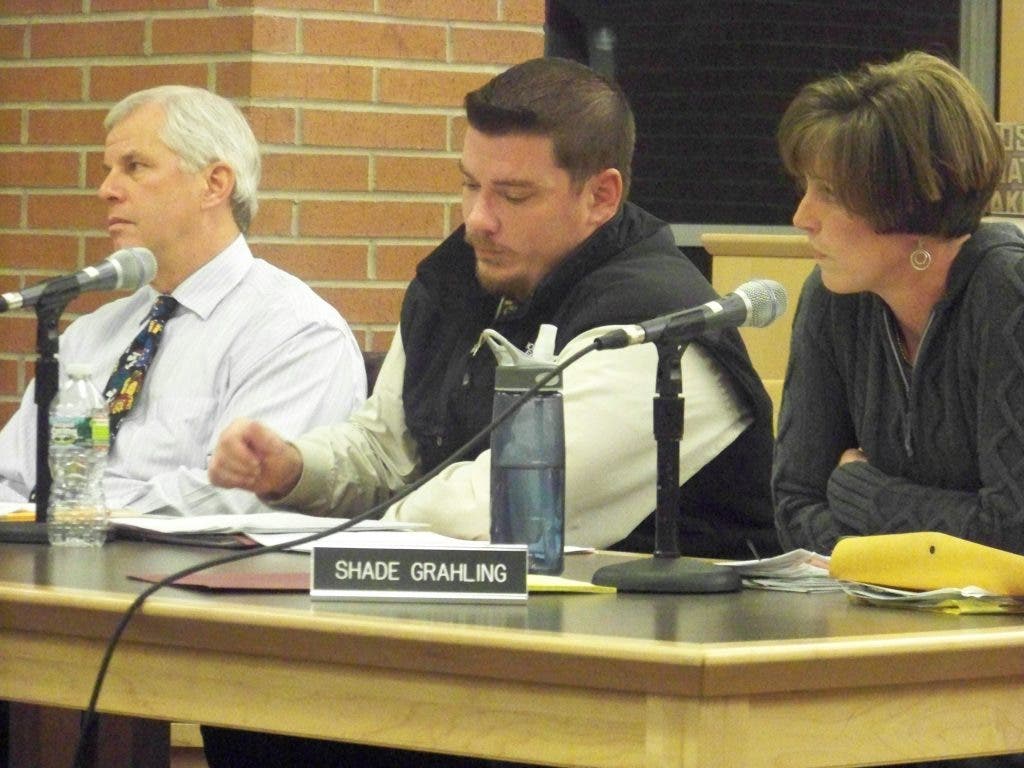
The is looking at several curriculum changes and enhancements. Some are expected to begin with the New Year, while others may not become implemented in the district until further into the future.
Board member Shade Grahling reported on the planned and potential changes at Thursday night’s Board of Education meeting at .
The first—and earliest expected—curriculum change will come with the Spanish curriculum for grades 3-5 in January. The district has purchased Rosetta Stone Spanish language software that students and parents can use both inside and outside of a school setting. The cost for the program, which meets state foreign language standards, is approximated at about $40,000, which is less than the cost of hiring an additional teacher for this purpose.
Find out what's happening in Madisonfor free with the latest updates from Patch.
Grahling and others, including , stated that the program could potentially be expanded to include students in kindergarten through second grade, and that software in other languages—including English for ESL students—is available if the district wishes to move forward with the idea.
“I think in the future once we get used to it, if it’s something we want to keep and continue to use, we might think about piloting French, Mandarin or another (language),” said Nittel.
Find out what's happening in Madisonfor free with the latest updates from Patch.
The curriculum committee has also discussed switching the sequence of science instruction for the district’s high school students. The proposed change would be to introduce physics to future classes before teaching them chemistry and biology in their sophomore and junior years, respectively.
“It’s much better foundational knowledge for all the sciences to begin with physics as freshmen,” said Grahling.
For older students looking to take AP Physics, Grahling stated that under this new system, the district would have the opportunity to offer two levels of the course. Students in both levels would be able to take the course together, with differentiated instruction for students in the class based on the level of the course they are taking.
“It would be possible to differentiate instruction for students working in (physics course) B instead of C, or students working in (course) C instead of B,” Grahling said.
On another science-related note, the district is also currently considering offering a robotics course at the high school for interested students. This comes after parent questions caused further investigation into the matter. The class, which is under the working title of “Engineering and Robotics” to broaden appeal to students, could be available as a rotating elective in time for the 2013-14 school year.