Arts & Entertainment
How to Write a Memoir: Authors Host Panel at Libary Headquarters
The Memoir Writing Group held a "how-to" panel discussing their work, writing techniques, and personal experiences.
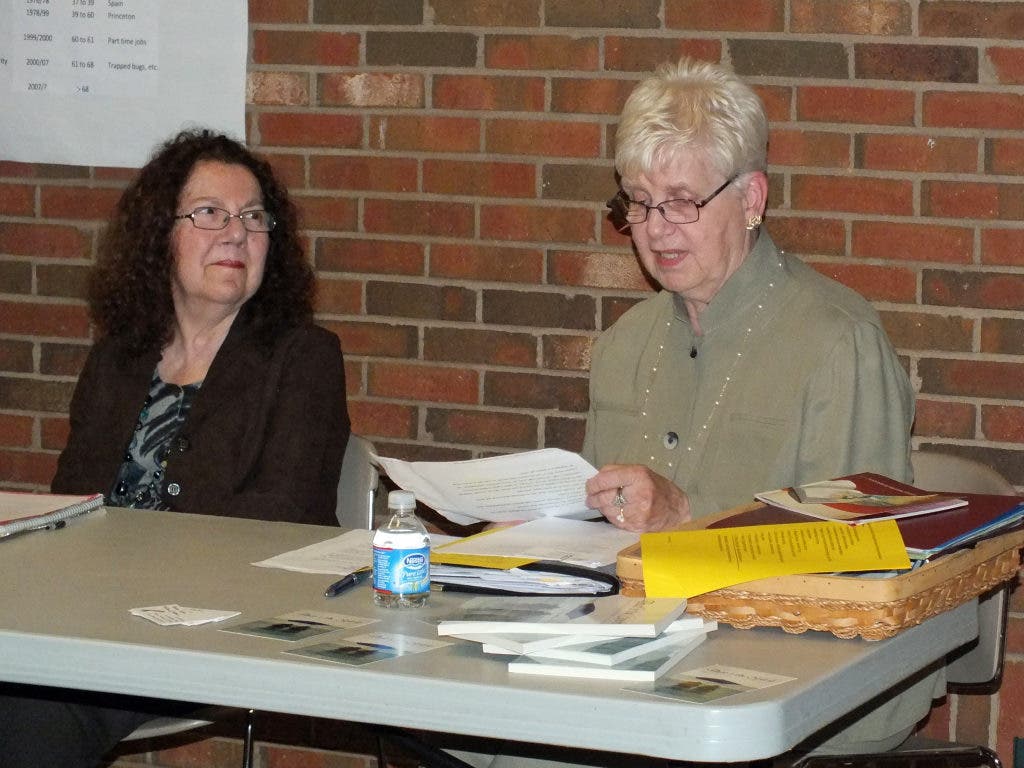


Local authors presented a panel on memoir writing at on Thursday, May 5.
Some published and others not, all are part of a writers group. They share a common theme, family and personal history, but their styles are individual and unique.
Bettie Linke of Monroe Township wrote her memoir, That’s the Spirit in two parts. The first section speaks of growing up locally in the 1930s and 40s. “They are my stories about downtown Jamesburg, back door stories. Things like making grape juice,” Linke said with a chuckle.
Find out what's happening in Manalapanfor free with the latest updates from Patch.
She used short stories to compose the second part of her memoir. Linke read from “I Never Had a Night Light,” a symbolic piece on technology changes and how they have affected her growth.
Linke was self published in September 2010 by Xlibris had 13 speaking engagements since. “To write nonfiction, you have to be unafraid,” Linke said. “You have to open up your veins and tell it all.”
Find out what's happening in Manalapanfor free with the latest updates from Patch.
Author Jack Zaraya, of Freehold, wrote Danny and Lily: A Remembrance on the subject of his immigrant parents’ marriage and making their lives in the United States. Zaraya uses an outline of major events from his past to give his writing direction. “I’m an only child, so when I started the book, I thought it would end when I was born,” Zaraya said. “It ended with my father’s death in the early ‘80s.”
Allentown resident Dick Fine began memoir writing to preserve the ordinary stories from his past, which he says have now become extraordinary. “I better record them, or they’ll be lost forever,” Fine said.
As a scientific report writer, Fine’s switch to memoirs came with much critical feedback. He told the audience “listen to all comments, open your ears. Remember that criticism is subjective. Pick and choose. The bottom line is your book has to be yours.”
Fine also spoke about the trickiness of memories and the importance of owning them. “Your brothers and sisters read your writing; and, they may call and say 'that’s not how it happened.' ”
Judith H. Sherman, author of Say the Name: A Survivor’s Tale in Prose and Poetry, tells the story of her childhood during WWII and her experience as a young teen in a concentration camp. Sherman began with poetry, but strived to convey the horrors of the Holocaust. Her memoir, written in chronological order, incorporates poetry, narrative, and drawings. “The reading is easy, in simple language,” Sherman said. “The theme is not.”
Each author touched on the importance of sharing their work. Some find it a personal release; others said it is an integral part of the writing process.
Writer Marlene Abelon, of Marlboro, said the reason she writes is to share something inside herself. “I have stories that deserve to be told,” Abelon said. “This is a legacy, for my children, for future generations.”
To write a successful memoir, Linke suggests starting with surroundings. “Look around. Our surroundings are our personal archives,” she said. “Our family history paints the picture.”