Community Corner
Author Reveals Legacy of Jewish Naval Pioneer, Paul Shulman
J. Wandres explains the story behind his book, "The Ablest Navigator".
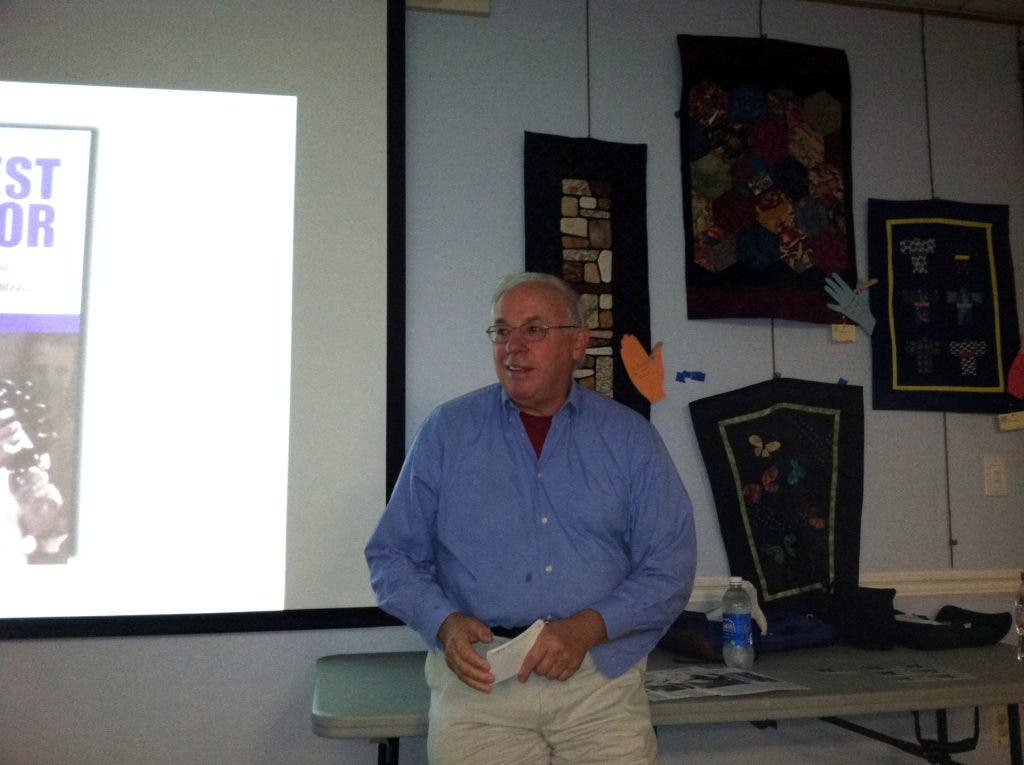
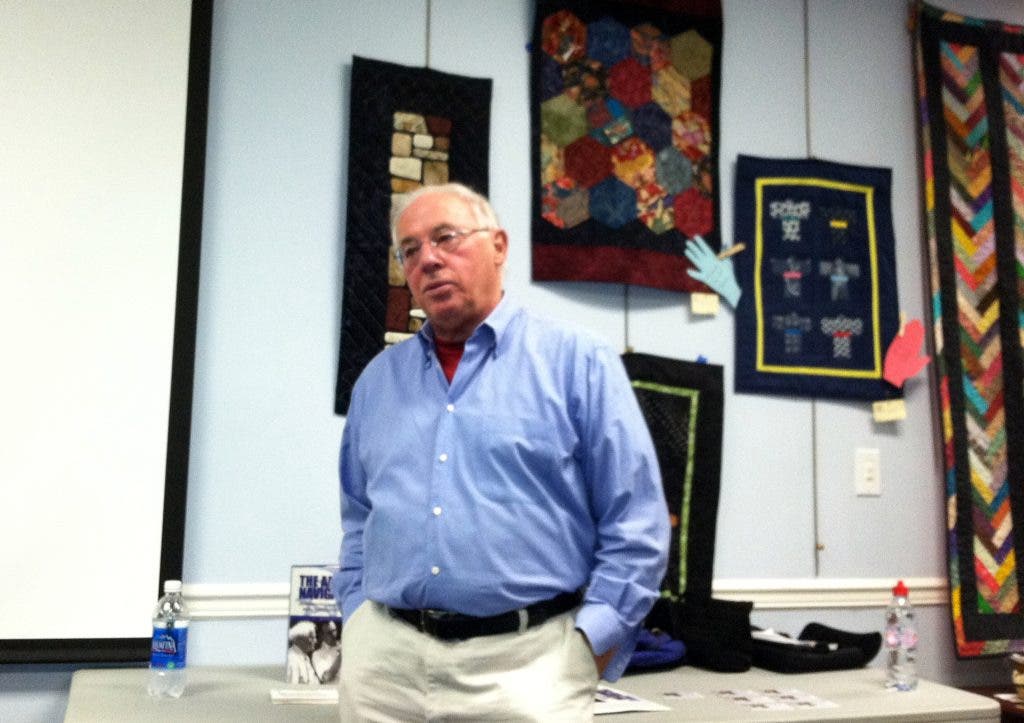

An intent audience who gathered at the Manchester branch of the Ocean County Library last week listened to a tale of adventure, war and heroism on the high seas in the mid-20th century, courtesy of author J. Wandres.
Wandres was present at the library to discuss the book he authored, "The Ablest Navigator" – and he explained that the initial motivation to write the book came from a 1998 visit to the Clandestine Immigration and Naval Museum in Haifa, Israel with his wife Judi. During that visit, Wandres purchased a book called "The Jews Secret Fleet" by Murray Greenfield and Joseph Hochstein.
“This book documents an effort by wealthy American Jewish business executives and philanthropists to fund the purchase of a dozen surplus warship and private vessels, and their conversion into vessels that could bring hundreds, or thousands of refugees across the Mediterranean Sea to Palestine,” Wandres explained. The foreword to that book was written by Paul Shulman.
Find out what's happening in Manchesterfor free with the latest updates from Patch.
Shulman, a 1944 graduate of the United States Naval Academy, was one of 50 midshipmen of Jewish origin commissioned in his class, and sent straight into battle during World War II. The first Navy craft Shulman served on, the U.S.S. Hunt, had the good fortune to survive both Mother Nature (in the form of a typhoon) and the aerial onslaught of the Imperial Japanese Army Air Force’s brutal kamikaze bombing.
After finishing his stint in the United States Navy in 1946, Shulman volunteered to assist the Haganah, the paramilitary force for the Jewish Agency for Palestine, led by David Ben-Gurion, who would later become Israel’s first Prime Minister. In this role, Shulman was able to help establish the naval force of the fledgling nation, founded in 1948 — at the time, Shulman was just 26 years old and made an admiral.
Find out what's happening in Manchesterfor free with the latest updates from Patch.
Despite his relative youth, Wandres explained how Shulman’s naval experience and expertise proved to be crucial in both secretly transporting European expatriates and Holocaust survivors to Israel, and in defending the brand-new nation from attacks by Arab guerillas. In one case, a daring night raid led to the sinking of the Emir Farouk — the crown jewel and flagship of the Egyptian Navy — which was the most notable Israeli victory in the War for Independence.
For these and other efforts, Shulman was named the second commander of the Israeli Navy in 1949, after the retirement of his predecessor, Gershon Zak. After retiring from Israel's navy, he later went on to form a major engineering corporation in Haifa, and stayed in Israel for the remainder of his life. In 1994, Shulman passed away.
The following year, a memorial ceremony was held in his name at the U.S. Naval Academy in Annapolis, Maryland. Shulman’s widow, Rose, said at the time that her husband Paul’s memory “belonged to the pages of Israel’s history.”
Wandres explained that one of his motivations in writing "The Ablest Navigator" came from wanting to “give Shulman the recognition that he deserves”, after some due diligence on his part prior to writing his book revealed that no published work had been written about Shulman before that time.
“I would be the first writer to ‘discover’ one of the heroes involved with Israel’s right and fight to form an independent nation; and I was similarly intrigued with the notion that a young Jewish man, who was a veteran of World War II, would give up the promise and potential of a richly rewarding life in America (his parents were well-connected in the business and organizational worlds), to go off and volunteer to help a place that was not even yet a nation,” Wandres said.
Something that further impressed Wandres about Shulman was his desire to serve his cultural homeland, despite the hurdles that he needed to overcome in order to make that possible.
“After he finished his U.S. Naval service and volunteered to serve the Jewish Agency's Haganah force, he had the spirit and drive to forge ahead and, with few assets and support, establish a training academy in a land where he did not even speak the language,” Wandres noted.