Politics & Government
Energy Aggregation Could Bring Savings, But Council Worries About Consumer Choice
Aggregation company told township council it can potentially save millions of dollars

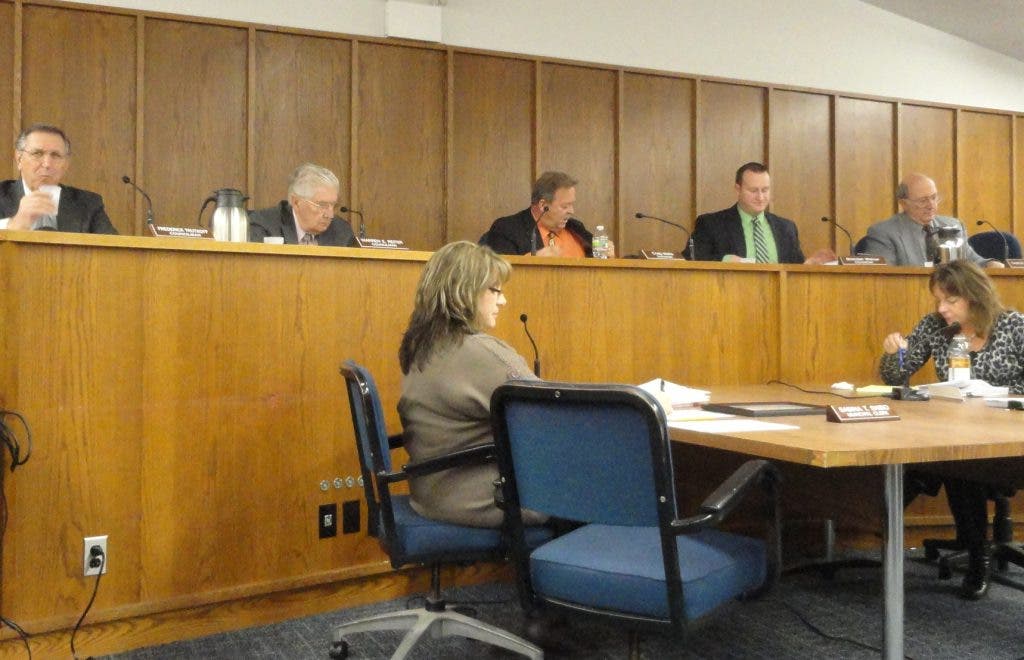
An energy firm this week said that its estimates show Manchester and its residents could save millions by switching to an aggregation plan, though Township Council members remained hesitant to embrace the offering.
The entire township could save more than $4 million in energy costs over JCP&L by switching to a third-party supplier, according to a Colonial Power Group presentation given to the council and residents in attendance at the governing body's meeting this week.
But state law mandates that these programs are opt-out, meaning resident enrollment would initially be automatic if the township chose to adopt the plan.
Find out what's happening in Manchesterfor free with the latest updates from Patch.
Council President Craig Wallis expressed concern that it would place a decision usually left to residents in the township's hands.
"It's not a choice if you told me I'm doing it, and I have to do something to opt-out of it," Wallis said.
Find out what's happening in Manchesterfor free with the latest updates from Patch.
Colonial representative Cory Cole said that every resident would be sent a letter showing the rate the township negotiated and details about the plan. If a resident did not want to take part, they would be able to call the provided toll-free number and opt-out or return mail stating such.
"I don't see that as a choice," Wallis said. "A choice would be letting me opt-in."
Some residents at the Monday evening council meeting shared a similar concern.
"You're forcing this on us," said resident Hank Glenn.
Of the estimated savings by aggregating, the municipal government could receive a certain percentage, or it can pass on all the savings to residents. That decision would be up to township officials.
"The town is the one who chooses, and you can draft your own language," Cole said.
With more than 22,000 housing units in the township, more than 3,000 are estimated to already have a third-party supplier and 3 percent, or about 680 units would likely choose to opt out, Colonial estimates.
The 2012-13 market rate is $.09 per kWh, while JCP&L's rate, which includes overhead costs, is $.11, according to Colonial.
"We're simply an aggregator," Colonial representative Dan Campbell said. "We create a contract between the municipality and the third party supplier who gives us the best rate."
Colonial would do that by collecting information about the township and going out to find the cheapest rate, Campbell said.
But the number of homes in Manchester available to participate may be smaller than Colonial estimates, Councilmember Samuel Fusaro warned, since the township's senior communities are able to enter into aggregation services and some have already done so. Those communities already in a program would remain with it even if the rest of the township went with Colonial.
Cole said that his company will work with JCP&L to gather data as to which communities have already joined a third party plan.
"It's an interesting idea that has potential," Fusaro said, though he added that the township must do its "homework" before making a decision.
"It's something that we could use here," said Council Vice President Brendan Weiner, who has been investigating energy aggregation and invited Colonial to speak. "But I don't in any way want the residents to feel strong-armed."
Township Attorney Steve Secare requested a copy of the letter that is sent to residents when the switch is made to examine.
"I think everybody would like to see the language," Secare said.
Cole said he would provide it to township administrators.
Secare floated the idea that joining an energy aggregate would have made for a good ballot question on which residents could vote, rather than having the council decide. But, it is too late for the issue to appear on the November ballot.
Those already enrolled in a third-party program would not be enrolled in the township's program, according to Cole. Further, residents would be able to opt-in or out at any time with no penalty.
Under an aggregator, JCP&L would continue to assume responsibility for distribution of electricity, billing and repairing outages — residents would continue to call the utility for all issues. There would be no cost to the township and its officials would not be involved in any service aspects, according to Cole.
Colonial Power Group, which has a local office in Manasquan, is an energy consulting company that creates and manages community choice aggregations that serves almost 300,000 residents.
The township would enter into an aggregation agreement through ordinance and several other steps. Further, they want to learn what the public thinks about the issue.
"I want to hear your input and what your thoughts are," Weiner said.
Get more local news delivered straight to your inbox. Sign up for free Patch newsletters and alerts.