Kids & Family
Get A Good Look At Supermoon Lunar Eclipse At Ocean County College
Astronomy group members will share their telescopes with the public during the eclipse Sunday evening.


By MARC TORRENCE
On Sunday, New Jersey residents should be able to see something that hasn’t happened in more than 30 years: a supermoon combined with a lunar eclipse.
And a local astronomy group wants to help you see it even better: members of the Astronomical Society of the Toms River Area (ASTRA) will setup their telescopes at Ocean County College to share views of the eclipse, planets and stars, at no charge.
Find out what's happening in Manchesterfor free with the latest updates from Patch.
The ASTRA event begins at 8 p.m. and goes until midnight outside the Robert J. Novins Planetarium on the campus of OCC, according to a Facebook event posting by Ocean County College. The event is weather-permitting, according to the post. The National Weather Service says there is a 30 percent chance of rain on Sunday evening.
Sky-watchers will see a larger-than-normal moon begin to dim and turn red, lasting for more than an hour before returning to its normal brightness and color in the sky.
Find out what's happening in Manchesterfor free with the latest updates from Patch.
The last time this happened was 1982, and it won’t happen again until 2033.
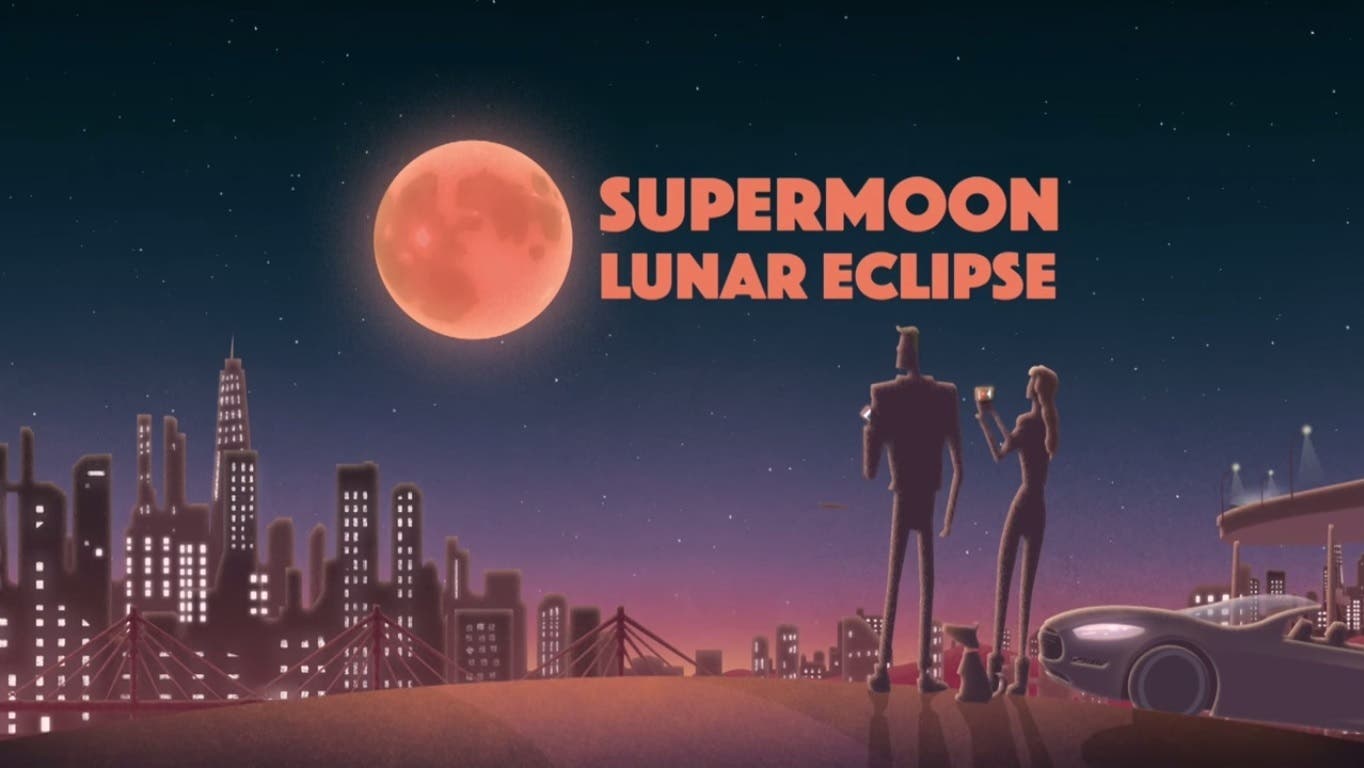
This light show in the sky is courtesy of two usually separate phenomena occurring at the the same time: The supermoon is what makes the moon appear bigger; the lunar eclipse turns the moon red.
The combination should make for a spectacular sight: a massive, red moon hanging in the sky for more than hour.
“Supermoon” is the unofficial term for “perigee,” when a full moon coincides with the moon’s closest approach to Earth in its oval-shaped orbit, making it appear 14 percent bigger in the night sky.
(We’re actually in the middle of a cycle of three supermoons in a row. The first showed up August 29, and the last will be October 27.)
A lunar eclipse happens when the Earth passes between the sun and the moon. The moon enters the Earth’s shadow, creating a reddish glow on the moon.
NASA says the supermoon will begin to dim at 8:11 p.m. EDT. A shadow will fall over the moon starting at 9:07, with the total eclipse beginning at 10:11 and lasting for an hour and 12 minutes.
It’s also no cause for concern, despite the ancient Incans and Mesopotamians believing the moon to be under attack during a lunar eclipse.
“The only thing that will happen on Earth during an eclipse is that people will wake up the next morning with neck pain because they spent the night looking up,” Noah Petro, deputy project scientist for NASA’s Lunar Reconnaissance Orbiter said in the release.
For more information, check out this fun video NASA put together:
Get more local news delivered straight to your inbox. Sign up for free Patch newsletters and alerts.