Arts & Entertainment
Local Librarian Teaches How to Preserve Family Treasures
Preserving old documents, photographs, fabrics and books
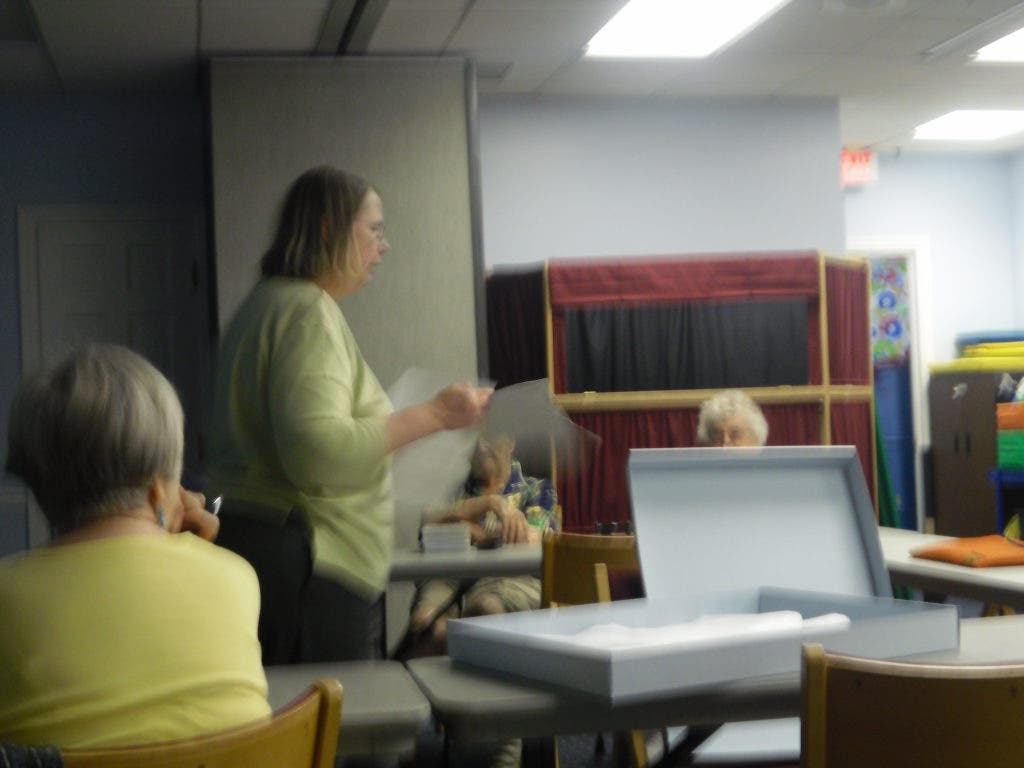


Many people want to preserve precious family heirlooms so that history can be safely passed down from generation to generation. Librarian Sandi Stark presented methods to preserve and protect family treasures at the Manchester Library last week.
Stark attended a one day workshop about preservation run by The American Library Association.
“The American Library Association is very concerned about people not preserving things and losing our history," she said. "The Association estimates that trillions of items are being held by the general public that are at risk of being lost forever — and that is why preservation is so important.”
Find out what's happening in Manchesterfor free with the latest updates from Patch.
She explained that the most important way to safeguard treasures is to store items away from sunlight, extreme temperatures and humidity.
“Constant and extreme temperatures can severely damage those important items. Also, watch out for moths, ants, rodents, termites and carpet beetles — all which eat paper.”
Find out what's happening in Manchesterfor free with the latest updates from Patch.
Although many people store heirlooms in basements and attics, Stark encouraged patrons to find other places to store the valuables.
It is not only the outside elements and pests that can cause damage to treasured papers and documents.
“Much of the paper stock manufactured after 1850 is highly acidic and self-destructing. Acidity can cause paper to become discolored and brittle,” Stark said.
“Pressure sensitive tape and any kind of glue or adhesive dis-colors permanently,” Stark said as she showed a damaged photograph. “Also when you remove these, the image is sticky and attracts dirt,” she said.
Stark stressed several times that working with clean and “oil-free” hands is necessary when touching these materials.
She demonstrated how to properly store fabric in a preservation box using archival grade tissue paper.
“The key here is not to fold the cloth and leave it for the rest of your life. Take it out every now and then and refold it so that it does not get creases,” she said.
Mold can be removed from artifacts in a safe way.
“First, put the item in a plastic bag in a non-defrosting freezer for several hours. Then, thaw it out in the plastic bag. Wear a HEPA safe face mask when you remove the item, and then vacuum it with a HEPA filter vacuum,” she said.
Stark also encouraged patrons to start scanning photographs to preserve the pictures and “to come into the digitalized generation, even though it is scary for some of us”.