Politics & Government
Approved Master Plan Amendments Raise Environmental Debate at Council Meeting
Concerns for local wildlife and environment mark an ordinance's public hearing
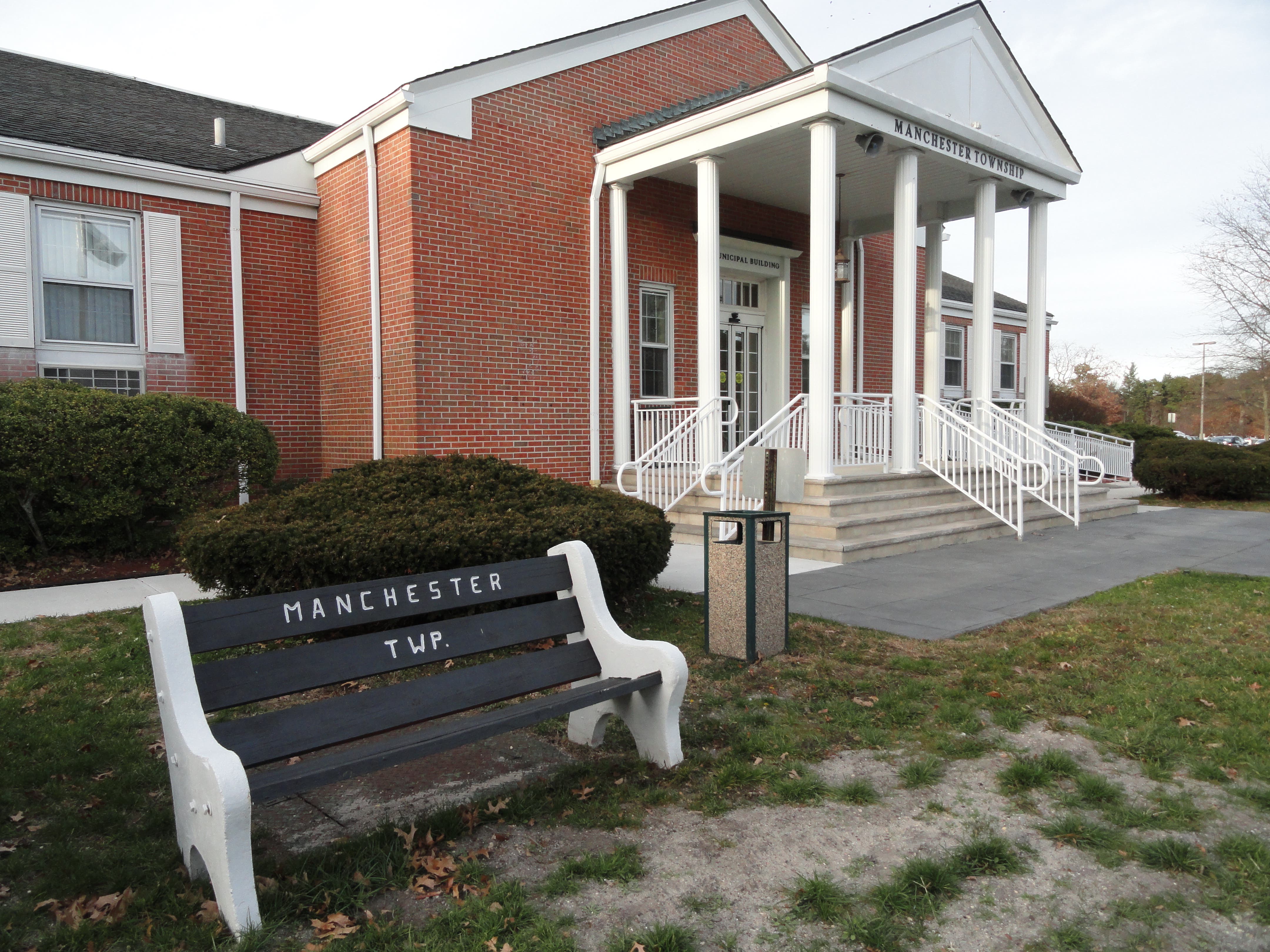
Local residents, environmentalists and professionals expressed their views on proposed amendments to be made to master plan at Monday night’s council meeting – just as they did , where a recommendation for those same amendments was approved.
The revised master plan ordinance would allow for development of land in areas located in Whiting (Manchester’s western section), which could potentially include construction of residential dwellings for families, a move ardently opposed by both the New Jersey Pinelands Commission and the Pinelands Preservation Alliance (PPA) for environmental reasons.
Pinelands Forest Area-Receiving (PFA-R) zones were updated in the master plan to reflect mandatory changes adopted in 2009 by the New Jersey Pinelands Commission. The new rule provides for the clustering of residential developments on one-acre lots when two or more units are proposed, leading to a density of one unity per 20 acres, said Andy Thomas of Thomas Planning Associates when he first presented amendments to the land use and population sections of the township Master Plan at the Manchester Planning Board's Nov. 7 meeting.
Find out what's happening in Manchesterfor free with the latest updates from Patch.
"Part of the reason that the Pinelands wants clustering and demands it is to leave as much of the property untouched as possible, to protect the endangered species," said board attorney Edward Liston at the group’s December meeting. "If you were to take that property and grid develop it at one house per 20 acres, chances are you'd lose a lot of endangered species."
Some areas surrounding Roosevelt City are proposed to be changed from PFA-Sending to PFA-R zones. According to the Pinelands Commission, this means that the township will be able to "use Density Transfer Programs to direct development to particular 'receiving' areas, while protecting more sensitive 'sending' areas."
Find out what's happening in Manchesterfor free with the latest updates from Patch.
Under the Pinelands Commission clustering guidelines, 52 units could be built on 60 acres of contiguous land, which would leave the surrounding area untouched.
"They're going to preserve 650 acres around Roosevelt City," Thomas said last week.
Township Council President Craig Wallis said that he didn’t think there was any governing body more “stringent” before which to have amendments passed than the Pinelands Commission.
“I can understand what they’re trying to do,” Wallis said. “They’re trying to preserve much more land and give up a little bit of land.”
Wallis continued by saying that the land in question is not “protected” land, but rather “controlled” land.
This master plan amendment had several public opponents – who spoke of how the rural, scenic atmosphere of that section of town would change if residential development were permitted to occur in the region of Harry Wright Boulevard, and how two species of snakes indigenous to the area would be threatened also.
Theresa Lettman, a Broadway Boulevard resident and member of the Pinelands Preservation Alliance, objected to the proposed amendments. Addressing the council, Lettman stated that she was at the meeting to explain that “there were things the council could do to protect the environment and the threatened endangered species habitat.”
Lettman said that the PPA felt that the council could pass a cluster ordinance in Manchester Township, but that they should take care in designating the sending and receiving areas for development.
“We think that you should further expand the other areas that are to the north and west of Roosevelt City, and areas adjacent to Route 539," Lettman said. "We believe that those areas should be expanded, because all the documentation we have doesn’t support any large populations of endangered species up there."
Lettman added that the council could also not apply the bonus density to specific properties unless they aggregate lots.
“The bonus density was placed by the Pinelands Commission in the regulations to allow property owners to put together lots. In Manchester’s case, you’re giving the developers structural management of bonus density of 20 to 30 percent, and they don’t have to aggregate lots,” Lettman said. “Those are the two things you can do to preserve the area that raises the most concern.”
Lettman said that the PPA hired Robert Zappalorti of Herpetological Associates to make a presentation to the council on this matter, who previously presented testimony to the council in December 2003 and December 2007.
Zappalorti then stepped forward to deliver his report to the council, which showed that endangered species have enjoyed a small resurgence in the last several years, but that they are still endangered.
“The other thing that the PPA asked me to do was review the report submitted by Trident, the consultant hired by the land owner," he said. "In my opinion, the study they did lacked enough surveys. They didn’t have long enough drift fences, they didn’t have enough traps, and their sampling was limited to going out and checking the fences and the traps, then leaving the site."
Zappalorti said that it was difficult to spot wildlife in the thickly-wooded and vegetated area in question, and that more intense survey work had to be done to properly track and catalogue the number of wildlife in the area.
“These animals are camouflaged and very difficult to see,” Zappalorti said. “If you start building additional houses south of Harry Wright Boulevard, the number of snakes turning up in people’s backyards is going to increase, and you don’t want that.”
Zappalorti added that it was “a poor decision and planning” to develop houses in an area where rattlesnakes are known to live.
“We’ve never had a death in New Jersey from a timber rattlesnake, but it is possible that a serious bite on a main artery or vein can kill a person,” Zappalorti said. “By avoiding additional houses south of Harry Wright Boulevard, you’re protecting the habitat that’s there – and it’s important that these animals are able to survive in their natural habitat.”
Zappalorti maintained once again that the 2009 study done by Trident was inadequate, and that the documentation he provided to the council Monday night would fill in the gaps in Trident’s data.
“There are plenty of other sections in Roosevelt City that merit more houses, especially along Route 539 – it’s a very busy corridor, that’s where you should concentrate (development),” Zappalorti said.
Arthur Douglas of York Avenue said that his video camera has documented the endangered species of snakes in the area to be developed.
“The best possible thing that could be done is to move the proposed planned development like everyone’s been saying. We are imploring you to use your best judgment, and hopefully save these snakes,” Douglas said.
Fellow resident Greg Douglas appealed to the governing body on behalf of himself and his neighbors.
“We want you to care,” Douglas said.
The resident explained that he wanted to raise his children in a peaceful, natural setting away from the concrete and mini-malls he left behind in his former neighborhood.
“You don’t have to pass this; you can stop this right now, it doesn’t have to be. I’m asking you to stop development south of Harry Wright Boulevard – if you can’t do it for us, can you do it for the most important reason? That is to protect the endangered species of the pine snake and the timber rattlesnake. They have no voice, but they need your protection,” Douglas said.
Douglas then read from a young child’s poem, written from the perspective of the Pinelands, which urged for its protection and defense against further intrusion of development.
After the public comment, Council Vice President Brendan Weiner pointed out that if the ordinance wasn’t voted on Monday night, it would not come up again until next year.
“It’s unfortunately an issue of timing,” he said.
However, given the opposition to the ordinance, Weiner offered that the governing body could take additional time to examine the ordinance and initiate a compromise to satisfy all parties involved for the future.
Council Attorney Steven Secare mentioned that the land in question is regulated by the Pinelands Commission regardless and that the council did not have a large amount of input here from a legal standpoint.
“Craig (Wallis) made a good point that there still has to be Pinelands (Commission) approval for there to be subsequent building,” Secare stated.
Wallis said that all the information was already heard by both the Manchester Planning Board and the Pinelands Commission, who he dubbed “the ultimate authority in his mind” on the matter.
“I have a resolution approved, put out there by the planning board," Wallis said. "I looked at it, and it’s something that has to be acted on. The state is a pretty tough authority in their requirements and what they want. I’m ready to move forward.”
Even with Weiner and returning Councilman Sam Fusaro’s abstentions during the subsequent council vote, the ordinance was adopted through affirmative votes from Wallis, Councilmen Fred Trutkoff and Warren Reiter.
Gregory Kyriakakis contributed reporting to this story.