Business & Tech
Columbia High School Teens Launch Video Game Company
Eyesight Technologies may pioneer artificial intelligence in the future but for now, video games.




MAPLEWOOD, NJ - While most seventh graders are struggling with social interactions and figuring out a school/life balance, Wesley Sappington wanted to make breakthroughs in artificial intelligence. So he decided to start his own software development company.
"I was very interested in technology ever since I was little, and had already began writing code as early as 6th grade. Honestly, I had no idea what I wanted to do with myself - simply a hunger to stop dreaming and start doing," Sappington said.
Sappington was attending Maplewood Middle School when he decided to create Eyesight, his software development company. Sappington said the original spark of creation for the company was the idea of using artificial-intelligence to pre-load data.
Find out what's happening in Maplewoodfor free with the latest updates from Patch.
"That's fancy tech speak for creating software to 'see the future.' The technology I originally intended to create was all about seeing the future with 'Eyesight,'" he said.
But within a short amount of time, Sappington realized he was biting off more than he could chew.
Find out what's happening in Maplewoodfor free with the latest updates from Patch.
"Once Eyesight was formed, it was simply me, a name, and an abstract idea of software-dev glory. Within a week or two I realized that my grand plans of artificial intelligence, competing with Microsoft, and conquering the world were a little too big for a middle schooler just starting out," he said.
So Eyesight Technologies shifted its gazet to game design.
"Not only is it more realistic, but it's fun. While I hadn't decided on the specific games just yet, I knew one thing for certain - I didn't want them to be a flappy bird clone or another shooter," He said.
Sappington said that despite the pivot to game design, the name stuck.
"People had already heard about my endeavor, and had heard the name Eyesight - and they liked it," he said. "It became a word-of-mouth thing and just took off from there."
According to Sappington, when it came to game design, he didn't want to tread on ground others had walked on before.
"I wanted to make something different, something out there, something pushing boundaries, something that people can look at and say, 'this is such an Eyesight thing to make, I can't imagine other people making content like this,'" he said. "I wanted to make games that we could release without a logo and people would know that we made them. I wanted to stand out."
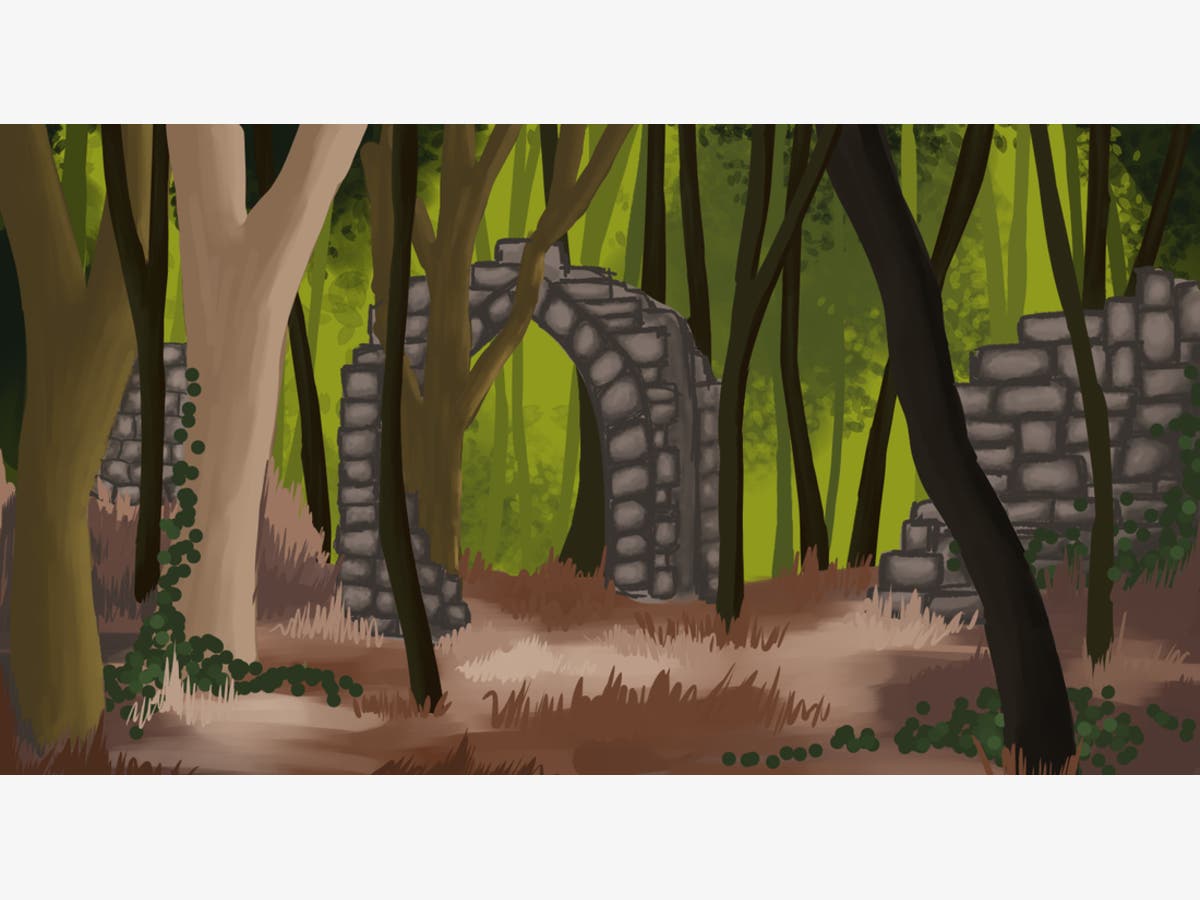
Currently the fledgling company, comprised completely of Columbia High School students, is working on two very different games. The first has a working title of "Fallen World's Traveller" and is somewhat reminiscent of a visual novel or choose-your-own-adventure story.
"Don't roll your eyes just yet - the game uses a very unconventional system to create its story," Sappington said. "We call it 'Criteria and Connection Based Storytelling (CCBS).' In short, while the game has a finite number of endings, CCBS allows it to have hundreds if not thousands of paths to each ending," Sappington said. "The game also boasts a strategy-based combat system to add to the excitement."
The second game is called conundrum, and it is a top-down 2D survival game where the player is placed in a mysterious labyrinth full of ghouls and demons. Aided by a narrator with questionable motives, the player must escape before the Minotaur, the only creature that cannot be killed, catches him.
"Interestingly, the game lacks any kind of fighting mechanic. Instead, the player must design, build, and in the most advanced cases, code his own inventions," Sappington said. "These inventions can be simple or complex, but must help the player navigate the labyrinth during the day, and keep him safe in the freezing cold night."
The common thread between the projects, according to Sappington, is the desire to make more intellectual games that make the player think.
"Whether it's an ethical dilemma in Fallen World's Traveller or a new, innovative, design in Conundrum - we certainly put the brain to work," he said.
Sappington said his team is inspired by other indie developers like Subset Games.
"Subset started out just like us, barely known and barely funded, but managed to create some incredible content from nothing," he said. "When coming up with the concept of Conundrum, I actually took experience from quite a few different flash games. You know, the kind you can play on school computers when the teacher isn't looking. Laugh at me all you want, but some of these games can be really atmospheric and even creepy when done right."
Currently, Sappington's entire team attends Columbia High School, but the founder noted that he is willing to dip into the middle schools as well. The Eyesight Technologies team consists of multiple "departments" and two "divisions." Each department is for a different role; programmers, artists, musicians, and writers.
"The divisions are our two projects, Fallen World's Traveller and Conundrum," Sappington said.
Currently included on the team is Computer Programmer Thomas Culhane, Musical Composer Gabe Roth, artists Allie Mishkin, Lillian Bak, Sam Klimet, Sky Garcia, and Will Klimet. Olivia Morgan and Daniel Falconer are listed as writers on their company website.
Right now Sappington said for his team the development is coming in three phases.
"First is the development of the 'framework.' As well as fleshing out ideas and concepts, this first phase is really about determining what the game will be and creating a framework to achieve that. For example, coding the game engine, the piece of software that runs the game, or creating the underlying plotlines of the story," he said. "It's all about making the minimum possible content to show off and demonstrate what we're doing. What is the minimum we can do to have something to show for ourselves?"
Sappington said the second phase is all about adding content like art and creating the individual events that support the plot, to the framework and the third phase is polishing, playtesting, getting feedback and tweaking accordingly.
"We've finished the first phase for both of our projects, and are powering through the second. That's why we've begun to reach out and gain exposure," Sappington said. "Our 'Pre-Release' plan has started, meaning that we'll be updating a growing audience with our progress through the development process. In other words, it's time to come out of the basement and tell people what we've been working on."
While they aren't looking to onboard new people at the moment, Sappington said they do post open positions to their social media when they are available. And when the games are released, Sappington said at least one of them will be free to play.
"We simply want to make cool stuff together and put our different skills together toward a common goal. It's a great experience for everyone involved and we love doing it," he said.
That said, Sappington noted it hasn't always been easy to run a growing company when you're busy being a teenager with schoolwork and and other teenage obligations bogging people down.
"Sometimes gamedev can be tough when you're going to school everyday," he said.
Thanks for reading! Learn more about posting announcements or events to your local Patch site here. Have a news tip you'd like to share? Or maybe you have a press release you would like to submit or a correction you'd like to request? Send an email to russ.crespolini@patch.com
Subscribe to your local Patch newsletter by clicking here. You can also have them delivered to your phone screen by downloading our Apple iOS app here, or by visiting the Google Play store for the Android app here.
Get more local news delivered straight to your inbox. Sign up for free Patch newsletters and alerts.