Politics & Government
Making Heads or Tails of Your Local Tax Bill
Peter Fresulone, Township CFO, is answering a lot of phone calls and questions. We thought we'd help him get the word out.

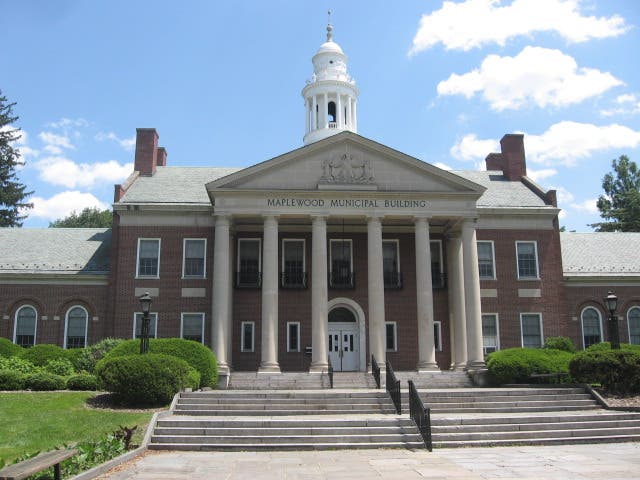
As soon as the Township of Maplewood sent out third quarter tax bills in July (due August 1, by the way, with a grace period through August 10), the phones started ringing at Town Hall.
People wanted to know if the revaluation had gone through already. If not, why had their taxes gone up?
The answer: No, the revals have not come in yet. Property owners will start receiving notifications of their revaluation in November and the new property values will not go into effect until 2011. Local taxes have gone up, rather, due to the newly passed budgets by the Township of Maplewood (approved in July), South Orange-Maplewood Board of Education and the Board of School Estimate, and the County of Essex. Add to that the fact that the total assessed value of the Town—$2,480,348,664—has decreased by more than $12 million from last year due to tax appeals, leaving the Town with less revenue to pay for increased costs.
Find out what's happening in Maplewoodfor free with the latest updates from Patch.
Yes, your local tax bill is a melange of three different layers of government—as well as two different Open Space Trust Funds. All in all, your estimated third quarter tax bill equals $4.86 per $100 of assessed value. Last year, it was $4.66/$100 assessed value. That means an increase this year over last of 4.32%. That $4.86 breaks down this way:
- Township of Maplewood —$1.27 per $100 assessed value
- Maplewood Open Space Trust Fund — $.015 per $100 assessed value
- South Orange-Maplewood School District — $2.81 per $100 assessed value
- County of Essex — $.75 per $100 assessed value
- County Open Space Trust Fund — $.03 per $100 assessed value
Those of you with basic math skills will note that that actually adds up to $4.87 but Township CFO and Tax Collector Peter Fresulone explains that he thought that number was a little high. He's waiting to see finalized numbers on assessed value and County budget and then he will adjust the rate—if necessary—for the 4th quarter bill, which, he explains, is the reconciliation quarter for the annual budget.
Find out what's happening in Maplewoodfor free with the latest updates from Patch.
Those who followed the budget process for the Town, the school district and the County through the winter, spring and summer will know that each entity struggled with decreases in state aid (a 20% cut to the Town, a $22 million cut to the County, and an 80.9% cut to the school district), and increased costs due to factors such as health insurance (in particular the school district's health care costs rose more than 26% this past year), as well as the aforementioned decrease in assessed value.
Last December, the Town pre-emptively made the decision to furlough non-uniformed employees for 12 days in 2010. The school district made far more draconian cuts—including eliminating 23 full-time positions and outsourcing the 76 special education paraprofessionals.
Nevertheless, the County, school district and Township increased their levies this year to balance those budgets. The increase from the school district was a little more than 4% for Maplewood (although the increase was 3.48% when spread across Maplewood and South Orange). The County increased its budget 2.8%. And the Township's budget is translating into an estimated 3.96% increase.
Is relief on the way? The governor and state leadership are working to limit hikes, but not to eliminate them.
This summer, the State Assembly adopted Governor Christie's proposal to institute a 2% tax cap on municipal budgets. Many town leaders across the state have worried about how they can deal with escalating costs under such constraints and await the details and potential passage of a 32-bill toolkit to help them do just that.
And Mayor Vic DeLuca reminds us that the tax cap may be 2%, but excluded from the cap are increases for employee health benefits, employer pension contributions to the state fund, and debt payments. These costs may be passed along on to taxpayers on top of the 2% tax cap.
Get more local news delivered straight to your inbox. Sign up for free Patch newsletters and alerts.