Community Corner
The Real Housewives of Colonial New Jersey
Durand-Hedden House offers lessons in colonial housewifery: Soup and spinning were on the menu at Sunday's Open House.


"Our chicken was tired of laying eggs," Irene Kosinski said to ten-year-old Madison. "So she jumped into the pot for our soup."
Kosinski stood in the cozy kitchen of the Durand-Hedden House, behind a heavy wooden table and in front of a roaring fire. In her role as mistress of the colonial household, Kosinski demonstrated the tools of her trade, cast-iron spiders, ladles, wooden spoons, and pokers for the fire, for an enthusiastic audience.
"Now," she told a preschooler whose fingers fidgeted towards the pots and pans. "Let's see you churn butter." Kosinski laughed as the child's eyes widened in surprise. "That's how we do in my time," she said knowingly to the parents. "Or sometimes we do this," she said, pretending to tap an unruly child with a wooden spoon.
Find out what's happening in Maplewoodfor free with the latest updates from Patch.
Kosinski, a former eighth grade teacher, demonstrated the ways of the colonial kitchen as part of the Durand-Hedden's January 24th Open House, "Enjoy a Taste of the 18th Century." The event, which included soup-making and tasting, is popular: Even as the Jets kick-off time approached, the home was crowded with visitors. The Durand-Hedden volunteers were on hand to showcase the Kenneth Dalzell exhibit, as well.
In the parlor, away from the kitchen fire, Patty Chrisman demonstrated the art of spinning wool, as she pedaled and spun at once. "You can feel it's sticky," she said to two first graders, offering them a handful of wool, almost straight from the sheep. "That's lanolin," she explained. "It's what makes sheep waterproof."
Find out what's happening in Maplewoodfor free with the latest updates from Patch.
Chrisman explained that in a true colonial household, the "spinster" might have done her wool work closer to the fire, both to keep warm and to keep a watchful eye on the day's cooking.
For Sunday's event, though, Kosinski and fellow volunteer Lorraine Bull had the soup under control. "We have three kinds today," said Kosinski. "Besides chicken, we have squash and carrot." She noted that both were seasoned with spices typical of a colonial kitchen. "We have allspice, ginger, nutmeg and cinnamon. Sometimes we might use curry, which is a taste, a seasoning that we brought with us to this area."
Journeycake was on the menu. Laced with cabbage, it "fills the void," according to Kosinski, especially on a long ride on horseback. Honeycake was made with local honey; the Durand-Hedden House has working beehives in season.
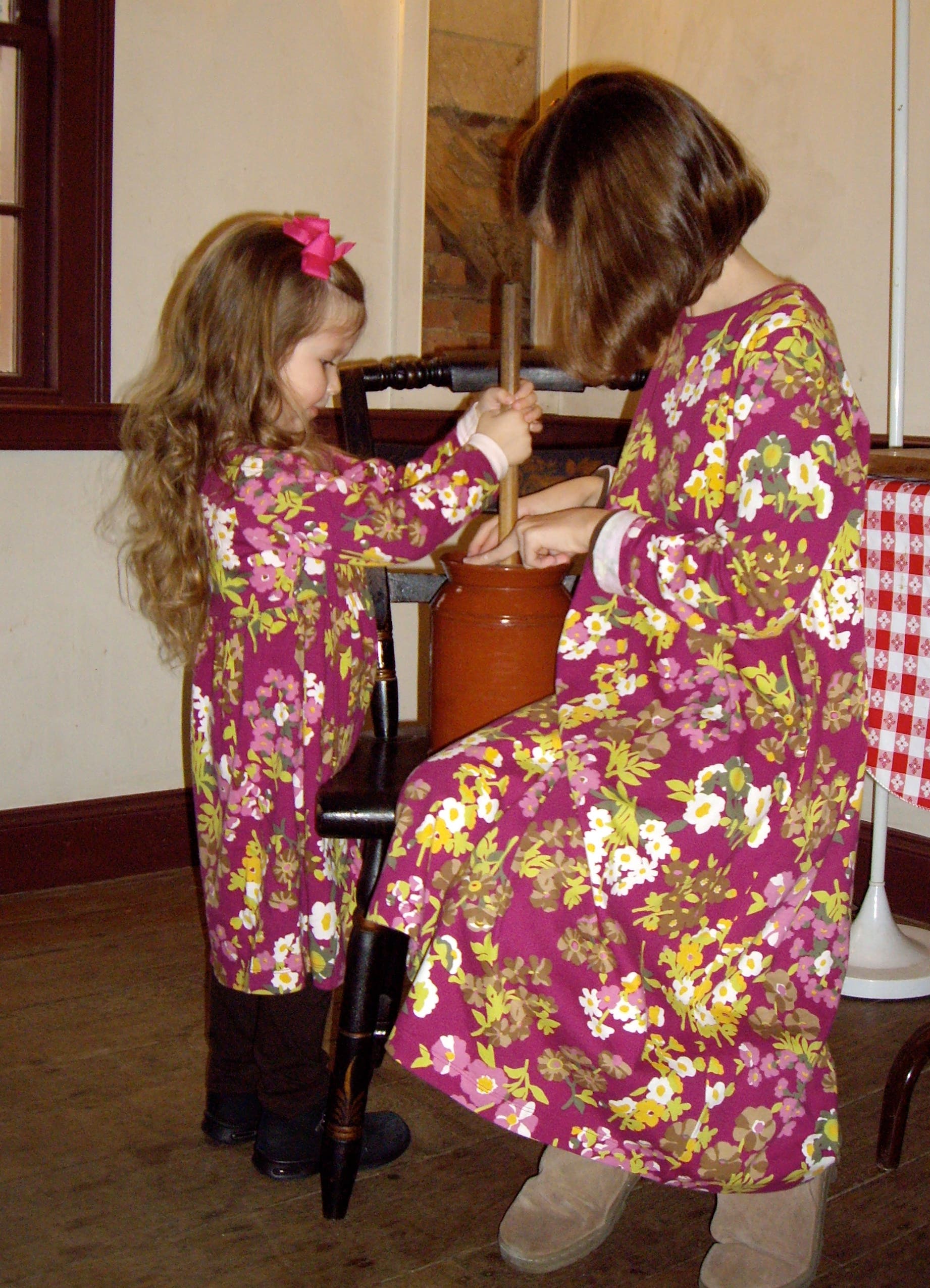
Colonial times meant work for every member of the family, and the day's events included a "Chore Corner." Young visitors to the Durand-Hedden House tried churning, and tested eggs to find which was fresh and which was hard boiled. Sisters Chandler, age 3, and ten-year-old Madison lifted the dasher and let it fall repeatedly, hoping that butter would form. Other children followed, learning quickly that churning butter takes more time and effort than expected. Kosinski demonstrated that the same was true of all colonial cooking, as all parts of the animal were used, and every possible vegetable preserved and eaten. "That's one reason we're serving soup," she remarked. "It's filling and uses root vegetables that are available in winter."
In honor of Martin Luther King, Jr. Day, the Durand-Hedden collected cans of soup for donation to Meeting Emergency Needs with Dignity (MEND). "Soup," commented one eight-year-old as he left the colonial era, still clutching a cup of carrot soup that Kosinski prepared. "That makes sense."