Community Corner
New Celebrity Chef Program Stirs Up Hope For Patients In Recovery
An in innovative celebrity chef program is changing lives at the Discovery Institute; addicts in rehab embrace cooking as a recovery tool.


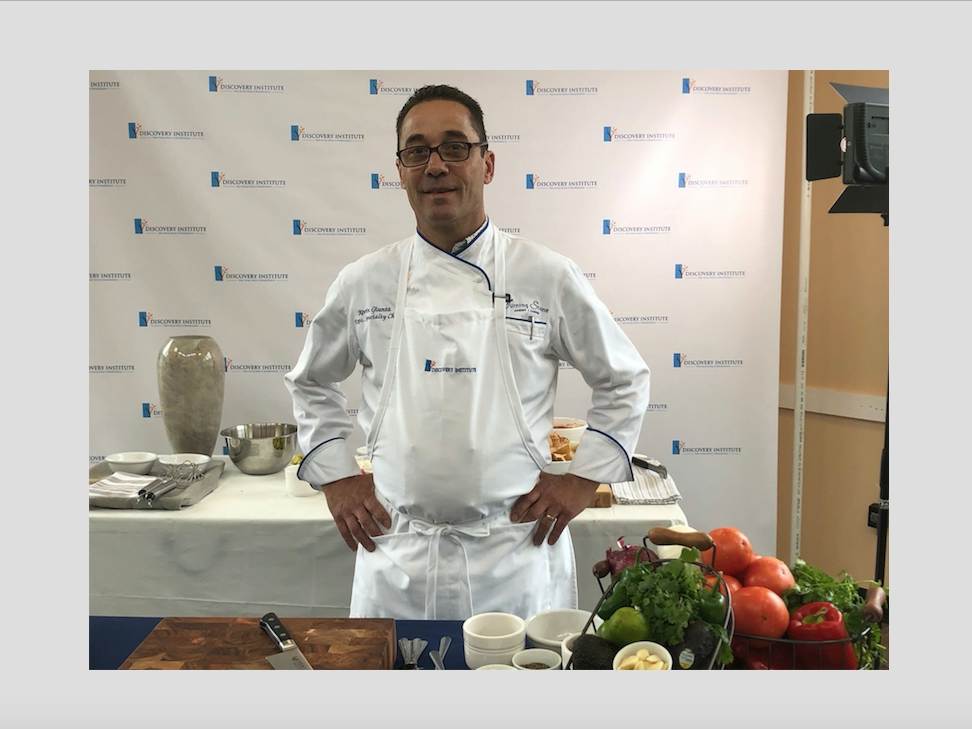
MARLBORO, NJ — Cooking a meal for family and friends — lovingly gathering the fresh, healthy ingredients for either a time-honored recipe or a foray into a new type of fare — is something many take for granted, one of life's simple pleasures that can mean connecting with others on the most basic level.
But for those mired in the depths of addiction, struggling to see a light of hope at the end of a dark tunnel of despair, the very act of cooking for others, or of preparing healthy meals to feed themselves and self-nurture, can be seemingly impossible.
That's why a new program at the Discovery Institute for Addictive Disorders in Marlboro, NJ, a full-service residential treatment provider, seeks to help patients utilize meal preparation and cooking as a critical tool toward healing and hope.
Find out what's happening in Marlboro-Coltsneckfor free with the latest updates from Patch.
The goal of Discovery Institute for Addictive Disorders, established in 1970, is to provide high quality habilitation and rehabilitation services to the chemically dependent adult population and their families statewide, the facility's mission statement explains.
To that end, the innovative and life-altering new program at Discovery spotlights celebrity chefs who turn out to teach meal prep as a means of life-saving support during the stages of early recovery. Patients who participate learn to prepare healthy, simple meals on a budget— and to turn to cooking as a way to prevent relapse and promote self-love and care as they embark upon the path of long-term recovery.
Find out what's happening in Marlboro-Coltsneckfor free with the latest updates from Patch.
The brand-new cooking program kicked off recently at the Discovery Institute, with Chef Kevin Giunta, corporate chef for Turning Stone Casino in New York, who, along with the dining staff at Discovery, demonstrated to participants how to prepare inexpensive, nutritious, and delicious Mexican fare with ease.
The concept of preparing food as a recovery aftercare skill was conceived by Discovery President Nick Boatman, who explained that supporting each life skill, no matter how small, has a positive effect on early recovery and relapse prevention.
“When patients complete treatment here at Discovery, they have received excellent medical care for their addiction, but successful recovery in the months and years after depends on many different factors such as honing great life skills that give you a good routine,” Boatman said. “When you learn certain basic skill s for the things everyone has to do every day such as eating, its an investment in your self-care and elevates your self-worth while making everyday tasks feel less overwhelming."
Giunta's presentation, which had participants fully engaged and eager to help, included basic cooking principles and integral recovery lessons.
His demonstration was the first in a series that will eventually be cultivated into a "recovery meal plan cookbook," published by Discovery, that patients can use with their families or on their own as a guidebook in the kitchen — and for their new lives.
“While there are skills and science to cooking, the real emphasis is to find your self-worth and self love in meal preparation," Giunta said. "You are worth it and deserve to eat excellent cuisine. The other idea is to show that it can be fun and affordable rather than overwhelming. All of those things help anyone navigating early recovery.”
Giunta, who studied at Johnson & Wales, said his interest in cooking was born at a young age; he has traveled through Italy and other parts of Europe, learning various rustic cooking styles.
“Using simple, fresh ingredients while partnering with local farmers to bring the best options to the table is always in style," he said.
Despite a string of stellar culinary gigs in his impressive resume, including serving as the executive chef for properties including Trump Taj Mahal, Trump Plaza, Tropicana and DiBruno Brothers in Philadelphia — and awards including the New Jersey Sustainable Seafood competition at the Governor’s Mansion — his demeanor with the patients at Discovery was warm and engaging.
His innate kindness and patience was a recipe for success, as patients volunteered to taste the food he and other kitchen staff prepared. The excitement was palpable as he dished up his lessons and outlined ways to integrate the steps into future meals with family and friends.
For Giunta, the experience was deeply personal: As he whipped up a mouthwatering meal in mere minutes, he opened his heart to share his own experience with addiction. Guinta, who has two sons, Erick and Michael, and two grandsons with his wife Sue, said his son Erick had waged a battle with addiction in past years.
Speaking with Patch, Giunta said he grew up in a very close-knit, Italian family. "Food always brought us together," he said.
And now, with his about 10 years clean and sober, Guinta said cooking together as a family again is a gift.
"For the last eight or nine years we’ve come together as a family, and cooking is one of those avenues that helps bring us together," he said. Sundays are a time for making memories, as his family "has a great time" preparing fresh pasta dinners together on Sundays.
Everyone has a great time, and the relaxed atmosphere is the perfect time to talk and engage in discussion, laughter, and the making of memories, Giunta said.
The experience not only benefits his older son but his younger boy. As he heads off to college, Giunta said, "He's not afraid to pull a pan out and fry an egg."
Shaped by his son's battle with addiction and his own family's love of cooking, Giunta feels compelled to give back by teaching those in recovery how to prepare meals and, in so doing, shape their future paths.
"I feel I owe it to the community to know that there are other avenues to find self-gratification," Giunta said. "That's the message I'm trying to put out there."
Looking ahead, Giunta, a corporate chef, said he's reached out to his son, now an addiction specialist, and his affiliates to offer career training and other opportunities to those in recovery.
For his class at Discovery, Giunta said the goal was to keep it simple. "I knew I couldn't just start going right into the recipe or chopping something. I knew I had to talk to them first, share my experience with my son — and I think that's where I got their attention," Giunta said. "I wasn't there to just show them how to cook. I was there to teach them that there are others ways to vent. Instead of taking the road to the left, take the road to the right and do something that's going to bring self-gratification."
Chopping fresh vegetables animatedly, Giunta explained the basic tenets of cooking to the patients gathered: "It's really easy. It's all about just having fun. And it's about a little bit of planning and preparation. That's really what makes us successful in life — planning and preparation. Whatever job you take or path you take after you leave this place, you've got to plan every step."
He chose to prepare Mexican food, he said, because "it brings people together. It's simple and it's interactive."
The act of preparing a meal can be pivotal in early recovery, Giunta said. "It's all about self-care, but also, about knowing what we're cooking and what we're putting into our bodies."
Most important, Giunta said, food is a shared bond. "Food brings people together — family together," he said. "Cooking should be about family, teamwork, and just having fun."
Cooking can also prove to keep frustration and anxiety away and provide a haven, he said.
As he prepared the Mexican meal for the patients, Giunta told them: "Great cooking doesn't have to be expensive. It's about local, simple ingredients, the fewer the better." Three great ingredients — tomatoes, peppers, fresh herbs — can comprise the foundation of a delicious, healthy meal, he added.
"We need to use food as a vessel to take care of ourselves, keep ourselves busy, and to bring family together," he said. "You know what you're cooking and at the end of the day there's a sense of gratification, of feeling better about yourself."
Giunta spoke to patients about how easy it would be, once they were released and embarking upon lives of recovery, to take care of themselves, as opposed to going to fast food restaurants.
After the meal was prepared, patients came up to savor the delicious offerings — and found both their appetites and hearts sated.
"I gained a sense of calmness," said Darrell — patients' last names were not divulged in order to protect their privacy — who said he has always enjoyed cooking. "I'm a foodie."
While battling his addiction, he said: "I lost the will to want to cook. I didn't want to spend time and make the food look good."
Now, after treatment and on the road to recovery, Darrell said he's a happy person, when not fighting addiction. "It feels really good to want to cook again. I definitely do think it will help in my recovery process because there's a sense of accomplishment for me," he said. "I like doing new things."
Not only that, but Darrell said the lesson sparked a long simmering fire inside: "I plan on going to cooking to school," he said. "I've always wanted to do it but never felt like I could. Doors will open now."
Another patient, Daniel, said he's always loved to cook and is focused on nutrition. "I'm a surfer so I like to eat healthy," he said. "Of course, when I was doing drugs and drinking, that kind of fell by the wayside. Now, I'm excited about cooking again. I might even make this meal for my girlfriend — it's definitely do-able."
Finding the program offered at Discovery, Daniel said, was a nice surprise. "I've worked in kitchens before and this reignited my interest again."
When asked what lessons they'd take away after the cooking lesson, and rehab, Darrell said: "Change your thoughts. Think positive. You are only as good as your best thought."
Daniel agreed. "Anything is possible. You can always start over. And when you decide to start over, you have a whole new path in front of you. You can leave everything else behind."
Dory Rachel, a member of the Discovery team, said she was moved at how the experience touched Darrell. "He's a big guy, and he was crying," she said. "He said he couldn't believe the good things in life that were happening to him now. He said, 'It was a dream realized.'"
Rachel said she was thrilled with the kickoff event. At first, though, she said she was unsure of how the patients would react. "You never know. These are grown men, you never know what they might be feeling that day. They can be feeling emotions and you never know what they might be."
As the simple, delicious food was passed around, however, the patients blossomed, she said. "The guys loved the food." All involved, she said, were thrilled to have been a part of the program and were engaged and talking about the experience long after the food was gone.
A cookbook for those in recovery is a cutting edge idea, Rachel said. "The idea of cost effective meals, eating healthfully and taking time to attend to body, mind and spirit — the repair of the body with good food, along with the time and attention given to the self — the spirit of that is such a special thing. It addresses all of the three modalities in addressing addiction — body, mind and spirit."
Next up, on Thursday, Chef Thomas Vaccaro, the dean for curriculum and instruction for baking and pastry arts at the Culinary Institute of America, will cook with the patients. Vaccaro was the American Culinary Federation’s National Pastry Chef of the Year in 2004. He coached the U.S. Culinary Team to many gold medals in the 1996, 2000, and the 2004 Culinary Olympics in Erfurt, Germany and earned a perfect score in the pastry competition as the team’s pastry chef at the 1992 Culinary Olympics.
Patients at Discovery represent all income levels and demographics, Rachel said. "We have a mix of the population, and food brings them together — the breaking of bread. It's exciting to watch this start to unfold. Food is the leveler, and the place where you start to heal on a community basis."
Chef Kevin Giunta's Mexican Menu
Arbol-Tomato Salsa
Molcajete Guacamole
Baked Tortilla Chips
Pollo Rojo Tacos
Mango Pops
Smooth Arbol-Tomato Salsa
Ingredients:
**makes 2 cups
1 lb. ripe tomatoes (2 med to lrg.)
5-8 dried arbol chiles (stemmed)
3 garlic cloves (peeled & halved)
¼ tsp. ground black pepper
A pinch of ground cloves
½ tsp. dried oregano
1 tbsp. cider vinegar
Salt
½ small white onion (finely chopped) optional
Place tomatoes, chiles and garlic in medium saucepan, cover with water (barely). Bring to a boil, partially cover and simmer over medium-low heat until tomatoes are very tender but not falling apart (about 10 minutes). With a slotted spoon transfer tomatoes, chiles and garlic into a blender (save cooking liquid) and add black pepper, clove, oregano and vinegar. Pulse blender until everything is resolved to a relatively smooth puree.
Pour the puree into a serving dish and let cool to room temperature. Stir in enough of the cooking liquid to give the salsa an easily spoonable consistency. (about 2 tablespoons) Taste and season with salt. Scoop chopped onion into a strainer, rinse under cold water, shake off the excess moisture then stir into salsa.
Guacamole
Ingredients:
**makes 2-3 cups
1 jalapeño (small)
3 ripe avocados (peeled and coarsely chopped)
1 garlic clove (minced)
1 medium ripe tomato (seeded and coarsely chopped)
4 ½ tbsp. lime juice (3 limes)
½ cup finely diced red onion (1/2 medium onion)
2 tbsp. finely chopped cilantro
Salt & pepper (to taste)
Char jalapeño over stove flame or under the oven broiler, turning it to blister the skin evenly. Place blister pepper in a covered container or in a bowl cover with plastic wrap. When it is cool enough to handle, peel of the dark skins, remove the ribs and seeds, then finely chop.
Mash 1/3 of the avocados with a fork in a large mixing bowl. Add the remaining avocados, chopped roasted jalapeno, garlic, tomato, lime juice, red onion and cilantro; stir to combine. Taste, then adjust the seasoning with salt & pepper.
Baked Tortilla Chips
Ingredients:
** serves 4-6
24 (6 inch) white corn tortillas
2-3 tbsps. canola oil
1 tsp. sea salt or to taste
1 tsp. chili powder or to taste
Pre-heat oven to 350 degrees. Brush both sides of each tortilla with oil. Stack tortillas into 4 stacks of 6. Using a sharp knife, cut each stack into 6 triangles. Evenly spread the tortillas in a single layer on a lightly oiled baking sheet. Bake, turning halfway through the cooking time, until they are crisp and golden brown (10-15 minutes). Sprinkle with salt and chili powder while the chips are still hot from the oven.
Enjoy with Smooth Arbol- Tomato Salsa, Guacamole or favorite Taco.
Pollo Rojo
Ingredients:
** serves 4
12-14 oz. cooked chicken thighs, breast or a favorite rotisserie bird (shredded)
1 tbsp. vegetable oil
½ white onion (julienne)
1 red pepper (julienne)
1-14 oz. can crushed tomatoes
4 oz. ketchup
1 cup chicken stock
3-4 chopped garlic cloves
1- 6 oz. can chipotle pepper in adobo, chopped
1 tbsp. paprika
1 tsp. cumin
Salt and pepper to taste
In vegetable oil, sweat onion and peppers slowly, until onions are translucent. Add garlic, cook 1-2 minutes. Add remaining ingredients, cook 15-20 minutes or until a thick ketchup-like consistency is achieved. Fold in chicken, cook 3-5 minutes, until chicken is well coated. Keep warm.
To plate:
Pickled onions (sugar & vinegar)
Queso fresco
Cilantro
White corn tortilla
Warm tortilla shells on flat top or grill, 30 seconds on each side. Fill with chicken, queso fresco, guacamole, pickled red onion and garnish with cilantro and lime.
Drizzle Arbol Salsa and crema.
Mango Pops
Ingredients:
¾ cup sugar
2 tbsps. coarsely chopped mint leaves
2/3 cup lime juice
2 cups sparkling water
1 10oz bag of frozen mango
Measure the sugar into a food processor. Add the mint and pulse until the mint is finely chopped. Put the sugar into a medium mixing bowl, add the lime juice and sparkling water. Stir until sugar is dissolved. Add ½ of the frozen mango, pulse for 30-45 seconds.
Divide the remaining mango pieces into ice pop mold, then fill with mixture, leaving ¼ inch from the top for expansion. Secure lid, insert popsicle sticks, then freeze.
Get more local news delivered straight to your inbox. Sign up for free Patch newsletters and alerts.