Neighbor News
Including Pets In Disaster Plans
Keeping pets safe in the event of an emergency means keeping them with you.
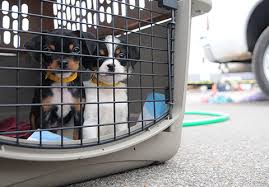
Include Your Pet In Disaster Plans
We are smack-dab in the middle of hurricane season. Luckily, our area has so far has not experienced a tropical storm or hurricane, nor any other type of natural disaster. But with memories of Hurricane Sandy still quite fresh in our minds, it would be wise to be prepared by having a plan in the event of a disaster, weather or otherwise, and your pets should be included in your disaster plans.
Matawan Borough’s website has a guide to planning for emergencies that includes valuable information pertaining to pets. Visit http://www.mcsonj.org/wp-content/uploads/2014/03/Hurrsurvguide815121.pdf for the full guide.
Find out what's happening in Matawan-Aberdeenfor free with the latest updates from Patch.
To begin with, all your pets should have identification. Red Rover recommends microchipping, as “…it is one of the best ways to ensure that you and your pet are reunited if you are separated…Keep the microchip registration up-to-date, and include at least one emergency number of a friend or relative who resides out of your immediate area.” (https://redrover.org/pet-disaster-preparedness).
In addition to a microchip, an ID tag on the collar serves as a good back-up form of ID. The Humane Society of the United States reminds us that “The average citizen who finds your pet [in case you are separated during an emergency] won’t be able to scan for a chip, but they will probably be able to read a basic tag.” (http://www.humanesociety.org/issues/animal_rescue/tips/pets-disaster.html). In addition, have a list of your local animal shelters handy; in case you are separated from your pet, you will need to call these facilities to see if your pet has been brought to one of them.
Find out what's happening in Matawan-Aberdeenfor free with the latest updates from Patch.
The Department of Homeland Security strongly suggests that you locate a safe place to stay well ahead of any actual evacuation. (https://www.ready.gov/animals) There are pet friendly hotels both within and outside of our area, but they may have no vacancies in times of emergency, and driving around looking for a place to stay is a waste of precious time and gas. The best time to plan is now. Identify not only pet friendly lodging nearby, but also further away from home, such as one or two counties over or in the next state. The Department of Homeland Security’s website contains a link for finding pet friendly motels and hotels in the area you plan to evacuate to: http://www.gopetfriendly.com/
Remember to pack your pet’s basic necessities. Red Rover advises keeping an emergency kit ready for each pet, and recommends the following:
o 1 week supply of food
o 1 week supply of water
o Medications (if any) and copies of vaccination records
o Photographs of your pet (to prove ownership, and in case you need to make the dreaded “Lost” flier)
o Pet first aid kit
o Temporary ID tags
o Carrier and leash for each animal
Should you need to evacuate, it is important to locate not only pet friendly places to stay, but also the emergency veterinary facilities in the area where you plan to evacuate to. Local veterinary facilities may be closed or overwhelmed. Even if you don’t have to evacuate your neighborhood, your regular veterinarian’s neighborhood may be inaccessible, and it’d be good to know in advance where you can bring your pet in case of injury incurred during disaster.
If staying at home is an option during an emergency, please do not leave your pet outside. Bring all pets into the house before disaster strikes. The Humane Society of the United States recommends picking one room in the home that will be safe, and closing off nooks and crannies where cats might hide. If you choose to stay in a large closet or garage, remove tools and toxic chemicals beforehand. Put emergency supplies in this safe place ahead of time, and include leashes and carriers in addition to food and water. (http://www.humanesociety.org/issues/animal_rescue/tips/pets-disaster.html).
An emergency/disaster plan that includes your pets may be better implemented if you do one or two dry runs at your home. The Monmouth County Animal Response Team advises planning on how you will assemble your pets (https://www.mcsonj.org/wp-content/uploads/2014/03/CARTBrochure.pdf ). Remember that you may be doing this in a chaotic, noisy environment that will be scary for your animals. If you are practiced and comfortable with putting them in carriers and loading them into your vehicle, it may make the experience a little less frightening for them (and you).
The Monmouth County Animal Response Team (or CART) states “In the event of an emergency, you will be notified via available media outlets*, such as television or radio, [as to] where the “pet-friendly” co-shelters are located.” (https://www.mcsonj.org/divisions/emergency-management/county-animal-response-team-cart/). According to Gary McTighe, Deputy Coordinator for the Monmouth County Office of Emergency Management, these co-shelters are in addition to and separate from local animal shelters and would be established at the time of the emergency. (*The media outlets referred to are listed on the Monmouth CART brochure (https://www.mcsonj.org/wp-content/uploads/2014/03/CARTBrochure.pdf). Also listed on the brochure are links to pet-friendly hotels, including Bringfido.com, petswelcome.com, and travelpets.com.)
Red Rover’s website (https://redrover.org/pet-disaster-preparedness) has extremely useful links for emergency planning that include not only dogs and cats, but also horses, birds, reptiles and amphibians. The Humane Society of the United States also has links to more useful information here: http://www.humanesociety.org/issues/animal_rescue/tips/disaster_preparedness_1.html?credit=web_id424367309
We’ve seen firsthand how devastating a hurricane can be, and we’ve experienced some pretty bad snowstorms in recent years, too. It is important to remember that emergencies and disasters are not limited to weather. Planning ahead as much as is humanly possible can help mitigate the potential harm to you, your family, and your pets, so that an emergency or a disaster does not automatically have to mean tragedy.