Health & Fitness
Is Respect a Part of Your Discipline Method?
When you peel away the layers of positive discipline, you are left with respect.

I have been asked to speak about positive discipline for only one hour. As I prepared my presentation, I wondered how I would accurately cover such an important and detailed topic in only one hour. I come from a generation that grew up with negative discipline and I know that changing a viewpoint based on our own childhood experiences can be difficult. In order to address my audience and show them that you can teach behavior in a positive way, I realized that I had to find the core of my beliefs about how children should be guided. When I peel away the layers of philosophy and technique, I realize that I am left with three concepts based on one word: Respect.
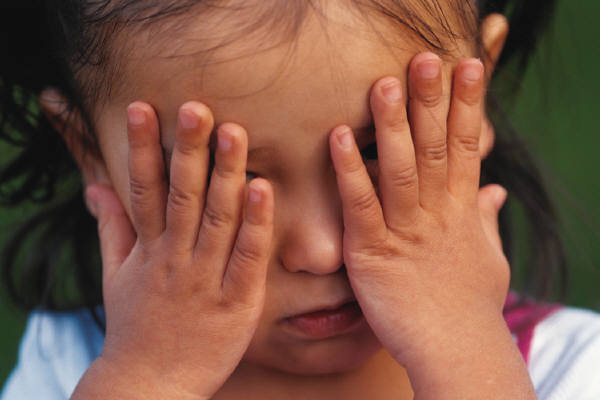
Respect that your children are people with real feelings. For many generations, children were told not to cry or that they would be given a reason to cry. If you child is crying, your child has a reason to cry. No one enjoys crying. When a newborn baby cries, it is a yell for help. The same is true of your toddler, preschooler and even your teenager. The youngest children can feel defeated by your attitude and words. Every time we invalidate a child’s feelings, we chip away at self-esteem, self-worth and the doors of communication. When children are frustrated, angry, sad, embarrassed – whatever emotion that is hard for them to handle – it is our job to acknowledge their feelings and give them the tools to cope. Help your children to calm down from a place of respect and love. Then discuss the situation.
Respect your child’s viewpoint of the world and his/her ability to learn. Young children are very egocentric. They see the world from only their point of view and they assume that everyone else does too. If they want a toy and try to grab it, they don’t understand why you won’t allow that. They want the toy – surely you must want them to have it. Young children cannot understand that their actions impact other people. Unfortunately, we all know adults who have never learned this important lesson. When we understand and accept that our children see the world differently than we do, we can help teach them. Our lessons should include coping skills and patient explanations about how other people feel. Most children gradually become less egocentric and will remember those lessons repeated calmly over and over. It may not seem like your children are learning when you have to repeat yourself. They will. And they will learn more from calm, instructive adults than punitive adults.
Find out what's happening in Matawan-Aberdeenfor free with the latest updates from Patch.
Respect the power of positivity and know that negativity only leads to the negative. A wise person once told me that you cannot fill the air with negativity and expect to get positive things back. You cannot yell at children, send them to an isolating time out & make them feel demeaned and expect them to grow into self-aware, positive adults. You cannot send young children to their rooms when you don’t like their feelings and expect them to grow into teens who confide in you. You cannot stop speaking to your children and expect them to respect you. You cannot spank them and then get angry when they hit or bully people. You must live what you want from your relationship from the time your children are infants. Never forget that you are the adult and you set the tone. You are the example of self-control, coping skills, calm and communication efforts. When you view and demonstrate that teaching behavior is as positive as teaching reading, writing & math, you will foster a more positive family environment.
We are teaching and raising children in a time of heightened awareness. We know more than past generations about how children learn best and how they can develop a healthy self-esteem. Simply defaulting to ways of the past is not our job. There was a time when children were seen and not heard. Subsequent generations learned better. There was a time when punitive discipline was seen as the only way. That time is not today. Consider how your actions and reactions impact your children’s emotional growth.
Find out what's happening in Matawan-Aberdeenfor free with the latest updates from Patch.
All that being said – How will I teach this in just one hour?!
For more information, read "Teach, Don't Punish - The Lessons of Positive Discipline" and "Stop Spending Your Days Saying, 'No, Don’t'"
_________________________________________________________________________________
Ask your questions about parenting & education, read more articles and learn about workshops for parents and early childhood professionals at www.helpingkidsachieve.com.
For information about The Early Learning Center of Temple Shalom or Temple Shalom Religious School, contact Cindy Terebush at eddirector@templeshalomnj.org or call 732-566-2961.