Politics & Government
Rep. Pallone Introduces Bold New Climate Change Legislation
It's not as ambitious as the Green New Deal — but it comes pretty close. Pallone is aiming for net-zero greenhouse gas emissions by 2050.


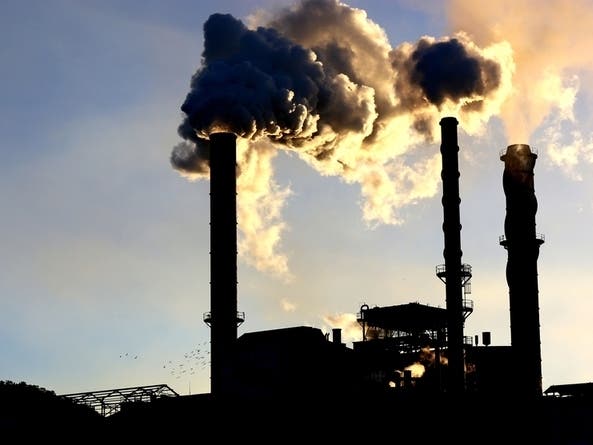

It's not as ambitious as the Green New Deal — but it comes pretty close. On Wednesday of this week, your local Congressman Frank Pallone (D-NJ6) released the legislative framework of the draft U.S. Climate Leadership and Environmental Action (CLEAN) Future Act.
The U.S. CLEAN Future Act is an ambitious new climate plan to ensure the United States achieves net-zero greenhouse gas emissions by no later than 2050. Pallone released this new legislation along with other members of the Energy and Commerce Committee, which he chairs.
The CLEAN Future Act is a comprehensive proposal of sector-specific and economy-wide solutions to address global warming and climate change. According to the U.N., avoiding the most catastrophic outcomes of climate change requires cutting carbon pollution to net-zero by 2050.
Find out what's happening in Matawan-Aberdeenfor free with the latest updates from Patch.
“Record wildfires, flooding, heat waves and drought have spelled out a dire reality: the climate crisis is here, and we can no longer afford to address this crisis along the margins," said Pallone. “This plan represents our commitment to achieving net-zero greenhouse gas pollution. For the sake of the American people, the long-term sustainability of our economy, and public health, we must act boldly, and that is exactly what we intend to do.”
Pallone is a Democratic congressman who has represented New Jersey's Sixth Congressional district since 1998. "NJ 6" stretches from Carteret and Woodbridge into Edison, New Brunswick and down to Asbury Park. It hugs the Bayshore coastline, including towns such as Aberdeen, Matawan, Hazlet, Sea Bright and West Long Branch. It also includes Marlboro Township.
Find out what's happening in Matawan-Aberdeenfor free with the latest updates from Patch.
Pallone has long been a vocal critic against President Trump.
Here are the following key takeaways from Pallone's legislation:
Power Sector: The CLEAN Future Act would require all retail electricity suppliers (basically any electricity provider, such as ConEdison, JCP&L, PSE&G) to obtain 100 percent clean energy by 2050. It mandates that all retail electricity suppliers provide an increasing supply of clean energy to consumers starting in 2022, rising to 100 percent clean energy by 2050. The draft legislation stipulates that suppliers must possess a sufficient quantity of “clean energy credits” at the end of each year, or may otherwise make an “alternative compliance payment.” Suppliers may buy and trade clean energy credits from one another or purchase them via auction.
Building Sector: The draft legislation aims to improve the efficiency of new and existing buildings, as well as the equipment and appliances that operate within them. The Act establishes national energy savings targets for continued improvement of model building energy codes, leading to a requirement of zero-energy-ready buildings by 2030.
Transportation Sector: The draft legislation reduces transportation emissions, the largest source of greenhouse gas emissions, by improving vehicle efficiency, accelerating the transition to low- to zero-carbon fuels and building the infrastructure needed for a clean transportation system. The bill directs the EPA to set new, increasingly stringent greenhouse gas emission standards for light-, medium-, and heavy-duty vehicles, including non-road modes of transportation. It further requires year-over-year improvements to those standards – and that the level of the standards be set in accordance with the path to net-zero emissions by 2050.
Industrial Sector: The CLEAN Future Act establishes a Buy Clean Program that sets performance targets to steadily reduce emissions from construction materials and products used in projects that receive federal funding. With the vast majority of U.S. construction projects funded by government dollars, this proposal would transform these carbon-intensive industries by ensuring that these projects only use the cleanest construction materials.
National Climate Target for Federal Agencies: The CLEAN Future Act directs all federal agencies to use all existing authorities to put the country on a path toward net-zero greenhouse gas emissions by 2050.
State Climate Plans: The CLEAN Future Act empowers the states to complete the transition to a net-zero economy, based on the existing federalism model in the Clean Air Act. The bill sets a national climate standard of net-zero greenhouse gas pollution in each state by 2050. States are then granted flexibility to develop plans to meet the 2050.
National Climate Bank: The CLEAN Future Act establishes a first-of-its-kind National Climate Bank to help states, cities, communities and companies in the transition to a clean economy. The Bank will mobilize public and private investments to provide financing for low- and zero-emissions energy technologies, climate resiliency, building efficiency and electrification, industrial decarbonization, grid modernization, agriculture projects, and clean transportation. The CLEAN Future Act requires that the Bank prioritize investments in communities that are disproportionately affected by the impacts of climate change, including frontline, rural, low-income and environmental justice communities.
Environmental Justice: The draft also includes grant programs to allow impacted communities to participate in the permitting and regulation of petrochemical facilities in their neighborhoods. It further protects these groups by implementing strong new coal ash disposal requirements and repealing oil and gas production exemptions from landmark environmental laws.
The CLEAN Future Act also features a suite of complementary policies, including proposals to remove barriers to clean energy, reduce super pollutants like methane, and investments in grid modernization and energy efficiency programs.
The Energy and Commerce Committee is requesting feedback from the general public. Feedback can be submitted to CleanFuture@mail.house.gov.
Get more local news delivered straight to your inbox. Sign up for free Patch newsletters and alerts.