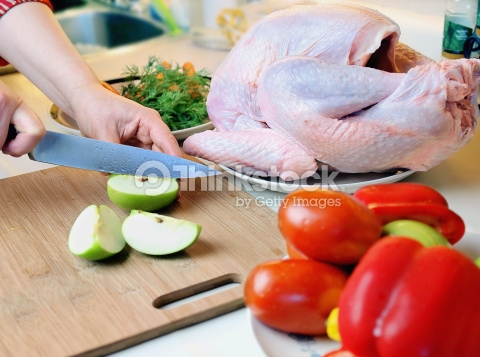
The holiday season is here. Family cooks around the state are planning, shopping, preparing, and cooking their holiday meals. Food is as much a part of the holidays as friends and family, but if food isn’t handled or prepared properly, food poisoning can spoil all the fun and festivities. Honor your holiday food traditions, but don’t rely on the food-preparation, cooking, and storage practices you grew up with. Food-safety science has come a long way since Grandma’s day.
“Oftentimes, the best part about the holidays is spending time with family … and eating of course!” said Dr. Bruce Ruck, Pharm.D. of the NJ Poison Center. “However, even for an experienced chef, cooking a feast for a large group can be quite daunting. It’s important to follow safe food handling and cooking guidelines so that your guests leave with full bellies and not food poisoning.”
According to Dr. Ruck, food poisoning is generally a mild illness that most commonly results from poor food handling practices. Food poisoning usually occurs hours after eating contaminated food and can include nausea, fever, vomiting, stomach cramps and diarrhea. Depending on the exact type of food poisoning, how your body reacts to the toxin and the amount of contaminated food that was eaten, symptoms may start either immediately after eating or be delayed in onset. Once symptoms develop they may last from several hours to two or three days. Food poisoning can be serious for people in poor health, for the very young and the elderly.
Find out what's happening in Mendham-Chesterfor free with the latest updates from Patch.
Handling food safely can help ensure a happy holiday season. Practicing basic food safety preparation and storage are the best ways to protect against food poisoning. Experts at the NJ Poison Center offer the following recommendations to prevent food poisonings:
- Wash hands with soap and warm running water for at least 15 to 20 seconds before preparing any foods and especially after handling raw meat, poultry, fish or eggs. You can estimate the proper time to wash by slowly singing the happy birthday song twice while you wash your hands.
- Keep preparation and storage areas clean; this includes countertops, stovetops and refrigerators.
- Wash utensils between each use. Never reuse utensils without careful cleaning; this is a source of contamination.
- Do not defrost meat or poultry on the counter at room temperature. Thaw it in the refrigerator or microwave instead.
- Use a meat thermometer to confirm that meat, pork and poultry are properly cooked; visit www.foodsafety.gov for proper temperatures.
- Do not prepare food if you are sick or have any type of respiratory or infection.
- Store raw food below cooked food in the refrigerator so raw food cannot drip into cooked food and contaminate it.
- Use separate cutting boards for meats, poultry and fish. Remember to always wash cutting boards with soap and water between use when preparing raw and cooked foods.
- Follow the directions on food packages.
To ensure that the leftovers will be just as good the next day, properly seal and store them in the refrigerator as soon as possible. Leaving perishable foods, including meats and dairy products, out at room temperature longer than two hours significantly increases the risk of food poisoning. Throw food away if you are unsure how long it has been sitting out.
Find out what's happening in Mendham-Chesterfor free with the latest updates from Patch.
“Be sure to keep these tips in mind as you cook and entertain family and friends this holiday season,” Ruck said. “And if you have questions about food preparation/handling, foodborne illness, or any poison exposure call the NJ Poison Experts 24 hours a day/7 days a week at 1-800-222-1222.”
Other Helpful Seasonal Tips
In the case of a winter storm with power outages, keep these safety tips in mind:
- Do not bring propane or kerosene stoves or charcoal grills indoors to cook or for heat.
- Keep the refrigerator and freezer doors closed and open them only when necessary. Fill freezers to capacity, but refrigerators need room for air to circulate.
- Place a refrigerator thermometer in the center of the middle shelf and check the temperature. If it has risen to 40 degrees Fahrenheit or higher, discard any potentially spoiled foods. Such foods include meat, poultry, fish, dairy and egg products, soft cheese, cooked beans, cooked rice, cooked potatoes, cooked pasta, potato salad, custard and pudding.
- When power is restored, allow time for the refrigerator to reach below 40 degrees Fahrenheit before restocking.
- "When in doubt, throw it out!"
Help is Just a Phone Call Away!
If someone is unconscious, not breathing, seizing/convulsing, bleeding profusely, difficult to arouse/wake up, etc. call 911 immediately, otherwise call the NJ Poison Experts at (1-800-222-1222). Calls are free and confidential and help is available in over 150 languages; 24 hours a day, 7 days a week, every day of the year. The experts are always here to help with accidents or questions involving medicines, chemicals or household products, etc. Program the Poison Help line (800-222-1222) into your cell phone and post it near your home and office phones too.
Program the Poison Help line (800-222-1222) into your cell phone and post it near your home and office phones too. There are no silly questions and our trained medical staff are always available to answer a question, quell a fear, provide advice, or intervene to get emergency services on site and prepped to provide the needed protocol in the fastest response time. When in doubt, check it out - Prevention is truly the best possible medicine.
Real People. Real Answers.