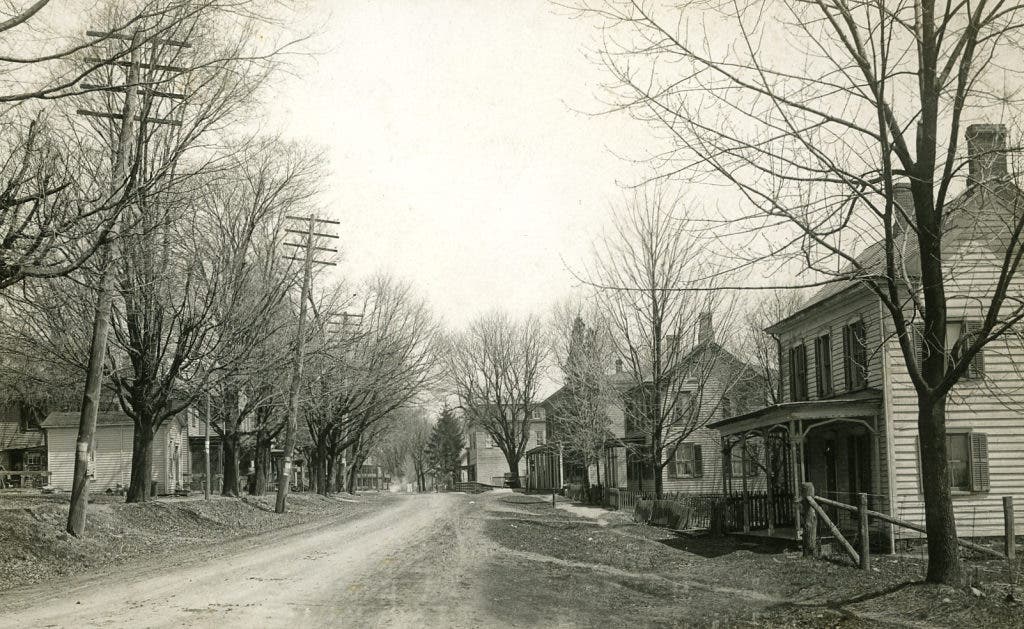
For the majority of the “newcomers,” Chester is the picturesque town at the intersection of Routes 206 and 513 in the rolling hills of Morris County. The quaint Main Street stores and the abundance of open land within the Township is most likely what drew you to this town. But Chester is so much more and boasts of an interesting history.
Originally, the Minisink Indians called this area, "Alamatunk" which meant "black earth bottom" for Black River, which was the original name for Chester. The oldest settlers came around 1640 when "Black River" established itself as a settlement primarily because of the intersection of two Indian trails. These old trails were traversed by the early settlers to go to all regions of New Jersey.
Most Chester people have said that no one knows why the name "Black River" was dropped and "Chester" adopted. Some say because Chester, England, was the home of their ancestors who had migrated to New England, and then to Southold and the Hamptons.
Find out what's happening in Mendham-Chesterfor free with the latest updates from Patch.
During the early 1800's, Chester was a stage coach stop where travelers sought overnight accommodations at the different Inns and hotels along the highly traveled roads going through town. These roads influenced the growth of early Chester. The products from Pennsylvania, such as wheat, grains, vegetables and sundries, passed through on the way to New York. Chester also had products to send such as their famous “Jersey Lighting” applejack and some fine furniture, notably, James Topping's clock cases and bureaus were also sent along to the New York market. The quality of Chester’s fruit, apples and peaches, was of the highest quality. These crops were a financial success and because of that, many distilleries opened and the ease in transporting the crops became a necessity. There were forges, furnaces, a brick yard and gristmills were in every corner of the township.
The Civil War changed Chester from a farming community to a small industrial town. Chester had a boom and the iron mines were the sole cause of considerable prosperity in Chester. There were at least thirty-five working mines in and around the town. During the period from the late 1860s to the late 1880s, several hundred thousand tons of iron ore were taken from these mines. A railroad was built for all of the ore to be shipped out on and two different railroad stations were built. The Central Railroad built one in town and the D.L. & W. Railroad built the second one about a mile north or town. When iron was discovered in the Mesabi Desert in Minnesota, it was the demise for the high iron life of Chester. Those who knew only mining were hard-pressed to make a living. Those who had retained their farms began again, raising crops. Their apples, peaches, garden produce, and grains helped to keep the economy alive.
Find out what's happening in Mendham-Chesterfor free with the latest updates from Patch.
This is just a small taste of Chester's history. I look forward to sharing many more stories about Chester's history in future blogs! Stay tuned....