Community Corner
Downtown Millburn Is Older Than It Looks
The historical society led a tour and pointed out the historical significances of the downtown area.

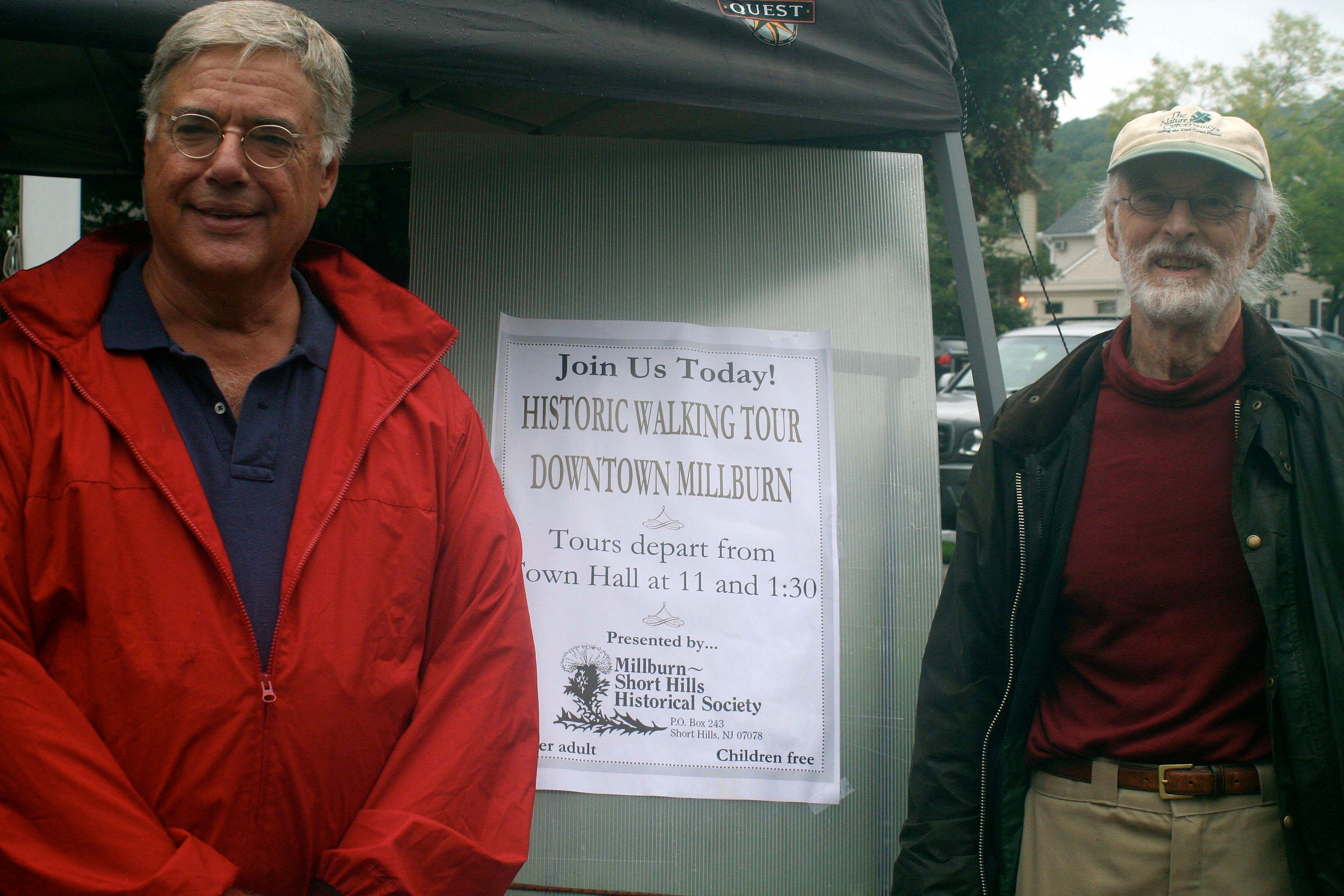


Looking at the buildings downtown, it may not appear how old many of them are. But a walking tour Saturday with the Millburn-Short Hills Historical Society unveiled the history behind the buildings in the downtown area.
"There are an awful lot of very early buildings you wouldn't know just by looking at them," said Lynne Ranieri, society museum curator, who led the tour.
It's hard to tell the age of some buildings, like the Garden Path location, because Millburn was part of Springfield until 1857. The records for the older buildings would be in Springfield, Ranieri said, but it's hard to locate them.
Find out what's happening in Millburn-Short Hillsfor free with the latest updates from Patch.
The tour spanned Millburn Avenue from Spring Street to Lackawanna Place and onto Main Street to Taylor Park. In addition to describing the places along the route, Ranieri, showed off photos from the society's collection. A lot of time was spent in the heart of downtown at the intersection of Millburn Avenue and Main Street, which Ranieri said has always had a lot of stores.
The area was the heart of Millburn by the 1800s, because it was a regular stop on the stage coach, Ranieri said. There were hotels in the area and stores. A trolley also traveled on Main Street from Maplewood, she said.
Find out what's happening in Millburn-Short Hillsfor free with the latest updates from Patch.
The intersection itself was once home to a flag pole, which was in the middle. Ranieri showed a photo of the flag pole, which had a person balanced on the top. The flag pole, however, had to be removed because too many people kept hitting it with their cars. The pole was moved to Taylor Park.
Millburn Avenue and Main Street were also the original tribal path for local Native Americans, Ranieri said. It's true to many communities in the northeast, she said, where their main roads were once tribal paths. Those roads were widened for horses and then widened further and paved for cars, she said.
Israel Condit, who is considered the father of Millburn, also owned a mill in the area. He needed a new way to transport his products, Ranieri said, and he was behind the railroad coming from Newark to the community. The train had its stop near the corner of Essex and Main streets, Ranieri said.
She said she has spoken with people in Springfield about why Millburn has flourished. They believe it's because the train came to Millburn and not to Springfield.
Town Hall also wasn't always in the spot where it's currently located on Millburn Avenue. It once was located across the street where Schoolhouse Plaza now stands. Town Hall was moved to its current location so the old building could become Washington School, which replaced many of the one-room schoolhouses in Millburn-Short Hills, Ranieri said.
The windows on the front of Town Hall were once doors, she said. It was where the police and fire departments were located, and their vehicles, once drawn by horses, were stored in the front part of the building. Where there are windows today were once doors for the vehicles.
Get more local news delivered straight to your inbox. Sign up for free Patch newsletters and alerts.