Community Corner
Learning to Investigate a Family History
Millburn Short Hills Historical Society offered interesting lecture for amateur genealogists.


Exploring a family history may seem like a detective hunt, and residents heard how to do such a search on Thursday night.
The Millburn-Short Hills Historical Society sponsored a talk by Bob Stein about genealogy and studying family history. Stein has been a genealogist for over a decade, is past-president of the Morris Area Genealogy Society and has appeared on the "Family Historian" TV show.
His talk was an introduction to genealogy—perfect for anyone who has ever wistfully watched the ubiquitous commercials about people finding interesting ancestors in their family tree.
Find out what's happening in Millburn-Short Hillsfor free with the latest updates from Patch.
According to Stein, “Genealogy is popular right now, but it’s been done for thousands of years. Genealogical sites are the second most popular on the Web.”
Stein used the metaphor of detective mysteries for mapping out a strategy for beginning genealogical researchers.
Find out what's happening in Millburn-Short Hillsfor free with the latest updates from Patch.
He offered some points for those wishing to get started with investigating their families, including creating a case folder for evidence and clues, going to the scene of the crime, looking for tangible evidence and interviewing witnesses.
He suggested starting with yourself when reconstructing family history.“ You remember more about yourself than others," he said. "Brainstorming is good, go back generation by generation and write down your findings.”
Search for family documents—such as birth certificates, baptismal certificates, licenses, and diplomas—hidden in attics, basements, trunks, desks or filing cabinets. Don’t forget to check unusual hiding places such as old luggage.
Look for information from cemeteries, funeral parlors, grave sites, churches and synagogues and search for multiple generations at the same time. Other sources include public libraries, court houses, newspapers’ obituaries, birth and wedding notices and local history and genealogy societies
Don’t worry about getting the sequence right off the bat. You’re just looking for data and it will all fall together later. "You want the flavor, the family stories," Stein said. "What people were like, what their lives were like. And don’t be disappointed if the direction changes. The sidetracks can be as important and interesting as an original topic.”
A technique he suggested is putting together a family history and sending it out to get feedback. "Sometimes a mistake gets a lot of attention, but to try to obtain at least two corroborations of any story, especially when there are family disputes," Stein said.
When you are finished with your research, you can organize the information by placing family records in folders or binders and documents in plastic sleeves, downloading all information to a genealogy program, analyzing the results, generating a family trees and writing a family history.
He mentioned there are many software packages for genealogy, most fairly good with prices ranging from free to about $100. If you do not have the hardware or software necessary to complete a search, your local library most likely does, so check there.
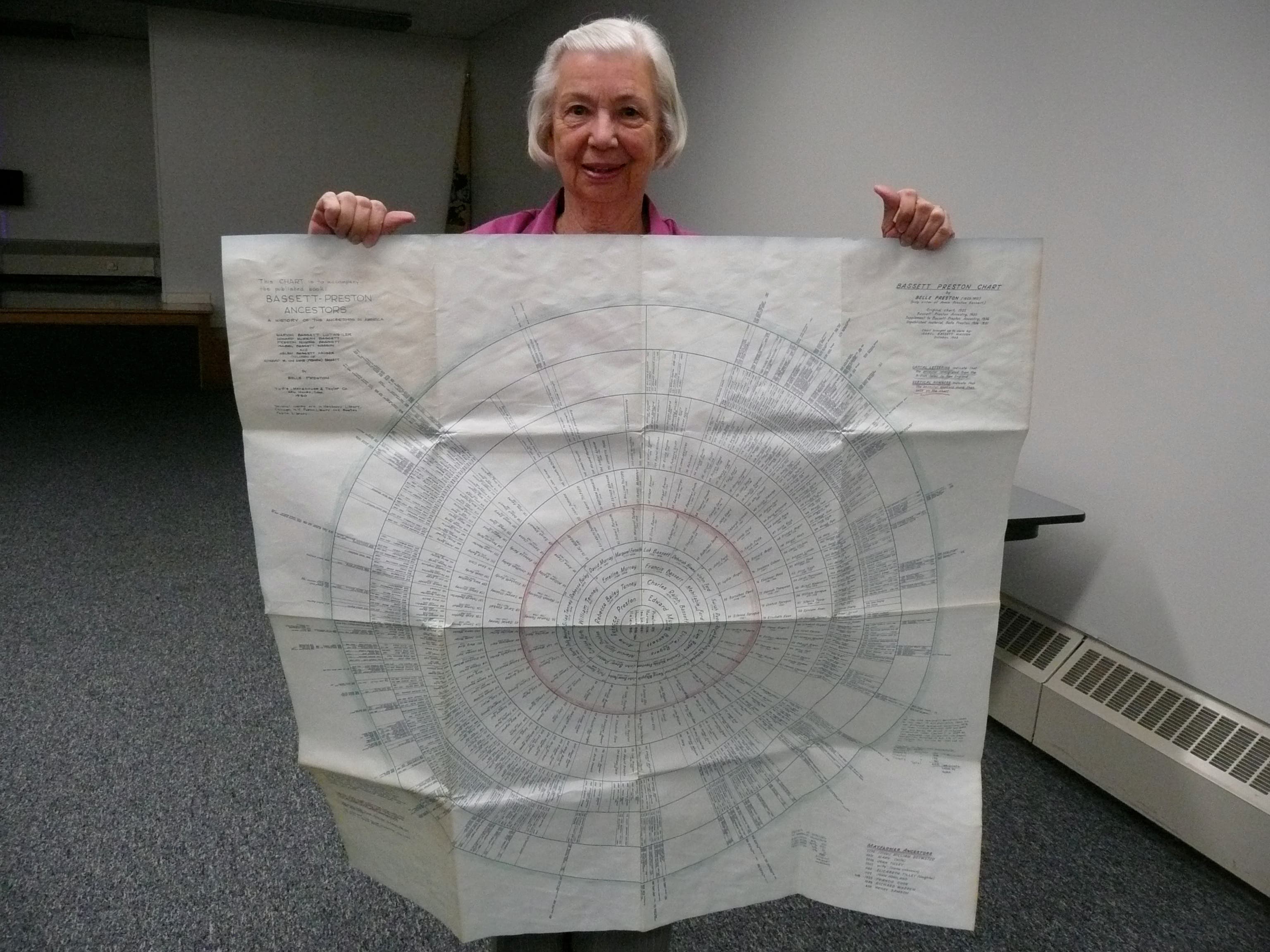
One attendee mentioned the Random Acts of Genealogical Kindness Web site where volunteers offer free research worldwide. Joan Daeschler, of Short Hills, brought her family tree, which went back 11 generations and traced her lineage to William the Conqueror. The chart measures about four feet square and was completed almost 90 years ago. Today there would be an additional four generations.