Community Corner
Local History: Farley Farm Was One of Many
Farm animals could be found throughout Millburn-Short Hills at one time
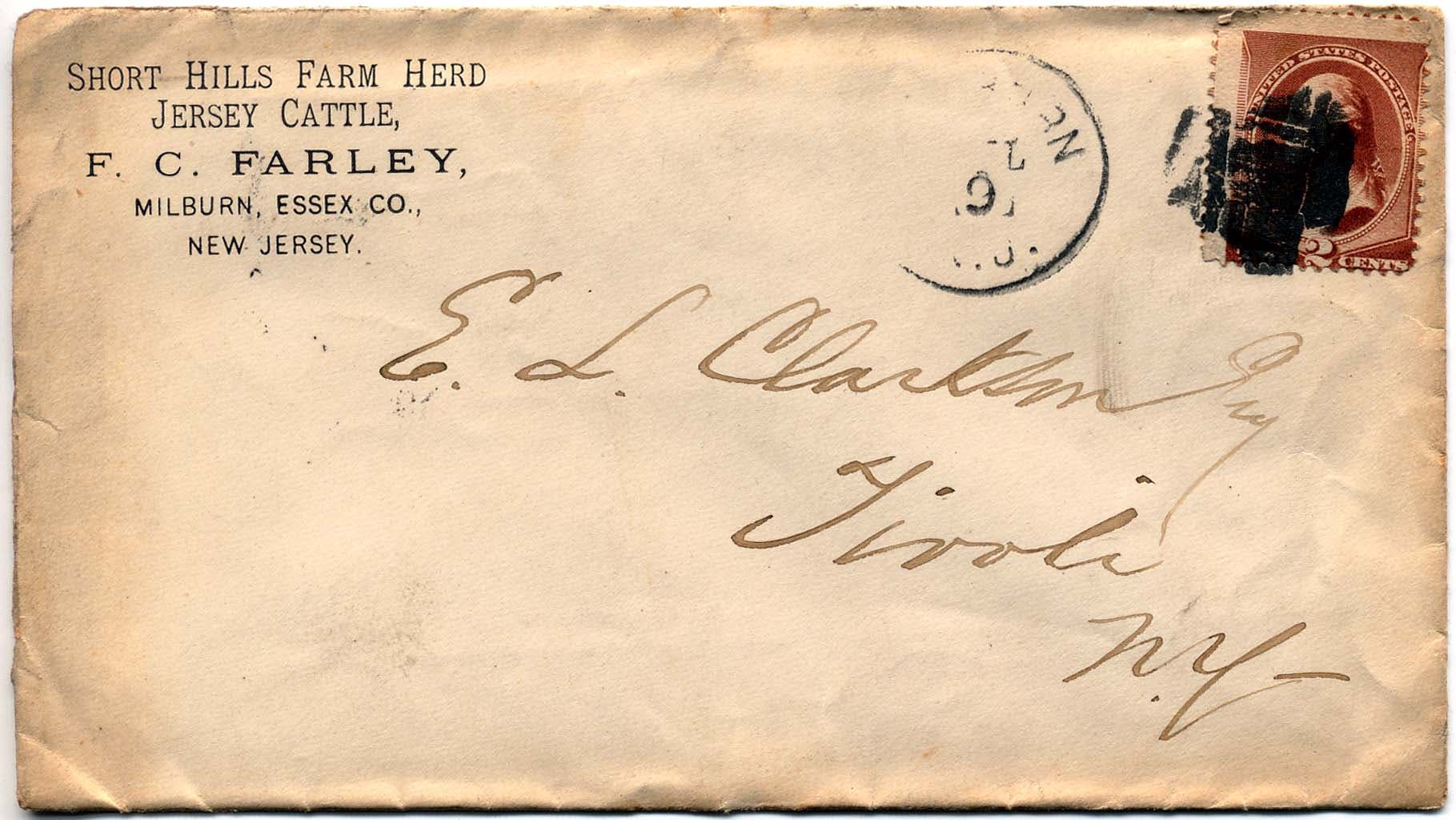

This empty circa late-1800's-early 1900's envelope from F.C. Farley of Millburn is in the collection of the Millburn-Short Hills Historical Society.
It was found among similar envelopes from other U.S. cattle breeders and it recalls Millburn's rural past, when farm animals such as chickens and pigs were commonplace.
On the section of the 1906 atlas map seen here, Frederick C. Farley's expansive "Short Hills Farm" can be seen between Glen Avenue and Farley Road. The early Farley farm house, at the intersection of Farley and Glen, was recently demolished and replaced by a new private residence.
Find out what's happening in Millburn-Short Hillsfor free with the latest updates from Patch.
In the 1900 U.S. Census, 68-year-old Frederick Farley's occupation was recorded as "China Merchant," so Farley may have retired from his cattle breeding business by that time.
We know that farm animals could be found throughout town, particularly at what was once Millburn's Poor Farm on the corner of Parsonage Hills Road and White Oak Ridge Road, where Gero Park is now. The animals, their egg and milk by-products, and other farm produce were kept to feed the residents of the Poor Farm or sold for a small profit to be used to that same end.
Find out what's happening in Millburn-Short Hillsfor free with the latest updates from Patch.
Members of the Millburn-Short Hills Historical Society write a weekly column highlighting items in the collection, which can be seen at the museum located at the Short Hills Train Station.