Community Corner
MHS Musings: Ten Questions with Hall Wang
Ten questions with the author of the editorial claiming Millburn High School parents and students are "college obsessed."
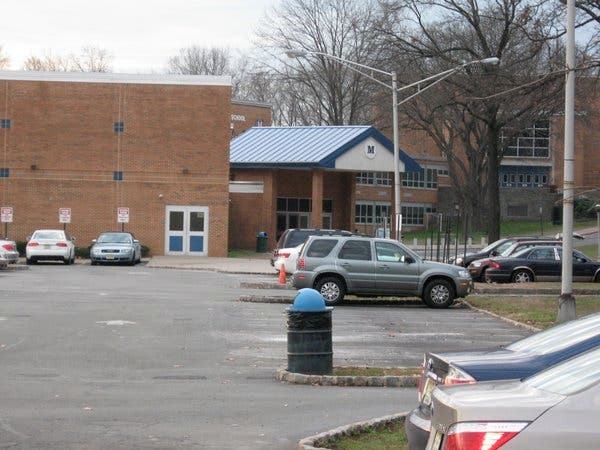

Recently 2004 Millburn High School graduate Hall Wang made the news for writing an editorial in the Star Ledger in which he wrote about his belief Millburn students and parents are "college obsessed."
Wang wrote Millburn students pursue activities not for the positive experience, but because it will give them another thing to put on their college applications. The editorial sparked some debate around town, and in the high school, and last week Patch editor Jennifer Connic wrote her beliefs on the issue.
After he graduated from Millburn High School, Wang graduated from Wake Forest University in 2008 and is currently in the United States Army preparing for a mission in Afghanistan this summer.
Find out what's happening in Millburn-Short Hillsfor free with the latest updates from Patch.
I was recently able to ask Wang some questions about his stance on this issue and about his experiences as a Millburn Miller.
1. What would you say about your experiences at Millburn High School?
Find out what's happening in Millburn-Short Hillsfor free with the latest updates from Patch.
I had a lot of fun in Millburn, but the thing about it is that I had to find my own way. To begin with, I moved there in the summer before my freshman year started, having grown up most of my life in North Carolina. From the get go, I was not welcome to Millburn.
Part of this had to do with how as an Asian person, I refused to pigeonhole myself and join the Asian cliché, and the Asian student community caught wind of this and frowned upon that. In North Carolina, we seriously had next to no Asians, so no such thing existed for me there.
Where I grew up, sure, we had our social divides, but we always had a strong sense of community throughout, so it was easy for me to be friends with people all over the map. The concept of an ethnicity marking themselves out as their own self-imposed semi-separate social group was something I saw as just plain wrong. I will say that other Asian students who did move to Millburn as I did, have an easier time if they joined the "Asian cliché" because they would then have an automatic friend base and a little mini-community to help them out.
Yet, more so, it was because I was the new guy that came from far, far away with a bit of a Southern accent that didn't fit anywhere. I wasn't part of any Jewish community group, any country club or church organizations. I understand the difficulties of being the new kid well (I moved to many schools within North Carolina as well), but what mostly made Millburn difficult to begin with was that no one really cared to welcome to me to town and help me get acquainted. A few did come out to do so eventually, but it was only a bare few. Everyone was too busy focusing on the mad dash toward college and sweating away at checking the boxes (many of the boxes that parents mandated) and apparently being friendly to people was not [one of these boxes]. This lack of hospitality is the most vivid way I remember the lack of care for others people had in Millburn.
I eventually came to realize that if I didn't want to be a lost casualty of Millburn, I would have to establish myself on my own. Some [of my experiences] worked okay, like being part of the lacrosse team, bowling team and Quiz Bowl Team, but they didn't pan out to anything too special for me.
I later discovered one of my great talents was organizing people to start new programs, and that is where I found my greatest successes. I founded the Millburn Model U.N. Team (at that time called the Johns Hopkins Model U.N. Team) and it was just an absolute joy to recruit 30 people, train them and lead them to compete (and sometimes win) against America's best at Johns Hopkins. I loved the challenge of organizing, managing, but, more than anything, the camaraderie and friendships we made as a team. I did [the same] with [establishing] men's volleyball. [Athletic Director] Ted D'Alessio helped me out with the paperwork and coaching, while I recruited the team and keep the team in line to start Millburn's men's volleyball on solid ground.
Yet however much fun I had in Millburn, I always knew the entire town, from the parents to the kids, was large college-application résumé pumpers. When I was part of the debate team, people always talked about how they were shooting for awards because "that's one more for the application," or "how my so and so finalist friend got into so and so school." People would openly tell me how they were doing morally questionable things just so they could stay/get ahead with a club position/the grade they wanted, because they felt they were entitled to it, and it was okay.
I finally came to realize how shallow people had become with the college issue when college admissions season came. People would tell me that Wake Forest, the school I was going to, wasn't good enough (with parents included, though most of them didn't tell me flat out obviously, it was the "oh, good for you, but did you hear about so and so got into this Ivy League school)." The most vivid memory of that was at luncheon for a program I was in. The moms did not want to talk to me anymore after I told them I was going to Wake Forest since they had an Ivy Leaguer among them that they could parade around.
2. Which Advanced Placement courses did you take in Millburn?
I was officially in six of these courses.
- AP United States Government & Politics
- AP Art History
- AP United States History
- AP European History
- AP Psychology
- AP Statistics
I also took AP Comparative Government & Politics, but I studied that on my own, took the AP test and got a five [out of a possible five] on it. I also studied AP Economics during my freshman year of college, and came back to Millburn High to take the test there.
Here is the thing about AP classes. I am a fan of AP classes, because it gives kids a heads up by giving them a sample of college level courses. The problem with Millburn is that AP courses became more than just courses but a status symbol, and it is sad that kids and parents judge other kids based on how many AP courses they took. One of my best friends from MHS didn't rack up AP courses as others did, but ended up as the salutorian of his college and has a very successful marketing career. Granted, I prefer kids using AP courses as a status symbol rather than drugs, weapons and the less savory problems some schools have, but that isn't healthy either. It tells the kids that you value a person by how well they test, and not by their character.
The other problem with APs at Millburn is that you had the "AP-rackers," who took every single AP course for the sake of having an AP for college even if they weren't interested in learning the subject matter. Teachers would be frustrated knowing that they were teaching kids often times with no interest in the subject, just taking it to "check the box." The APs I took were things I were interested in and wanted to explore the subject further. Just look at my college majors—political science, history with a minor in sociology.
3. What did you think of your teachers at Millburn High School?
I thought Millburn, for the most part, had a quality cast of teachers, coaches, and administrators.
My favorites were history teachers Mr. Urban, Mr. Uzzolino, Mrs. Creegan, Mrs. Santianna and Mr. Feeley; and chemistry teacher Mr. Gargiulo, although I got C's in Chemistry sometimes.
They were all very knowledgeable, and very focused on helping the students. I think the best thing about them was that they understood the Millburn world, although they did not come from places like Millburn. They always had a great sense of humility about themselves, and tried to do their job of teaching kids to the best of their abilities.
I will say that other than Mr. Urban and Mr. Feeley, none of my teachers really tried to give us a moral education. It is not to their fault, because it is the parent's job, and at most, the job of the middle school teachers. I always believe that it is in the middle school when people became shaped with their personalities and values. The problem is that in Millburn, I don't believe parents are sending the kids the right messages.
4. Why do you think us students at Millburn High School are so focused on college?
There are two primary reasons: parents and peer pressure.
It starts with the parents having good intentions [for their children] to succeed in the world, but somehow in Millburn the desire to be college focused has gone on overdrive and become corrupted to be an unhealthy obsession. I saw parents brag to other parents at dinner parties about their kid going to Princeton, and "in nice ways" condescend against other parents whose children hadn't reached expected achievements. That is a sign it has gone too far.
But the best sign that it has gone too far is how it has poisoned the children. All the kids have become influenced by strong-armed parental pressure that college is the end game, and they peer-pressure their classmates who don't fit the mold.
5. Do you think there are some exceptions to the generalization that you wrote in your editorial?
Absolutely. I made quite a few great friends in Millburn, many of them themselves went onto "lucrative careers" and great schools. Yet what differentiates them from the norm is that they did not let the college game determine their lives and poison their character. Instead they determined their path to college while still being genuine and good people.
6. As a student in Millburn were you college-focused, and is that the reason why you participated in so many extracurricular activities?
Honestly, I was college focused at first because I did buy into the peer pressure, and my parents bought into the college obsession as well. There were quite a few clubs, I will honestly admit, I joined, because everyone told me it was "the cool thing to do." But I was a 14-15 year old kid. Then, I realized I was not happy trying to bend into everyone else's mold.
Luckily for me, my parents didn't have the energy to over-manage, and I eventually realized high school was just miserable for me and I had to change. The extracurricular activities I am proud of were the ones that I chose or found on my own without any peer-pressure. I like to do things, meet people and experience new things. Of course, I never forgot that college was important, but I never let the college application define who I was or what I did.
7. Do you still visit your alma mater, Millburn High School?
The last time I visited was the summer of 2007, right before I went to paratrooper school. Since then I have not been back at Millburn very often between my college activities and military training. I still have friends who visit Millburn once a year. I probably won't be back [for a high school reunion] because for me, [high school] was a chapter of my life that is said and done and I need to look forward and not backwards. As Mr. Feeley said, for some people Millburn will be the epitome of their lives. I don't want to be that person.
8. What's your best memory of Millburn High School?
My best memory in Millburn was at a lacrosse game vs. Columbia. I was the backup junior varsity goalie. Our starter was sick, so I was playing the entire game. Everyone expected to be a disaster because Columbia was good, and, as a goalie, I was only so-so. Somehow, I blocked all the shots they threw at me from the get-go, which no one had expected. From there on, the team rallied around me and we went on to defeat Columbia (I think the score was 5-2 or something like that). I was new to the team and the sport, but in that moment college was out the window and we played for each other as a team.
9. What contributed to your decision to be in the United States military?
I wanted to be in the United States military since I was 5 years old watching the Americans defeat Saddam Hussein during the Persian Gulf war on television, although I lived in Canada at the time. I thought how exciting it was to have a job out of the office. When I moved to America when I was 6, I spent about six years in North Carolina and one in Louisiana. There, I was taught to value community, people and country. Yes, I went to the schools that said the pledge of allegiance every morning, brought our military/police/firefighter moms and dads for show-and-tell and praised public service. By the time I was in middle school, I had asthma, so I realized the military might not have been for me.
On career day, when you fill out what is your desired career, I wrote that I wanted to be treasury agent (I just saw the movie the Untouchables). The school apparently thought it was creative/amusing enough that they took a picture of me and posted it somewhere for having laudable goals.
Ironically, when I was in Millburn (by that time I been cured of asthma) and I told people (parents and students) I wanted to the join the military, they looked at me as if I was crazy. I was told it was a dead-end job that made little money and was pointless. I remember that I saw people give the people who decided to go to the Naval Academy and West Point the same questions and responses, as if we made odd life choices. That never discouraged me, because I never forgot the many people along the road of life I encountered and the sacrifices they made, be it to service to country or just the little things to help me out.
I always kept them in mind and decided I would join the military one way or another, so I can serve them. I was between the Marine Corps and the Army, and the Army decided to give me a scholarship. So after four years of Millburn, I wanted to go back to kinder friendlier place and decided against the schools of Millburn mothers' pride. I decided to go to Wake Forest and I got an ROTC scholarship to go along with it so I could be an Army Officer.
I was assigned as an infantry officer and volunteered to keep it. Right now, I am a platoon leader in Fort Carson and we are scheduled to deploy to Afghanistan this coming summer. Sure, there are days I don't sleep, but it is just thrill to lead Americans on missions to be the face of Americans back home. My soldiers reflect the fabric in every which way possible—ethnically, geographic background, social class and etc. One of them even got a chance to have the fortune to grow up as well to do as many Millburn families. They all joined the Army for different reasons. And even though some of them sometimes give me a few headaches, they are genuine people who care about each other.
10. In your editorial, are you saying that many Millburn students are not being genuine adolescents, and, rather, they are doing the things they do only to attract university attention? If so, what factors contributed to this generalization?
Let's be honest, pumping a college application isn't the ONLY priority, but it has become the TOP priority to the extent whereby other facets of life are marginalized to it (or so it seems like too often). Millburn kids are still kids and they'll still do things that any teenagers do. The difference is that the parents have influenced them towards a certain check the box mind set, and the objective of checking the box is of supreme importance at any cost.
The cost is that it has sets forth the wrong set of values. Yes, I do believe that many Millburn kids have a misguided set of values in valuing entitlement, selfishness and enjoying beating the guy next to you at any cost to get ahead. I worry about this because, let's be honest, Millburn kids are well educated and will be successful. It is, however, their values that determine if they are the next Wall Street criminals or the next Bill Gates. Their values will determine if they are friends who contribute to society… or pests.
I do not believe a "genuine adolescent" exists. I do believe that certain adolescent experiences are healthier than others are. The fact that Millburn parents strong-arm their children into the pressures and influences of college applications at any cost, and the kids acting under such influence are unhealthy. A healthier adolescent is one whose parents give guidance and incentives but give the kids room and time to be kids, try things out for themselves and learn as they grow up with each other, instead of shuttling them from event after even the parents organized for the sake of college.
The big picture is that kids will at times act out and fight with their parents, but the norm in Millburn is that parents have already bought into the mindset of thinking about college at every turn of their decision-making process. There is a realistic extent where children need to, but the way it has become, as I already explained is not the type of environment I want to raise my kids in.
When you go to college, you will hear of other kids also being raised under the "over parenting" epidemic that is more than just a Millburn problem but a bit of a national problem. Yet, the biggest thing you will realize (somewhat depending on what school you go to) is that your Millburn High School experience is not normal but abnormal.
Max Sauberman is a freshman at Millburn High School. MHS Musings, a column about happenings at the high school, appears on Mondays.